Clear Sky Science · en
The impact of tooth brushing simulation and staining thermocycling on surface roughness and color stability of CAD/CAM laminate veneers ceramic materials: an in-vitro study
Why this matters for your smile
Thin ceramic covers called veneers can transform worn or stained teeth into bright, even smiles. But many people who invest in these restorations also drink coffee and may smoke, and they brush every day. This study asked a simple but important question: how much do everyday habits like brushing and enjoying coffee or tobacco actually change the smoothness and color of modern veneer materials over time?
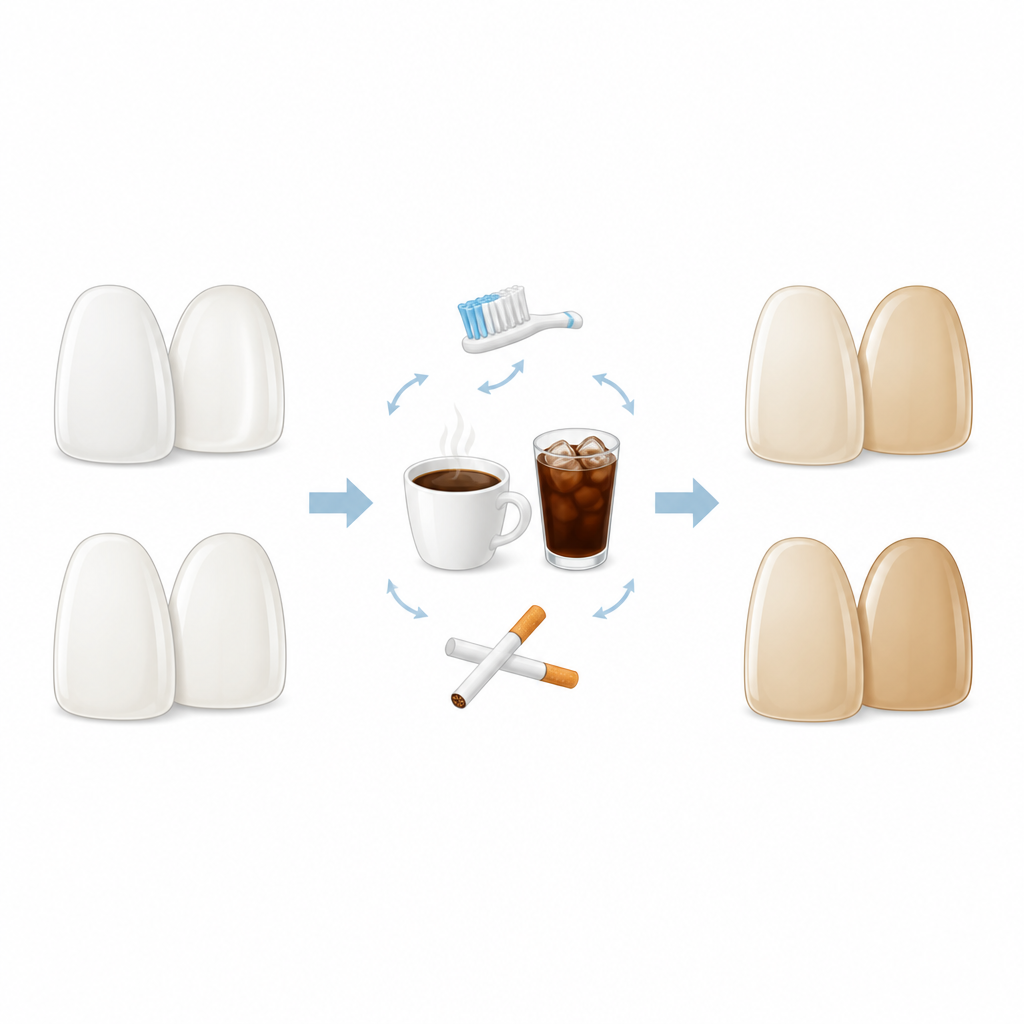
What the researchers wanted to know
The team focused on two high performance ceramics commonly milled by computer guided machines for dental veneers. One, known commercially as Tessera, is a newer advanced lithium disilicate glass ceramic. The other, Vita Suprinity, is a zirconia reinforced glass ceramic that is already widely used. Dentists can finish these materials in two main ways: by polishing them to a high gloss or by firing on a glassy glaze in a furnace. The researchers set out to compare how these materials and finishes stand up to a year of simulated brushing and repeated exposure to coffee and tobacco staining under controlled laboratory conditions.
How everyday wear was copied in the lab
Square samples of each ceramic were cut, shaped, and either polished or glazed to mimic veneer surfaces. The specimens then underwent a mechanical brushing test that used a powered device, soft brushes, and toothpaste slurry to imitate six months and then one year of twice daily tooth brushing. Between brushing sessions, the samples were cycled thousands of times between hot coffee mixed with tobacco extract and iced coffee, recreating the temperature swings and pigments that veneers might encounter in a heavy coffee drinker who smokes. At each stage, the team measured how rough the surfaces had become and how much the color had shifted using precise optical instruments.
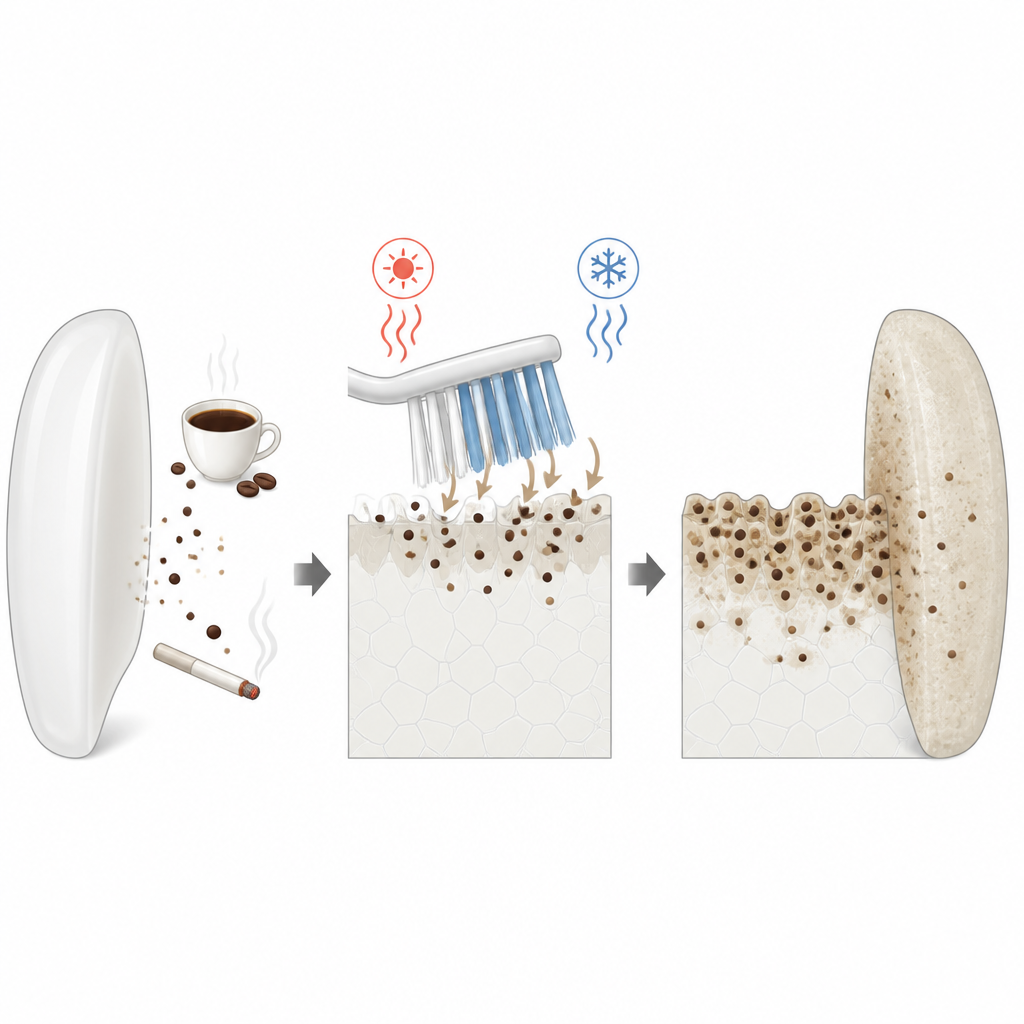
What happened to surface smoothness
Despite the harsh treatment, both ceramics remained relatively smooth. Surface roughness did increase slightly over the simulated year for all groups, but the changes were small and statistically similar regardless of material or whether the surfaces were polished or glazed. In practical terms, the veneers did not become noticeably rougher, which is important because rough surfaces can feel unpleasant, wear opposing teeth, and catch more plaque and stains. The glaze layer tended to produce the smoothest surfaces overall, suggesting that a fired glassy coating can help heal tiny defects and pores left by machining and polishing.
What happened to color and staining
Color was a different story. Every ceramic and surface finish group showed color changes that were larger than the range usually considered acceptable in dentistry. The most affected were the polished Tessera samples, which showed large, clearly visible darkening after a simulated year. Glazed Tessera and both polished and glazed Vita Suprinity samples changed color as well, but to a lesser degree. The authors suggest that the internal structure of Tessera, which combines different types of crystals in a glassy matrix, may leave more microscopic pathways for staining molecules to penetrate, especially when the surface is polished rather than sealed with glaze.
What this means for patients and dentists
For people considering veneers, the findings offer a nuanced message. The tested materials stayed smooth under intense simulated brushing and temperature stress, so they should feel comfortable and resist surface wear. However, regular coffee drinking and tobacco exposure can cause color shifts that may be noticeable, particularly for certain ceramics and finishing choices. Glazing the newer Tessera material appears to help limit staining, while polishing alone leaves it more vulnerable. For patients who smoke or consume a lot of coffee, dentists may need to choose materials and surface finishes with color stability in mind and discuss how habits and cleaning routines can influence how bright veneers remain over the years.
Citation: Salem, R., Ashraf, R. & Elbasha, S. The impact of tooth brushing simulation and staining thermocycling on surface roughness and color stability of CAD/CAM laminate veneers ceramic materials: an in-vitro study. Sci Rep 16, 15506 (2026). https://doi.org/10.1038/s41598-026-52223-1
Keywords: dental veneers, ceramic materials, color stability, tooth brushing, coffee staining