Clear Sky Science · en
Emerging quality-by-design optimized HPLC method for the concurrent determination of cefixime and ornidazole: a multi-criteria green and blue environmental footprinting
Why cleaner drug tests matter
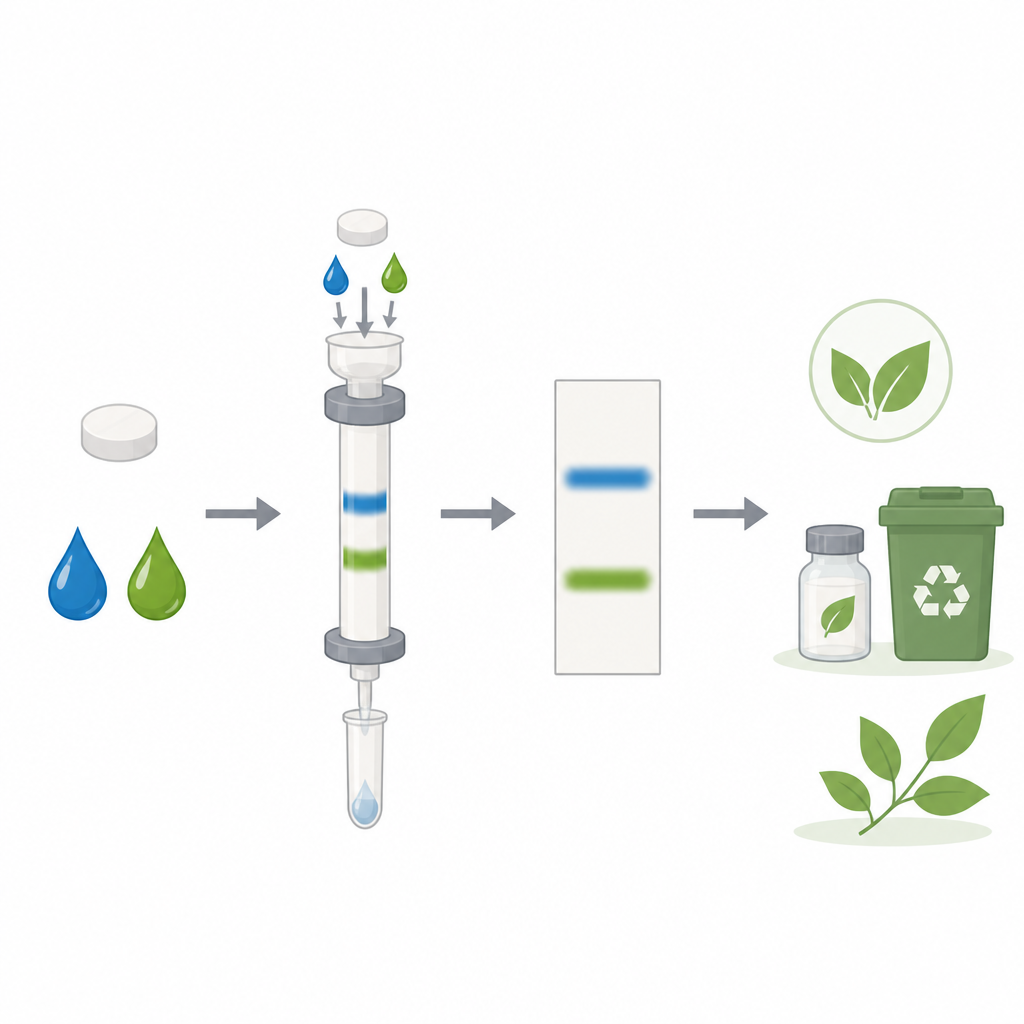
Whenever you swallow an antibiotic tablet, pharmacists and regulators must be sure that each pill really contains the right amount of medicine. This paper describes a faster and cleaner laboratory test to check two widely used drugs, cefixime and ornidazole, both taken for stubborn infections. The authors not only focus on measuring these drugs accurately but also show how the whole testing process can be made quicker, less wasteful, and kinder to the environment.
Two infection fighters in one pill
Cefixime is an antibiotic that attacks bacteria by damaging their cell walls, while ornidazole targets certain parasites and bacteria by harming their DNA. Doctors often prescribe them together to treat ear, throat, urinary, gut, and genital infections. Testing this pair is not straightforward because both drugs travel together in the same mixture and can appear very similar in standard laboratory checks. A reliable and simple way to measure both at once helps drug makers control quality and ensures patients get what the label promises.
A quicker way to separate and measure the drugs
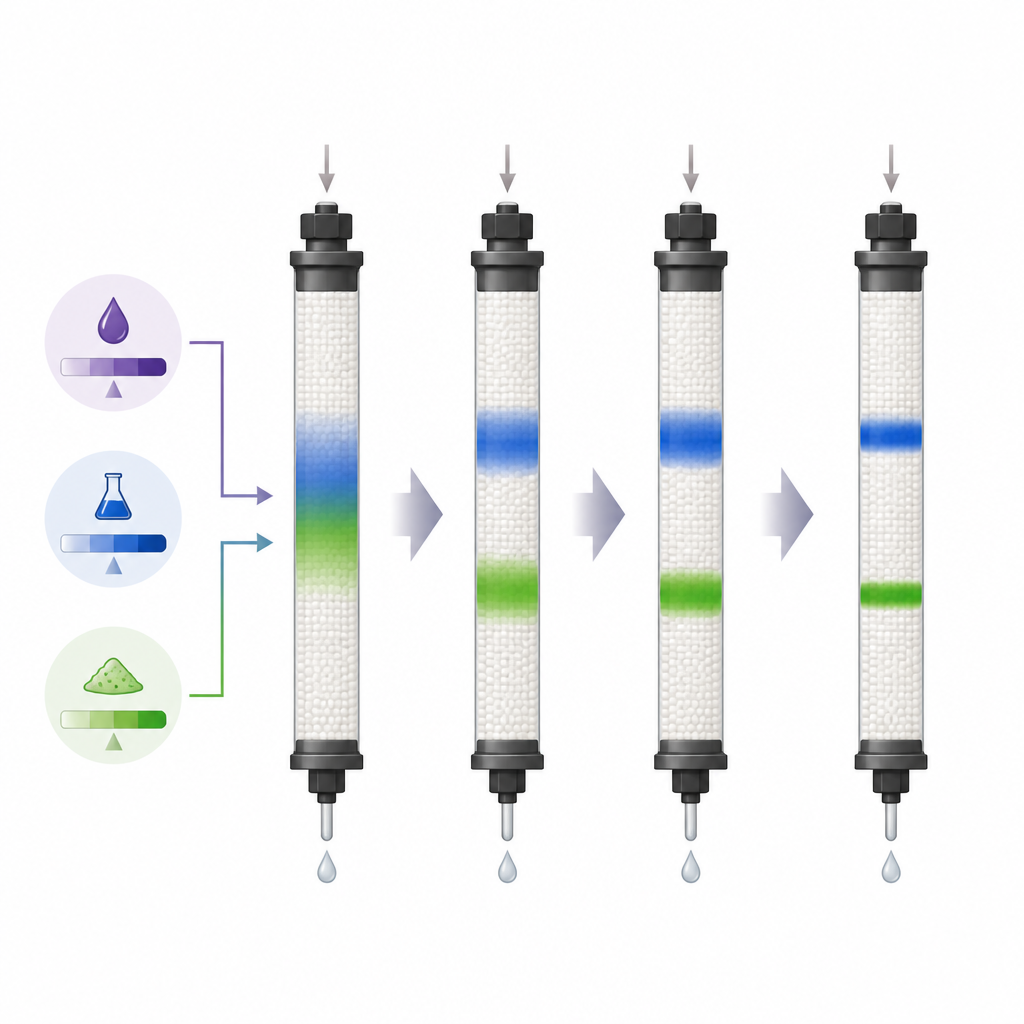
The team used a common laboratory tool called high performance liquid chromatography, which separates the components of a mixture as they travel through a thin column. They chose a special type of column with a cyano surface that can better tell apart molecules with similar properties. By passing a blend of methanol and a mild additive through the column, and shining ultraviolet light at a specific color, they could separate cefixime and ornidazole and read their amounts in less than four minutes. This short run time means many samples can be checked in a working day, which is important for busy quality control labs.
Letting statistics tune the method
Instead of changing one setting at a time, the researchers used a planned set of experiments to adjust three key factors together: the acidity of the liquid, how much methanol it contained, and the level of a helper chemical that smooths the signals. Computer software then examined how these factors influenced the sharpness and distance of the drug signals. This approach, borrowed from industrial quality programs, allowed the scientists to find the best settings with only eight core trials, saving material, time, and effort. It also gave them a clear map of how small shifts in conditions would affect the test, making it more dependable in daily use.
Keeping the lab and environment in mind
The authors checked that their method was accurate, repeatable, and sensitive enough to detect very small amounts of each drug. They applied it to pure powders, laboratory made tablets combining both drugs, and commercial single drug products, finding excellent agreement with an older reference method. Beyond performance, they examined how “green” and practical the test is, using several modern scoring tools that rate solvent choice, energy use, waste, and ease of routine application. By favoring methanol over harsher liquids and avoiding complicated solvent programs, the method scored well on both environmental and everyday usability scales, described as “green” and “blue” footprints.
What this means for patients and manufacturers
In simple terms, the study delivers a smart, compact laboratory recipe for checking two infection fighting drugs at once, while trimming cost, time, and environmental impact. For manufacturers, this means a reliable way to monitor combination products without relying on more hazardous materials. For patients, it supports consistent pill strength and safer treatments behind the scenes. The work also shows how careful planning and sustainability thinking can improve routine measurements that underpin modern medicine.
Citation: Mostafa, Y.E., Elsebaei, F. & Metwally, M.ES. Emerging quality-by-design optimized HPLC method for the concurrent determination of cefixime and ornidazole: a multi-criteria green and blue environmental footprinting. Sci Rep 16, 16309 (2026). https://doi.org/10.1038/s41598-026-51859-3
Keywords: HPLC method, cefixime, ornidazole, green analytical chemistry, design of experiments