Clear Sky Science · en
Real-world use of thrombopoietic agents in treatment-naïve children with severe aplastic anemia: a multicenter retrospective study
Why this matters for families
Severe aplastic anemia in children is a rare blood disease that can turn everyday infections or minor cuts into life-threatening emergencies. Standard treatment often relies on bone marrow transplants, which are not always available, especially in countries with limited resources. This study explores whether a class of medicines that encourage the bone marrow to make more blood cells can offer children a safer, more accessible path to recovery.
Understanding the illness
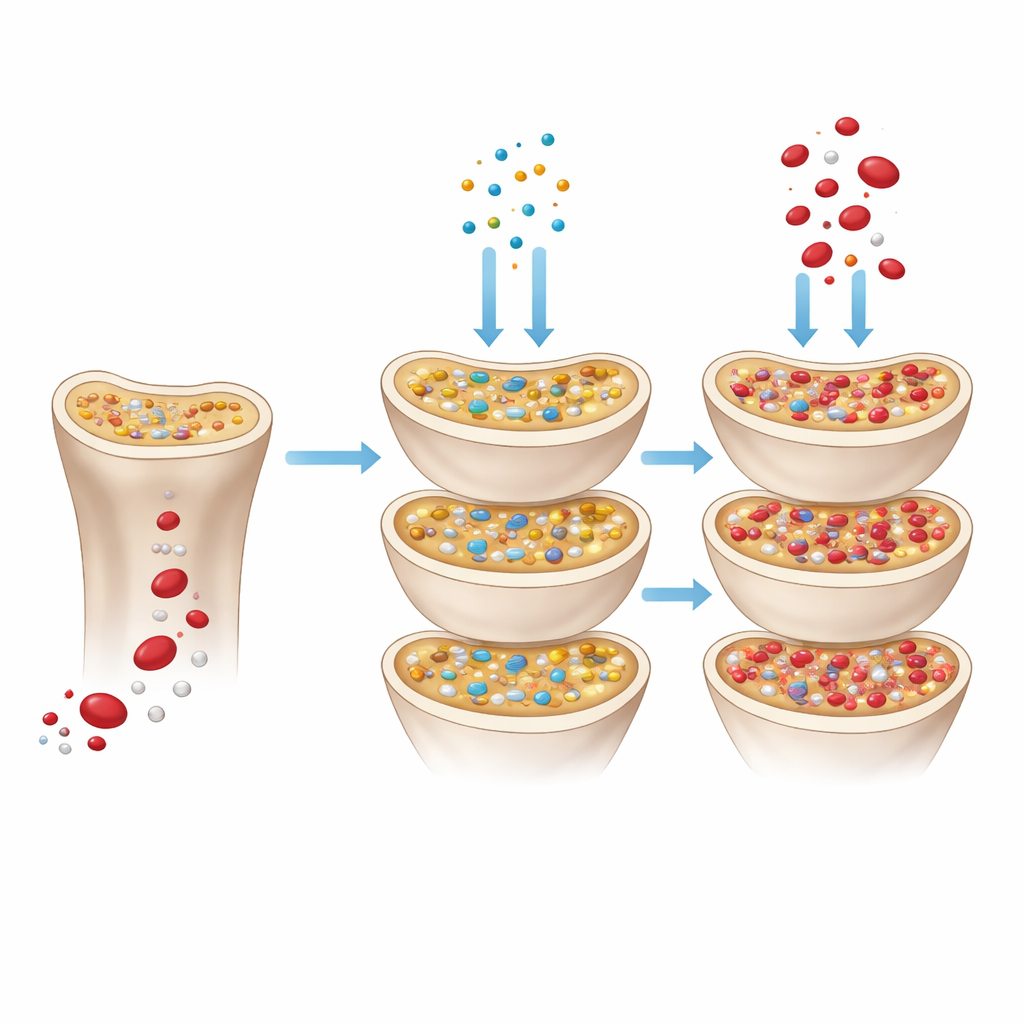
In severe aplastic anemia, a child’s bone marrow, the soft tissue inside bones that makes blood cells, nearly shuts down. Instead of producing a steady supply of red cells to carry oxygen, white cells to fight infection, and platelets to stop bleeding, the marrow becomes almost empty. Children may arrive at the hospital with extreme tiredness, frequent infections, nosebleeds, or bruises. The condition is most often caused by the child’s own immune system mistakenly attacking the stem cells that should be making new blood cells, although liver infections can trigger a similar picture in some children.
Limits of current treatment
The best established cure for many children is a bone marrow, or stem cell, transplant from a well-matched donor, which can lead to long-term survival in most cases when performed early. When a donor is not available, doctors turn to immune-suppressing drug combinations that calm the attacking immune cells and allow the marrow to recover. These standard drug cocktails can work well, but they are expensive, not always on hand, and require close monitoring in the hospital. In many low- and middle-income countries, long delays before transplant or full immune therapy are common, leaving children at high risk while their blood counts remain dangerously low.
A new use for platelet-boosting drugs
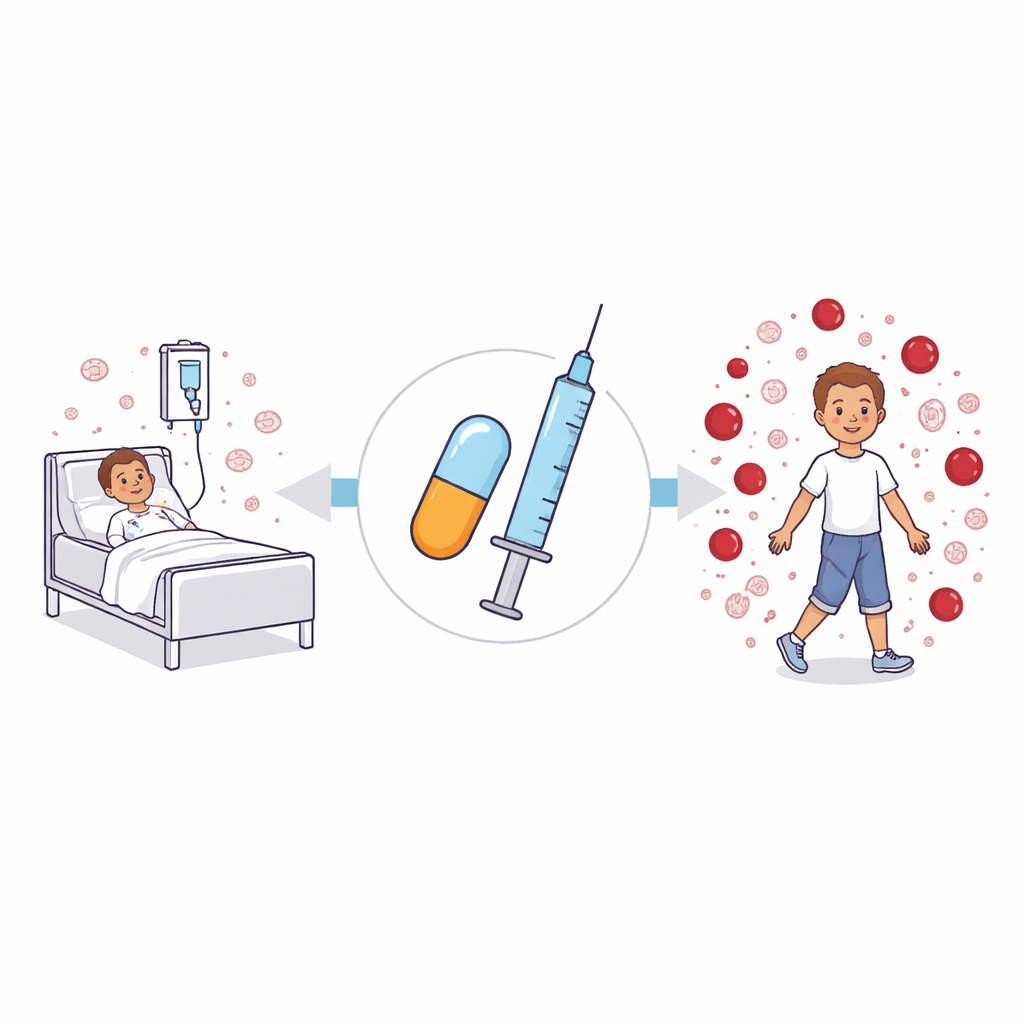
This research team from Egypt and Oman examined a newer strategy that uses medicines called thrombopoietin receptor agonists. These drugs, including eltrombopag and romiplostim, were originally designed to boost platelets, the blood cells that help with clotting. They act on the same pathways the body uses to tell the bone marrow to produce more cells. The researchers reviewed the medical records of 57 children newly diagnosed with severe aplastic anemia who could not go straight to transplant. Some children received one of these medicines alone, while others received it together with the immune-suppressing drug cyclosporine. The study looked at how blood counts changed, how many children went into remission, and how many survived.
What the study found
Across the group, blood counts improved meaningfully. By the last follow-up, hemoglobin, platelets, and infection-fighting white cells had all risen in both treatment approaches. Overall, about two thirds of the children reached remission, meaning their blood counts recovered to safer levels and they no longer depended heavily on transfusions. Serious side effects linked to the platelet-boosting drugs were not observed; most children had only mild stomach upset or temporary changes in liver tests, and no one had to stop the medicine because of it. Some children who did not respond at first later went on to receive standard rescue treatments such as transplant or anti-thymocyte globulin.
Comparing the two strategies
An important observation was that children treated with the platelet-boosting drug alone tended to recover faster than those who also took cyclosporine. In the group receiving only the new medicine, more than nine out of ten children eventually entered remission, and the typical time to remission was about six months. In the combination group, roughly six out of ten children achieved remission, and it took closer to a year on average. Long-term survival over five years was similar between the two groups, with about three quarters of all children still alive, but fewer deaths and slightly higher platelet counts were seen in the single-drug group, even though the differences were not statistically firm. In children whose anemia followed hepatitis, outcomes were comparable to those with no clear trigger.
What this could mean for care
For families and doctors in regions where matching donors, complex immune therapy, and intensive hospital care are hard to secure quickly, these findings suggest that platelet-boosting medicines may offer a practical front-line option. The study was retrospective and involved a modest number of patients, so it cannot settle the question of which regimen is best. However, it shows that using these drugs early, even without adding other immune-suppressing agents, can help many children regain healthy blood counts with a reassuring safety profile. Future controlled trials are needed, but for now this work points toward a more flexible toolkit for protecting children with severe aplastic anemia when standard treatments are out of reach or delayed.
Citation: Chazli, Y.E., Abdallah, G., Zakaria, M. et al. Real-world use of thrombopoietic agents in treatment-naïve children with severe aplastic anemia: a multicenter retrospective study. Sci Rep 16, 14723 (2026). https://doi.org/10.1038/s41598-026-51552-5
Keywords: severe aplastic anemia, pediatric hematology, thrombopoietin receptor agonists, eltrombopag, romiplostim