Clear Sky Science · en
Development and validation of conventional and TaqMan real-time PCR for the detection of Trichoderma afroharzianum causing corn ear rot
A Hidden Threat in Corn Fields
Corn is a staple food and animal feed around the world, but a newly emerging disease is quietly damaging ears of corn in Europe and beyond. The culprit is a fungus called Trichoderma afroharzianum, which can rot corn ears and reduce harvests. Because its symptoms can be mistaken for other common ear diseases, farmers and advisers need a fast and reliable way to tell whether this particular fungus is present. This study explains how researchers built and tested a precise DNA-based test to spot the fungus early, even before visible damage appears.
Why a Helpful Fungus Turned Problematic
Members of the Trichoderma group of fungi are usually seen as helpers: they live in soil and on plants and are widely used as biological control agents to protect crops from other diseases. In 2018, however, a new type of ear rot was found in southern Germany, and careful investigation showed that T. afroharzianum was the cause. Since then, similar ear rot outbreaks have been reported in several European countries and in China. Some related Trichoderma species have also been linked to stalk rot in corn. Because visual symptoms overlap with other ear rots, relying on field inspection alone risks missing this emerging disease or confusing it with better-known problems.
Building a DNA Fingerprint Test
To solve this, the team designed two laboratory tests based on PCR, a standard method for copying and detecting DNA. One is a conventional PCR test that shows results as a band on a gel; the other is a more sensitive real-time “TaqMan” PCR that monitors DNA amplification as it happens. The researchers chose two genes that are especially useful for telling closely related Trichoderma species apart. For the conventional test they targeted a gene known as TEF1α, and for the real-time test they used another gene called RPB2. They then created specific short DNA pieces (primers and a probe) that match only the DNA of T. afroharzianum, like a lock designed for a single key.
Putting the Test Through Its Paces
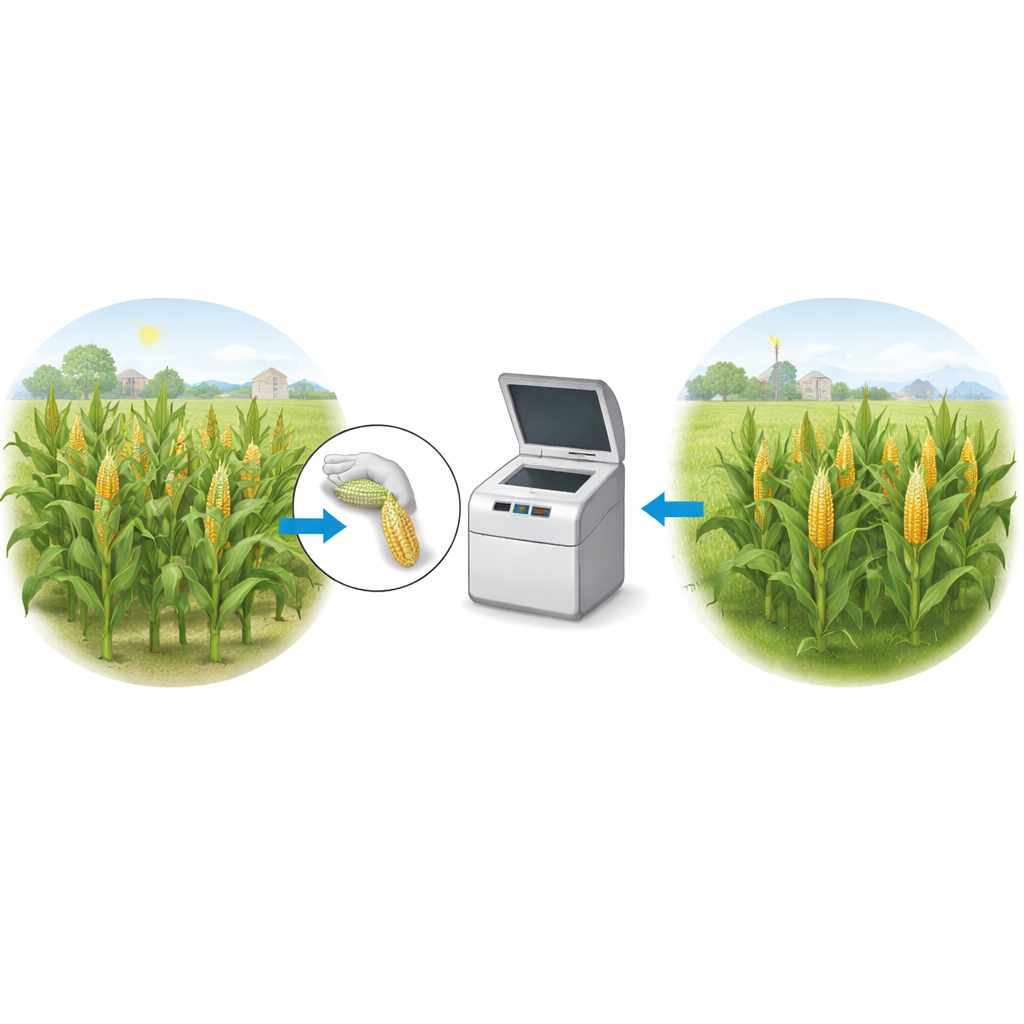
The scientists gathered a large collection of fungal samples from corn cobs, stalks, soil, other plants, and commercial products, mainly across Germany but also from France, Italy, Peru, and elsewhere. This collection included many T. afroharzianum strains—some known to cause disease on corn and others that do not—as well as numerous other Trichoderma species and unrelated fungi. Both PCR tests correctly detected all of the T. afroharzianum samples and excluded nearly all non-target species. The conventional test could reliably detect as little as one trillionth of a gram of target DNA per microliter, while the real-time test was a thousand times more sensitive, down to one quadrillionth of a gram. Importantly, both tests worked not only on pure fungal cultures, but also directly on DNA extracted from infected corn kernels, including cobs that still looked healthy to the naked eye.
How the Test Helps Farmers and Researchers
The new testing tool met strict performance standards, showing high precision, repeatability, and robustness across different machines and reaction conditions. The real-time version was particularly powerful for early detection and for use in more detailed monitoring, such as checking soil samples from corn fields to estimate disease risk before planting. However, the tests cannot yet distinguish between strains of T. afroharzianum that are harmful to corn and those that are harmless or beneficial in other settings, such as biological control products. This means a positive test in symptom-free corn must still be interpreted with caution and, when needed, followed up by testing whether the strain can actually cause disease.
What This Means for Protecting Corn
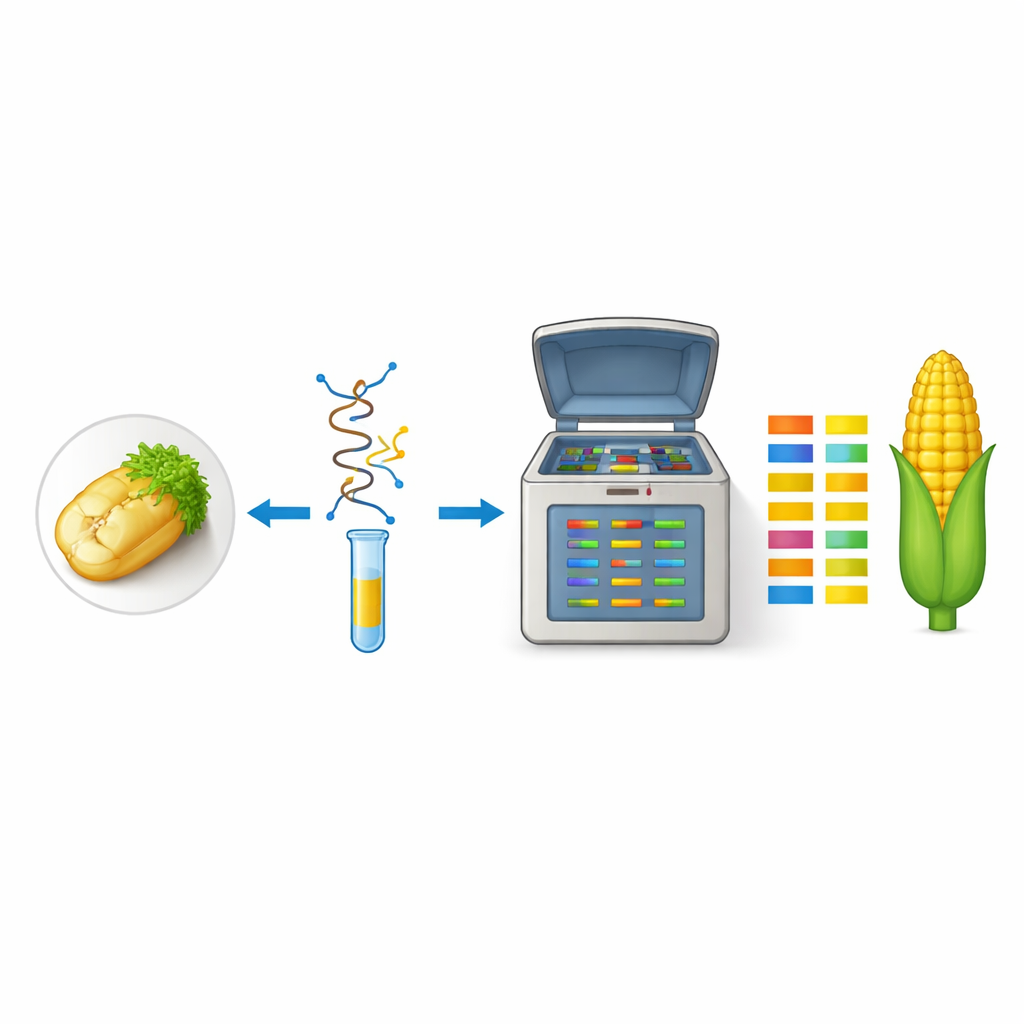
In plain terms, this research delivers a sharp new “magnifying glass” for spotting a hard-to-see corn disease. By directly reading the fungus’s genetic code in plant or soil samples, the two PCR tests allow specialists to identify T. afroharzianum quickly and accurately, without the delays of growing the fungus in culture or relying on look-alike symptoms. This early and reliable detection makes it easier to distinguish this disease from other ear rots and to time control measures more effectively, helping farmers reduce yield losses and limit spread. As scientists learn more about what makes some strains of this fungus harmful and others harmless, tools like this will also guide safer use of Trichoderma-based products in sustainable agriculture.
Citation: Douanla-Meli, C., Pfordt, A., von Tiedemann, A. et al. Development and validation of conventional and TaqMan real-time PCR for the detection of Trichoderma afroharzianum causing corn ear rot. Sci Rep 16, 14427 (2026). https://doi.org/10.1038/s41598-026-51199-2
Keywords: corn ear rot, Trichoderma afroharzianum, plant disease diagnostics, PCR testing, maize health