Clear Sky Science · en
Genetic alterations in poor-quality individually selected sperm highlight candidate biomarkers for male subfertility
Why sperm DNA matters for would‑be parents
Many couples struggling to conceive are told that routine semen tests look “normal,” yet pregnancy still does not happen. This study asks a deeper question: even when sperm appear acceptable under the microscope, could hidden changes in their DNA help explain male subfertility? By closely examining the genomes of carefully selected good and poor sperm from the same men, the researchers explored whether subtle genetic clues in sperm might one day guide diagnosis and treatment for couples undergoing fertility care.
Looking closely at good and poor swimmers
The team recruited six men from couples receiving infertility treatment. From each man’s ejaculate, embryologists used fine needles and a microscope to hand-pick 1500 sperm with strong movement and normal shape, and another 1500 that were immotile and misshapen. These “high-quality” and “poor-quality” pools came from the same sample, so both reflected the same inherited genetic background. The DNA was then extracted and subjected to whole‑genome sequencing, a technique that reads nearly every letter of the genome and can uncover a wide range of genetic changes, from tiny point alterations to larger structural shifts.
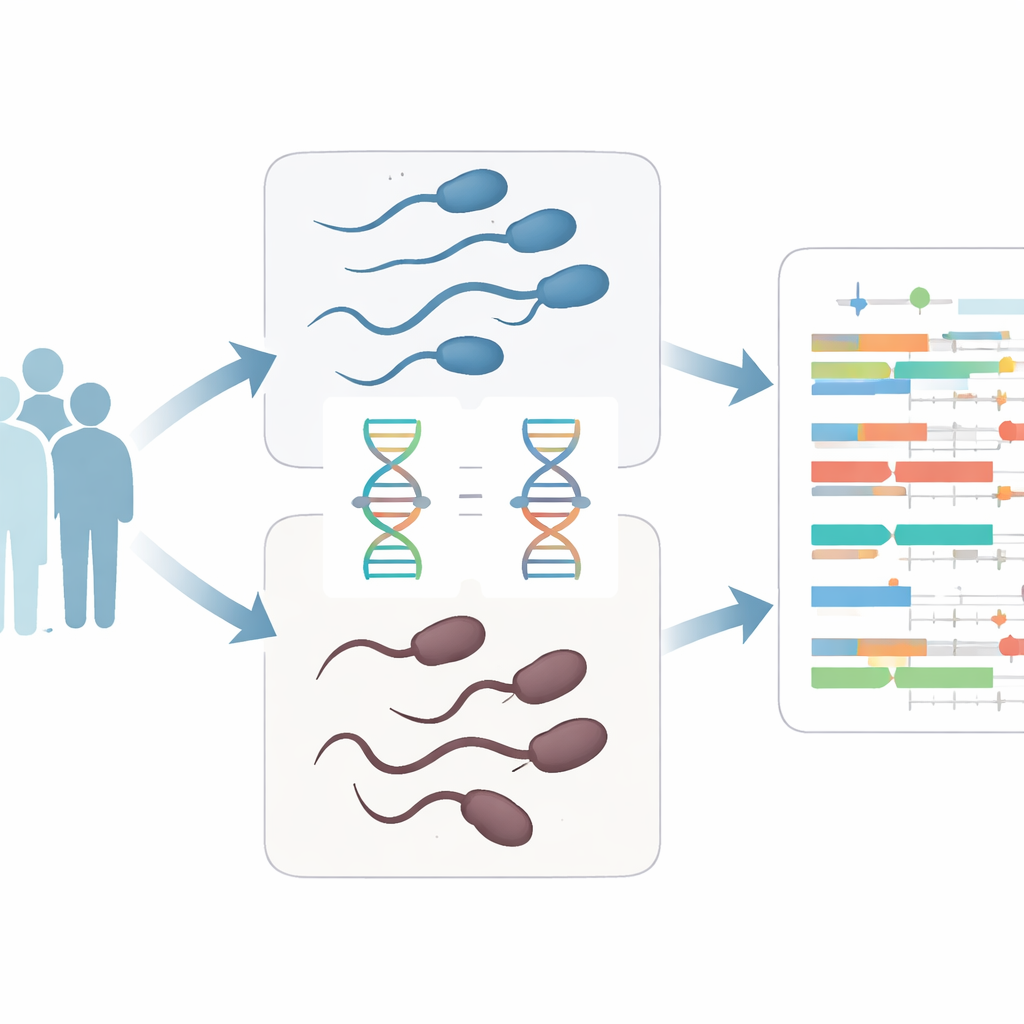
Reading the entire genetic script of sperm
After sequencing, the scientists passed the data through a strict multi‑step pipeline. They filtered out common harmless variants and focused on rare or potentially damaging changes, especially those in protein‑coding regions or at splice sites that control how genes are assembled. They also checked whether affected genes are active in the testis and sperm, and classified each variant according to clinical guidelines that rate how likely it is to contribute to disease. This careful triage produced a shortlist of 42 notable variants in 32 genes across the 12 sperm pools, all appearing in a form consistent with being present in both copies of the gene in each man.
Subtle genetic differences, not a smoking gun
When the researchers compared high‑ and poor‑quality pools, they found that the poor‑quality sperm often carried slightly higher counts of many types of variants: single‑letter changes, small insertions and deletions, and alterations predicted to disrupt proteins or interfere with the way genes are spliced. However, these differences were modest and did not reach statistical significance in this small group. Because good and poor sperm came from the same men, any inherited variant should, in principle, be shared between both pools. This led the authors to treat the numerical differences as descriptive patterns rather than proof that poor sperm carry a heavier built‑in mutation load.
Candidate genes that may flag trouble
Even without clear-cut group differences, several individual variants stood out as possible clues. A frameshift change in a gene called FOXO6, seen only in one poor‑quality sample, is predicted to truncate the protein and may disturb pathways linked to cell survival and stress responses in the testis. Other variants recurred across multiple men in genes expressed in reproductive tissues, including NPIPB15, ANKRD36C, and RGPD3. Most of these are currently labeled as “variants of uncertain significance,” meaning there is not yet enough evidence to say whether they are harmful. The team confirmed a subset of these findings with an independent method called Sanger sequencing and noted that men whose poor‑quality sperm carried more candidate variants tended, in this tiny cohort, to have weaker embryo development and no live births.
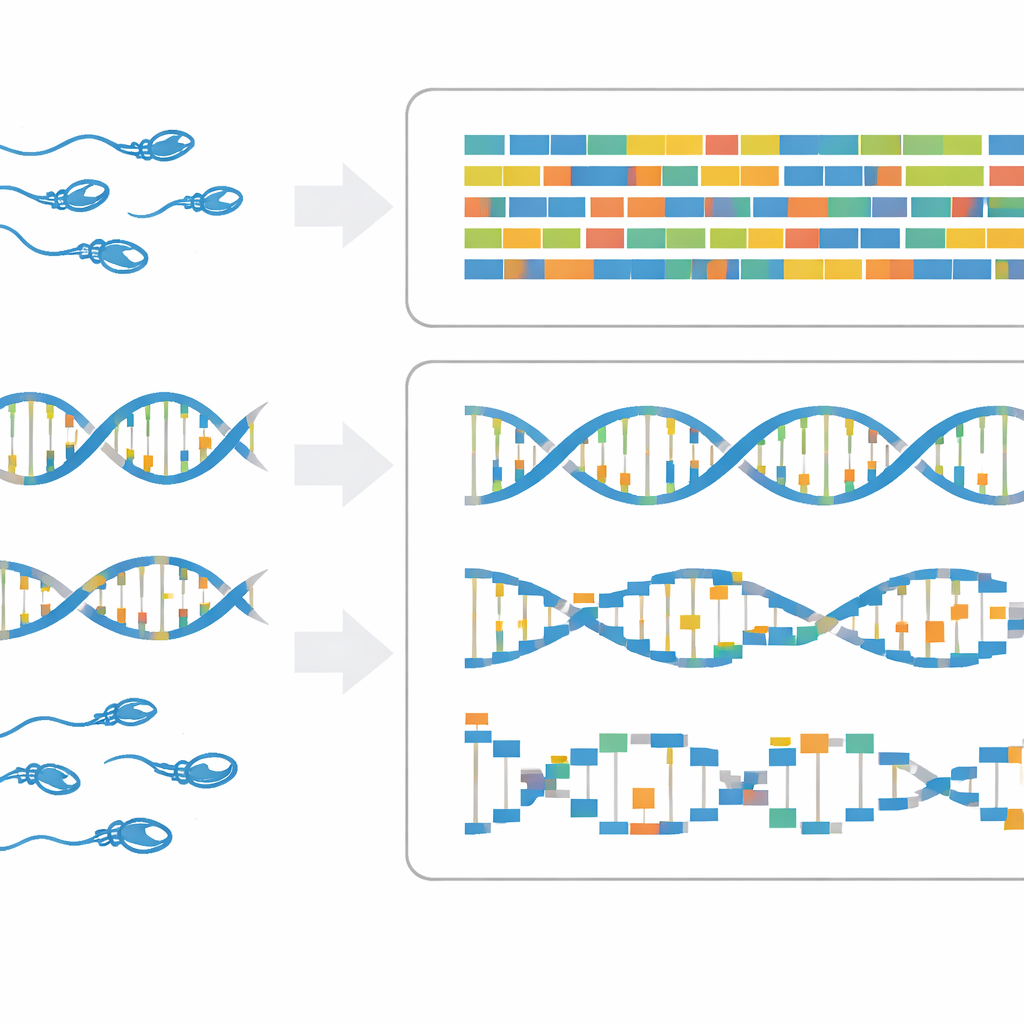
What this means for future fertility testing
Overall, the study suggests that poor‑quality sperm may be linked to subtle signs of genomic instability—especially structural and splice‑related disruptions—rather than to obvious, inherited gene defects that appear only in bad sperm. Because all sperm from a man share essentially the same inherited DNA, the most important damage may arise later, as sperm develop and are exposed to oxidative stress and other insults. While the findings are preliminary and based on a very small sample, they show that sequencing DNA from carefully selected sperm pools can highlight promising genetic markers and pathways for further study. In the long run, such insights could complement standard semen analysis, helping doctors better understand unexplained male subfertility and, eventually, refine how they counsel and treat couples seeking to conceive.
Citation: Al Smadi, M.A., Shah, A.A., Khan, M.R. et al. Genetic alterations in poor-quality individually selected sperm highlight candidate biomarkers for male subfertility. Sci Rep 16, 13643 (2026). https://doi.org/10.1038/s41598-026-50620-0
Keywords: male subfertility, sperm DNA, genomic instability, whole-genome sequencing, infertility biomarkers