Clear Sky Science · en
A Box–Behnken design–assisted RP-HPLC method development and optimization for simultaneous determination of four antiviral drugs in pharmaceutical dosage forms
Why checking medicines matters
When new diseases appear, doctors often turn to existing antiviral medicines instead of waiting years for brand new drugs. But before these repurposed medicines reach patients, laboratories must verify that every tablet and vial actually contains the right amount of each drug. This article describes how scientists created a fast, reliable, and more sustainable laboratory test to measure four important antivirals used around COVID-19, all in a single run.
Four virus fighters in one test
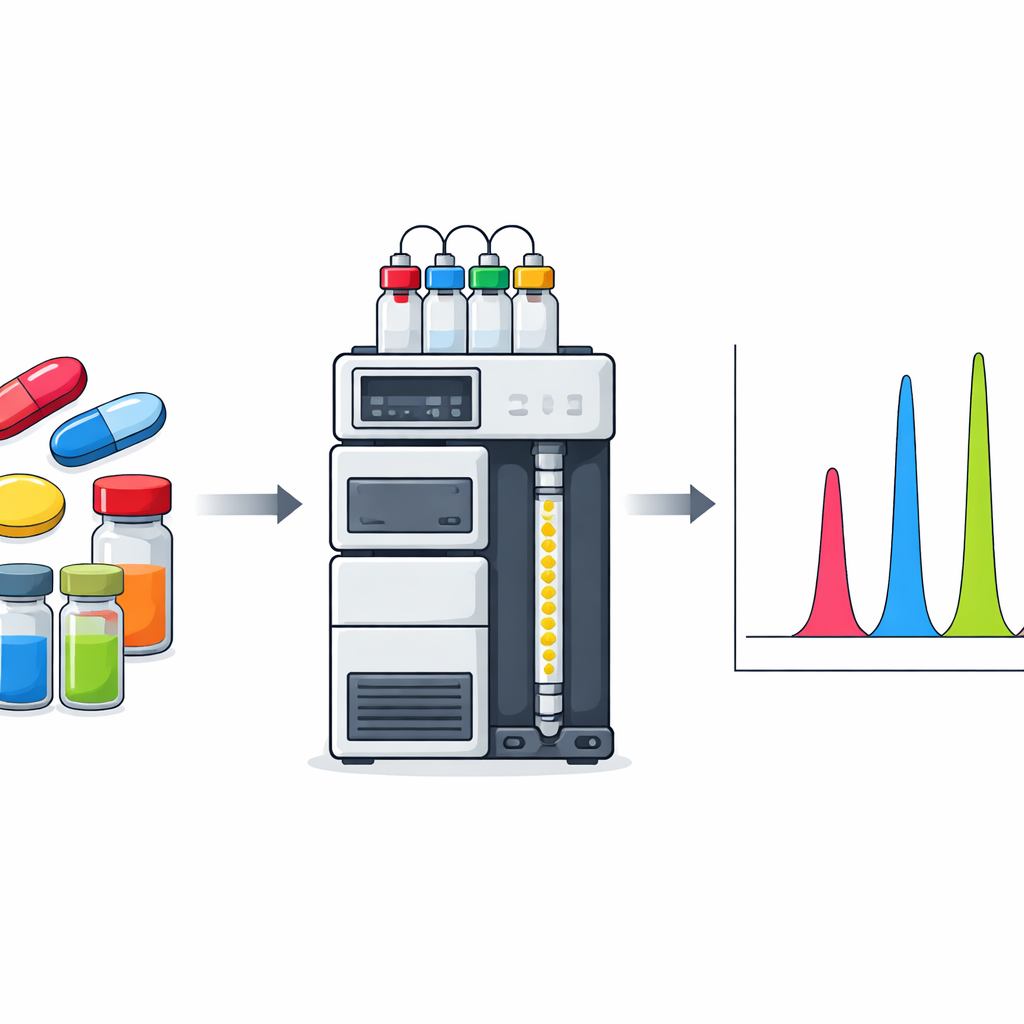
The study centers on four antiviral drugs: favipiravir, sofosbuvir, ledipasvir, and remdesivir. Each of these medicines attacks viruses that rely on RNA, the genetic material also used by the coronavirus that causes COVID-19. Because they are already approved for other infections, such as hepatitis C and influenza, these drugs became strong candidates for repurposing during the pandemic. Quality control labs, however, typically test each drug separately, which costs time, solvents, and manpower. The researchers set out to design one laboratory method that could accurately measure all four at once in real pharmaceutical products.
How the laboratory scan works
The team used a widely employed separation technique called high-performance liquid chromatography, or HPLC, which can be thought of as a sophisticated filter on a column. A liquid carrying the dissolved drugs flows through a packed tube, and each chemical moves at its own speed depending on how strongly it clings to the packing and the flowing liquid. A detector then records when each drug leaves the column as a separate peak in a graph. The scientists chose a standard type of column and a simple liquid mixture made of water-based buffer and acetonitrile, a common organic solvent, to keep the method practical for routine hospital and factory labs.
Smart tuning of conditions
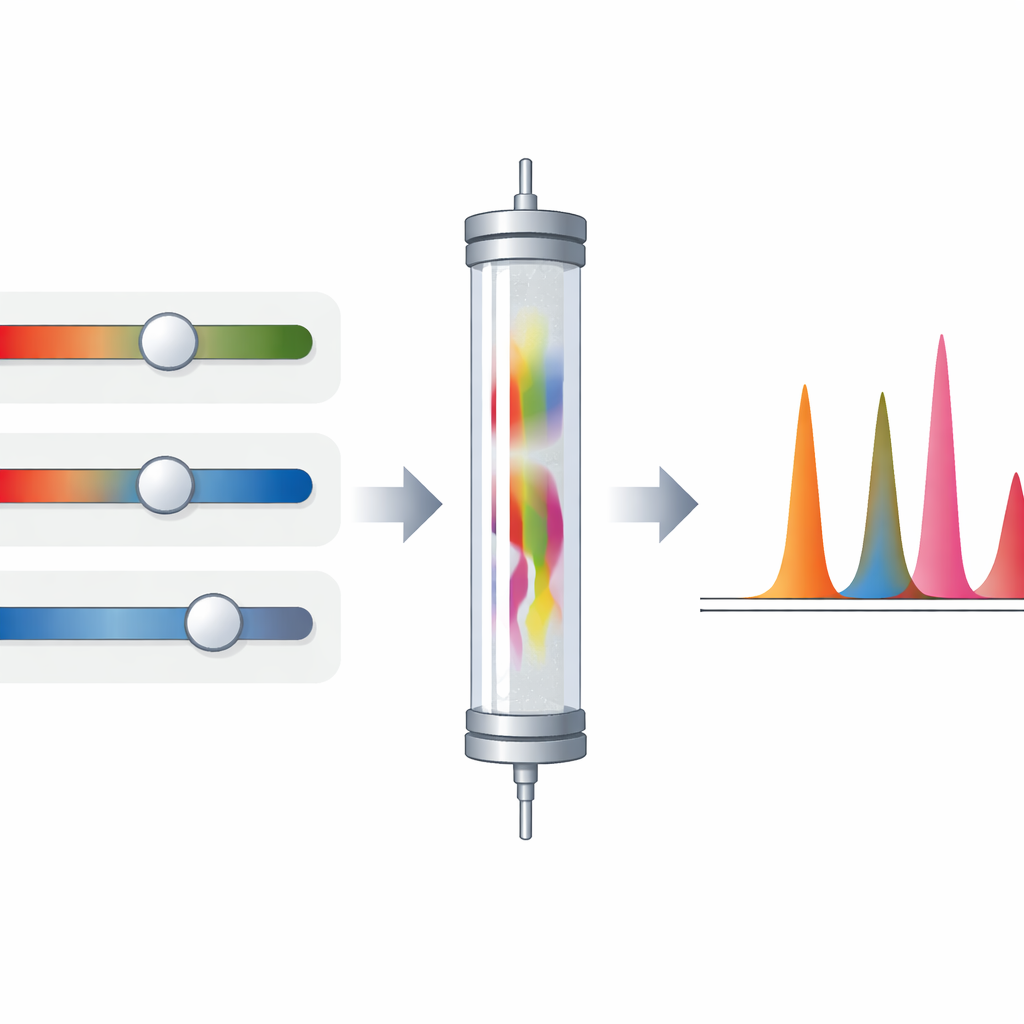
Rather than adjusting one setting at a time by trial and error, the researchers used a statistical planning tool known as Box–Behnken design, part of a broader “quality by design” philosophy. They focused on three key knobs that control how well the drugs separate and how long the run takes: the acidity of the buffer, the proportion of acetonitrile, and the flow speed of the liquid. By performing only fifteen carefully chosen experiments, they built mathematical equations that describe how these knobs influence the sharpness of separation between each drug pair and the total analysis time. Computer plots of these equations helped them pinpoint conditions that keep all four peaks clearly apart while keeping the run reasonably short.
Proving trustworthiness and safety
After selecting the best settings, the team thoroughly checked that the method performs as needed in real life. They showed that the detector signal rises in a straight line as the drug concentration increases over useful ranges, that the measured values stay very close to the true ones, and that repeated runs give nearly identical results. The method could pick up low levels of the drugs and distinguish them from other ingredients in commercial tablets and injectable formulations. Beyond performance, the authors also examined how environmentally and practically friendly the procedure is using several modern scoring tools that rate “greenness,” practical applicability, and overall quality; the scores indicated a good balance between accuracy, resource use, and everyday usability.
What this means for public health
In essence, the article shows that a single, well tuned HPLC set-up can reliably measure four key antiviral drugs in pharmaceutical products at the same time. For quality control labs, this means fewer separate tests, less solvent consumption, and quicker checks on medicine batches. In the wider context of pandemic preparedness, such streamlined methods make it easier to monitor supplies of repurposed antivirals and to guard against substandard or counterfeit products, supporting safer and more efficient treatment options when fast action is needed.
Citation: Ghazy, F.H., El-Bagary, R.I., Fahim, S.H. et al. A Box–Behnken design–assisted RP-HPLC method development and optimization for simultaneous determination of four antiviral drugs in pharmaceutical dosage forms. Sci Rep 16, 14733 (2026). https://doi.org/10.1038/s41598-026-50549-4
Keywords: antiviral drugs, HPLC, drug quality control, COVID-19, method development