Clear Sky Science · en
Prevalence and Risk Factors for Cytomegalovirus Retinitis Among People Living with HIV in Sub-Saharan Africa in the Antiretroviral Therapy Era: A Systematic Review and Meta-Analysis
Why this hidden eye infection matters
Cytomegalovirus retinitis is a serious eye infection that can quietly steal the sight of people living with HIV until it is too late. This study asks a pressing question for sub-Saharan Africa, where HIV is common but eye services are scarce: how often does this infection actually occur today, in the age of modern HIV treatment, and who is most at risk? By pulling together data from several countries, the authors show that this disease is less common than once feared but still affects thousands, and many cases could be prevented with simple eye checks and timely HIV care.
Looking across many countries
To get a clear picture, the researchers carried out a systematic review and meta-analysis, which means they carefully searched, screened, and combined results from previous studies rather than running a new clinic survey themselves. They looked for research from 2000 to 2025 that examined the eyes of people living with HIV in sub-Saharan Africa to confirm or rule out cytomegalovirus retinitis. Ten suitable studies from nine countries were found, together including 1,931 people whose eyes were examined by trained eye doctors. These studies came from West, East, Central, and Southern Africa and mostly involved adults with advanced HIV infection. 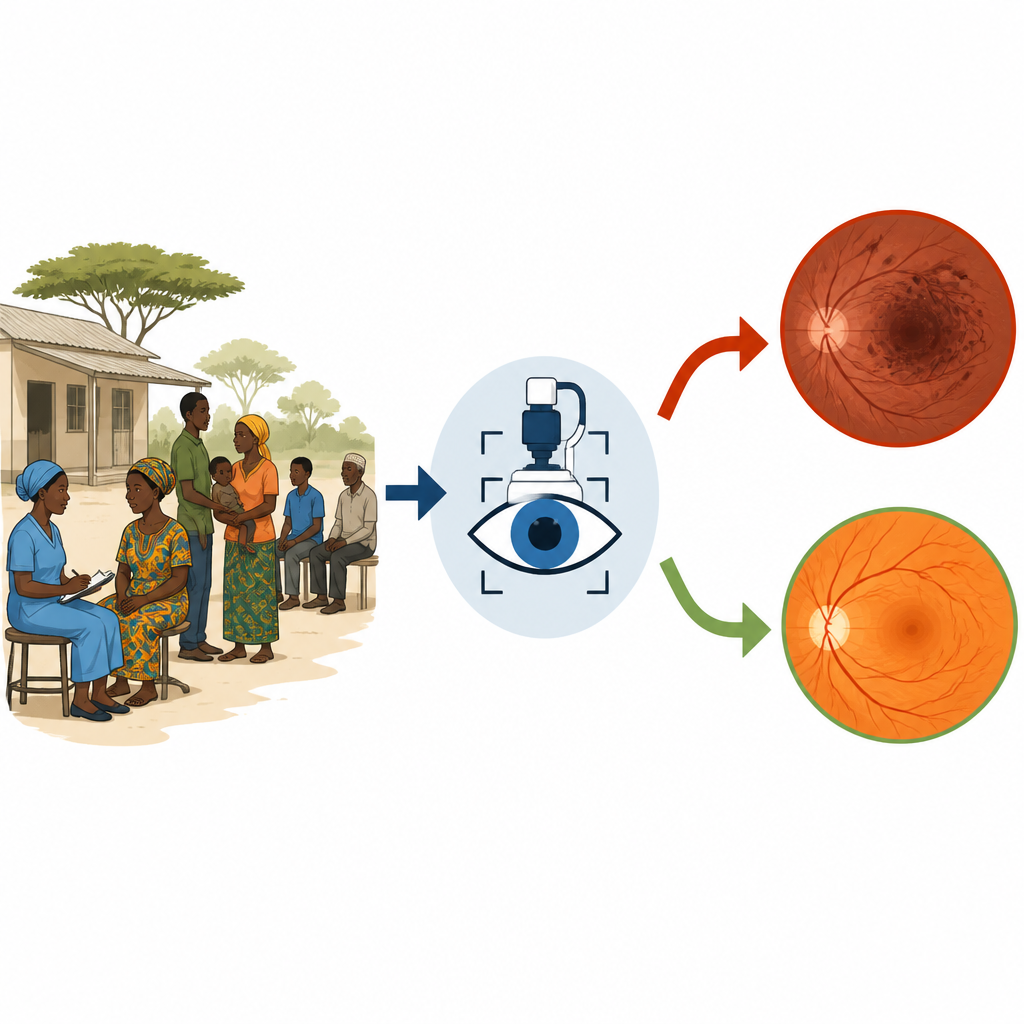
How common is the problem
Across all studies, 99 people were found to have cytomegalovirus retinitis. When the data were pooled, about 3 in every 100 people living with HIV who were examined had this eye disease. The proportion in individual studies ranged from well under 1 percent in some West African clinics to more than 10 percent in certain East African and Central African settings. Statistical checks suggested that the differences between studies were modest and largely due to chance and local sampling rather than wild swings in true risk. Importantly, this overall rate is lower than what has been seen in many Asian hospitals in the early years of HIV treatment, where the infection was often reported in 10 to 20 percent of patients with very advanced disease.
Who faces the greatest danger
The clearest message from all the studies was that cytomegalovirus retinitis almost always strikes people whose immune systems are extremely weak. In practical terms, this means individuals with very low CD4 cell counts, especially below 50 cells per microliter of blood. People who had not yet started antiretroviral therapy, who had stopped taking it, or whose treatment was failing were much more likely to develop the infection. Many affected patients also had other severe illnesses such as tuberculosis, reflecting late presentation for HIV care. Strikingly, most people with cytomegalovirus retinitis had few or no eye symptoms when first examined, and some still saw quite well despite dangerous damage at the back of the eye. 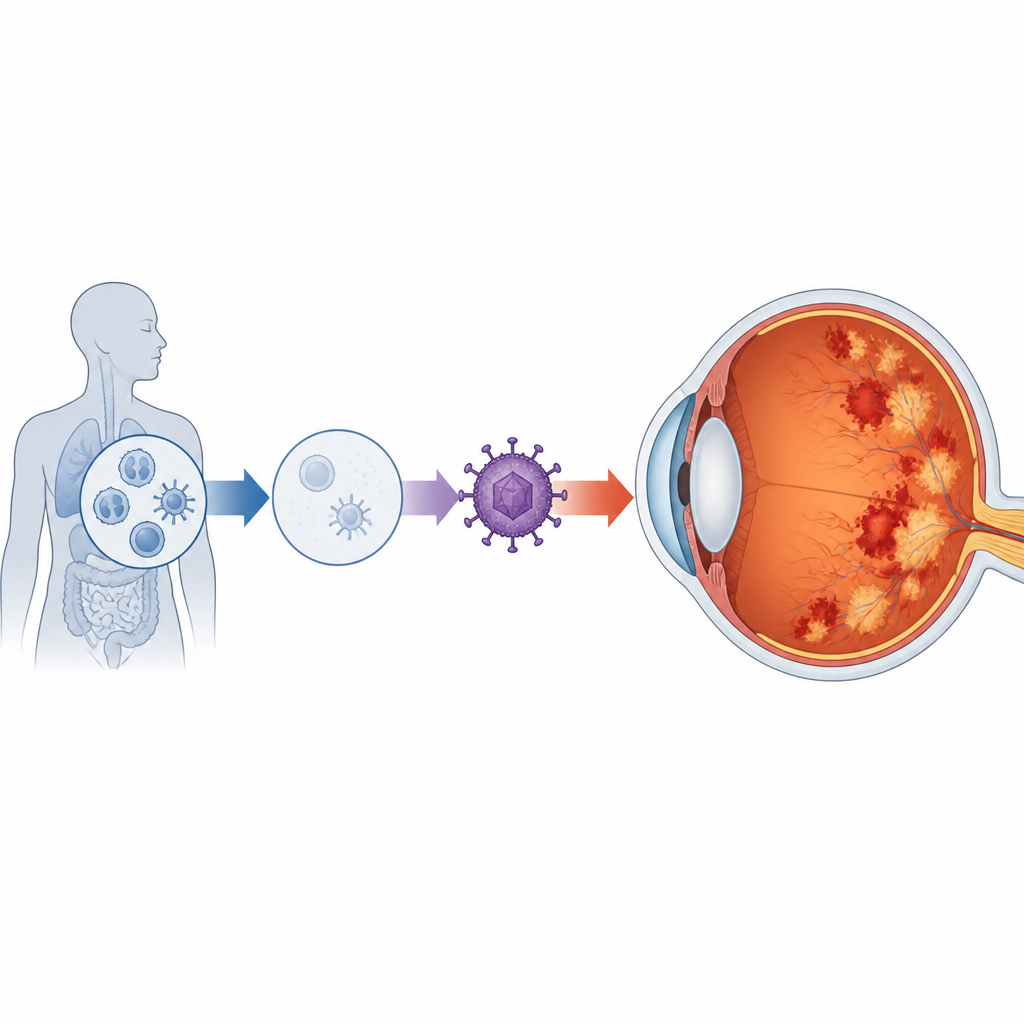
What this means for HIV care
Because symptoms often appear late, the authors argue that waiting for people to report vision problems will miss many chances to save sight. Instead, they suggest that HIV programs in sub-Saharan Africa should build simple retinal screening into the care of patients with very low CD4 counts, regardless of whether they notice changes in their vision. Eye checks can be done with a dilated fundus examination by an eye specialist or by trained HIV staff using basic tools. Alongside this, early HIV diagnosis, rapid start of antiretroviral therapy, and strong support for long term adherence remain the most powerful ways to prevent the severe immune damage that allows cytomegalovirus retinitis to take hold.
Protecting sight before it is lost
In plain terms, this review shows that cytomegalovirus retinitis is not as widespread in sub-Saharan Africa as in some other regions, but it is far from rare and continues to blind people who could be helped. Roughly one in thirty people with advanced HIV may be living with this silent threat. By focusing on those with the weakest immune systems, offering routine eye screening, and ensuring access to effective HIV and anti viral medicines, health services can turn a hidden cause of blindness into a preventable one.
Citation: Ismail, M.F., Khalafalla, I., Sheck, Z.O. et al. Prevalence and Risk Factors for Cytomegalovirus Retinitis Among People Living with HIV in Sub-Saharan Africa in the Antiretroviral Therapy Era: A Systematic Review and Meta-Analysis. Sci Rep 16, 16560 (2026). https://doi.org/10.1038/s41598-026-48848-x
Keywords: cytomegalovirus retinitis, HIV and vision, sub-Saharan Africa, opportunistic infections, retinal screening