Clear Sky Science · en
Imidacloprid induces hepatorenal toxicity in male albino rats via oxidative, immune inflammatory, and proliferative effects: a 90-day study
Why this common bug killer matters to you
Imidacloprid is a widely used insect killer that helps farmers protect crops, but its spread in soil and water means people and animals can be exposed to low levels for long periods. This study asked a simple but important question: what happens inside the body when this pesticide is sipped every day at doses considered low, not just swallowed in a one time accident? By following male rats for three months, the researchers explored how imidacloprid affects the liver and kidneys, the two main organs that clean the blood, and tracked early warning signs of stress and damage that might not show up as obvious illness.
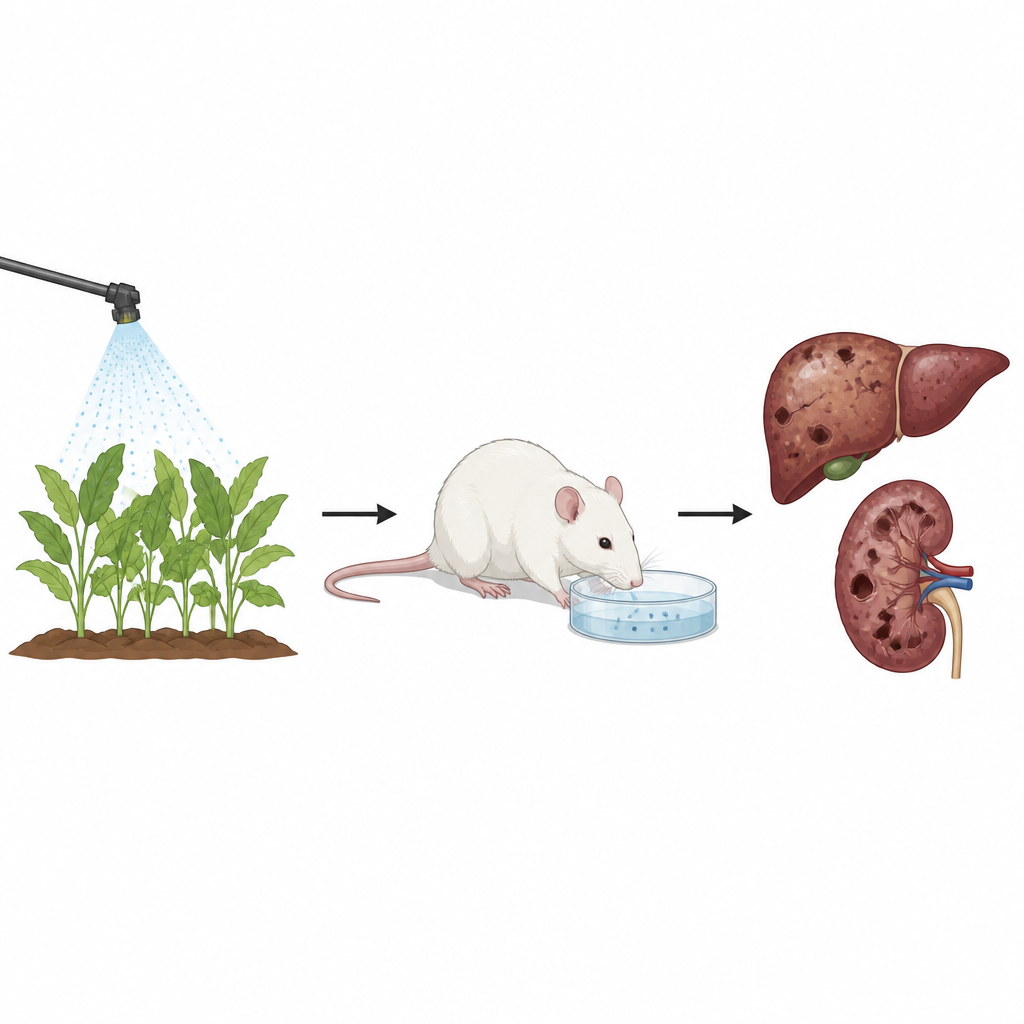
How the study was set up
To mimic ongoing exposure, the team gave groups of male rats drinking water containing different amounts of imidacloprid for 90 days, while a control group received plain water. The doses ranged from five times the human acceptable daily intake up to higher levels that still did not cause obvious poisoning or death. Throughout the study, the scientists checked the animals’ body weight, the size of the liver and kidneys, and blood measures that signal how well these organs are working. After the exposure period, they examined liver and kidney tissue under the microscope and measured chemical markers linked to cell damage, inflammation, and cell growth.
Hidden strain on liver and kidney function
Even without clear sickness, the rats exposed to imidacloprid showed several worrisome changes. Blood tests revealed that key liver enzymes, which leak into the bloodstream when liver cells are injured, rose in a dose dependent fashion at most tested levels. At the same time, kidney waste products such as urea and creatinine increased at the two higher doses, indicating strain on the kidneys’ filtering ability. Total blood protein tended to fall at higher doses, suggesting that normal liver functions like producing proteins were being disturbed. Although body weight and organ size changed only slightly, these lab markers showed that the liver and kidneys were working under stress long before catastrophic failure.
What tissue slices revealed
Microscopic inspection of liver slices from treated rats showed a steady progression from mild to marked disruption as doses rose. The researchers saw swollen and fatty liver cells, areas of cell death, clogged and thickened blood vessels, and clusters of immune cells, all signs that the tissue was reacting to injury. Kidney tissue also showed damage, including shrunken or enlarged filtering units, widened spaces in the tissue, fluid buildup, and tubules filled with protein rich casts. These structural changes matched the blood test results, reinforcing the idea that imidacloprid, even at low doses over time, can harm both organs’ fine architecture.
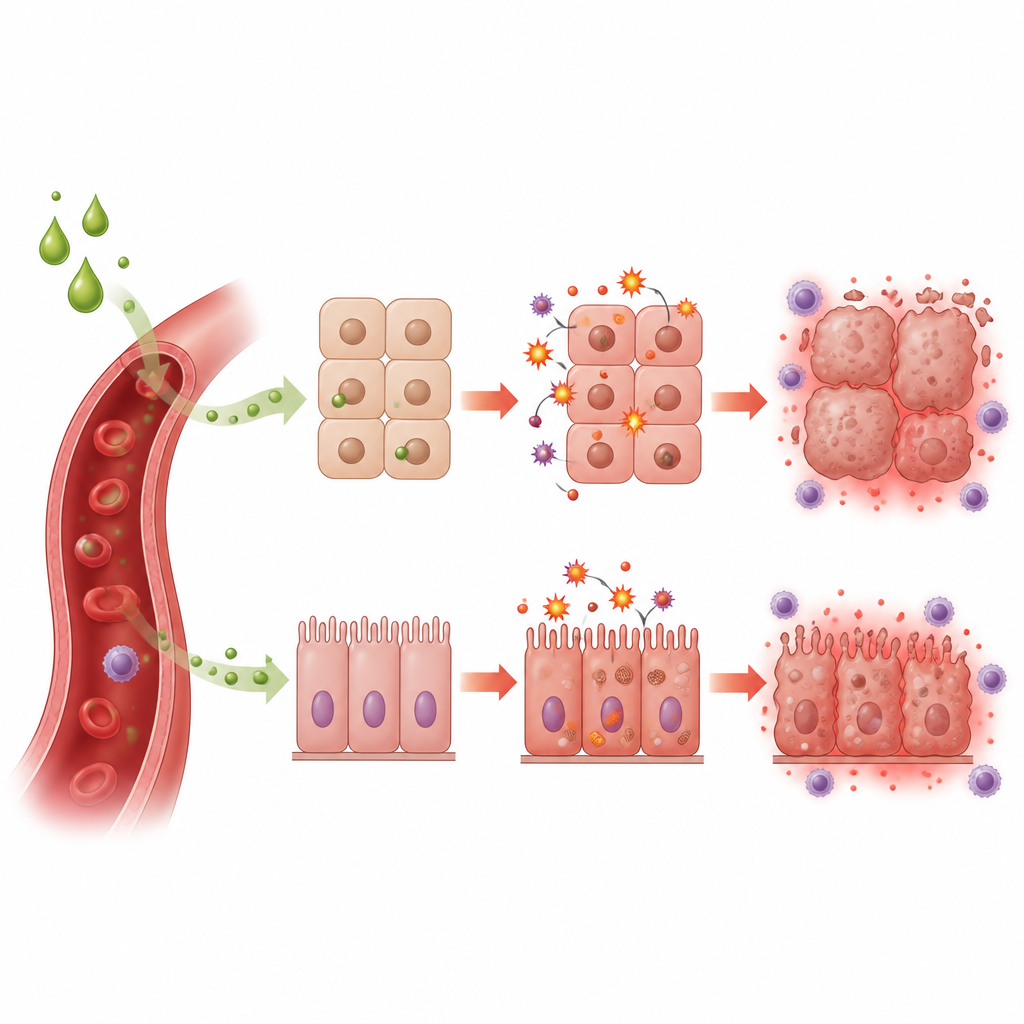
Signals of chemical stress and inflammation
To understand what was driving this damage, the team measured molecules linked to oxidative stress, a state where reactive byproducts outpace the body’s defenses, and inflammatory messengers that recruit immune cells. Levels of malondialdehyde, a marker of fat damage by reactive molecules, rose in the liver at all doses and in the kidney at selected doses. Antioxidant helpers such as glutathione related enzymes often fell, especially in kidney tissue, suggesting weakened defenses. At the same time, key inflammatory proteins, including IL 6, TNF alpha, and the NLRP3 inflammasome component, increased in both liver and kidney, particularly at higher doses. Markers of cell proliferation like PCNA rose, hinting that tissues were trying to replace damaged cells, while another marker, Ki 67, showed more complex, sometimes reduced patterns of cell division.
What it means for real world exposure
Taken together, the findings show that repeated low level intake of imidacloprid can quietly disturb liver and kidney health by sparking oxidative stress, fueling inflammation, and altering how cells grow and repair. These effects appeared even at doses chosen to reflect levels considered safe based on current intake guidelines, and became clearer at higher concentrations. While this work was done in male rats and cannot be directly translated to humans, it raises important questions about long term exposure to this common pesticide and supports calls to better monitor its presence in water and food, refine safety limits, and explore safer pest control options.
Citation: Khwanes, S.A., Mohamed, R.A., Abd El-Rahman, H.A. et al. Imidacloprid induces hepatorenal toxicity in male albino rats via oxidative, immune inflammatory, and proliferative effects: a 90-day study. Sci Rep 16, 15496 (2026). https://doi.org/10.1038/s41598-026-48767-x
Keywords: imidacloprid, pesticide toxicity, liver and kidney, oxidative stress, inflammation