Clear Sky Science · en
Glucagon-like peptide-1 (GLP-1) levels are associated with acute kidney injury after cardiac surgery
Why this matters for heart surgery patients
Every year, many people undergoing heart surgery develop sudden kidney problems in the days that follow. This complication, called acute kidney injury, can lengthen intensive care stays and raise the risk of serious illness or even death. Doctors would like to spot vulnerable patients before the kidneys actually fail, but today’s standard blood test—creatinine—only rises after damage is already underway. This study explores whether a naturally occurring gut hormone, GLP-1, might serve as an early warning signal of kidney stress in people scheduled for cardiac surgery.
A hormone that does more than control blood sugar
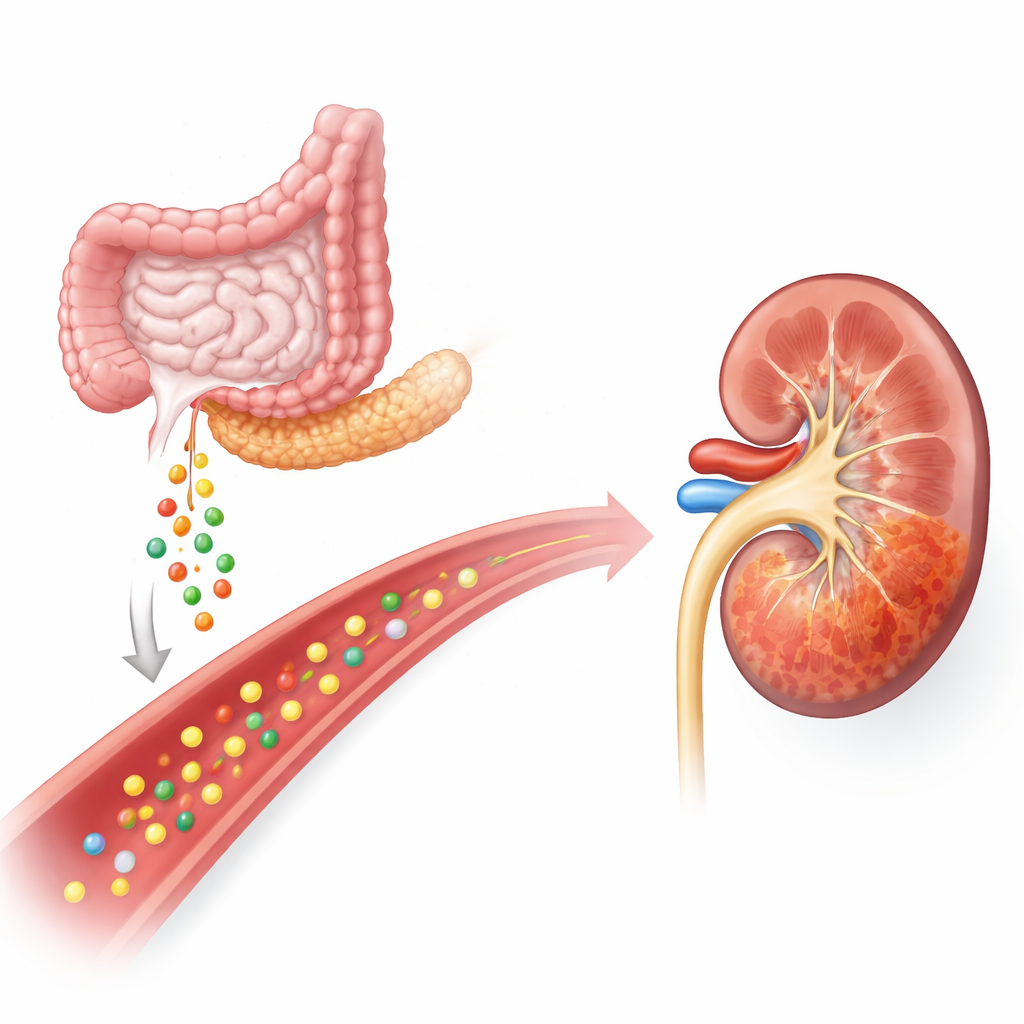
GLP-1 is best known from modern diabetes and weight-loss drugs that mimic its action. In the body, however, GLP-1 is an ordinary hormone released from the intestine after meals, helping the pancreas release insulin and fine-tuning blood sugar. Over the last decade, researchers have realized that GLP-1 does much more: it influences blood vessels, body weight, fluid balance, and kidney function. Large clinical trials of GLP-1-based drugs have shown not only better blood sugar control but also fewer heart problems and slower loss of kidney function in people with chronic disease. At the same time, small observational studies suggested that when the body is under severe stress—such as heart failure, critical illness, or widespread inflammation—levels of natural GLP-1 in the blood tend to rise, especially in people whose kidneys are not working well.
Following hormone levels around the time of surgery
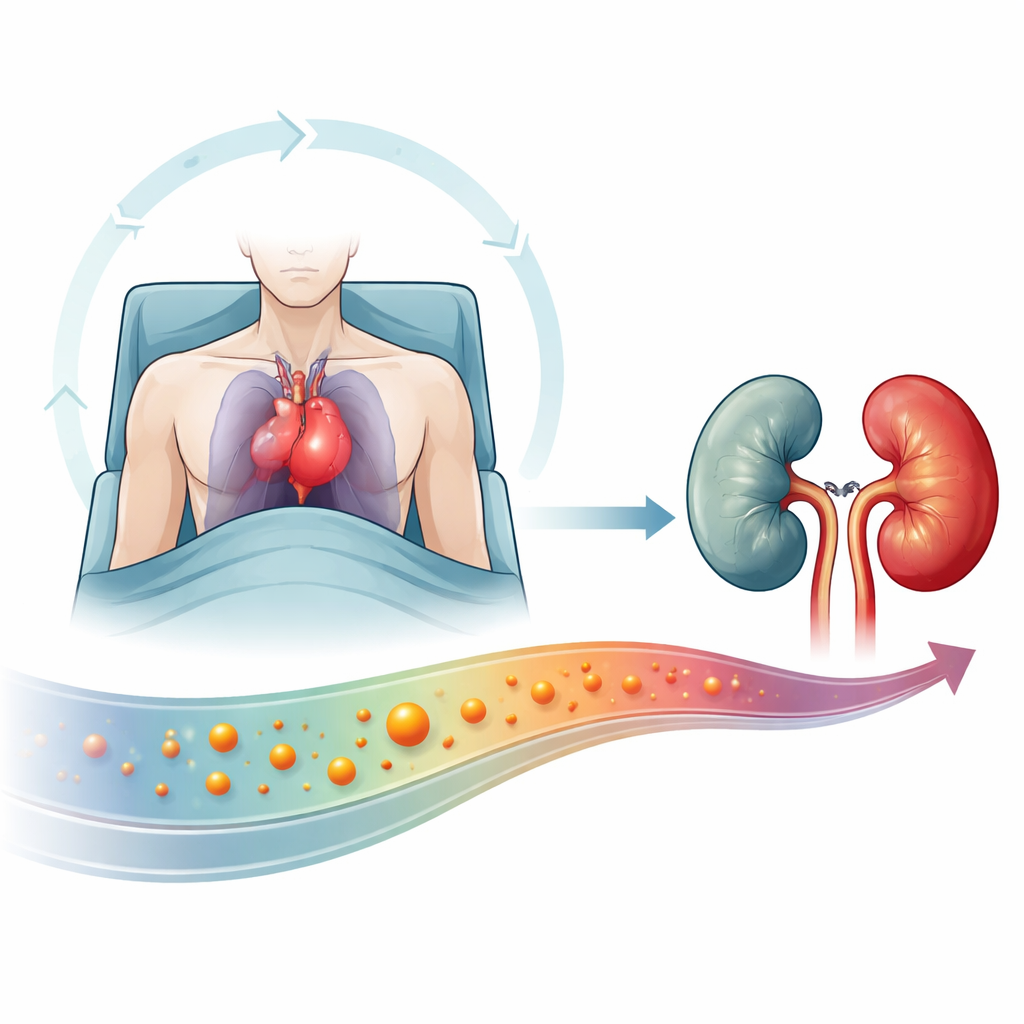
To see how GLP-1 behaves during and after heart surgery, the researchers followed 107 adults having planned procedures with a heart-lung machine. None were taking GLP-1-based medications. Blood samples were collected before surgery, right after the operation, and on the first and fourth days afterward. In these samples the team measured GLP-1, a related hormone called GIP, and creatinine. They then tracked who developed acute kidney injury over the first four days, using standard international criteria based on how much creatinine rose from each person’s baseline. Most patients had typical heart operations such as coronary bypass or aortic valve replacement and received standard intensive care afterwards.
Higher GLP-1 before surgery linked to later kidney problems
About one in five patients developed acute kidney injury, usually in its mildest form. These patients tended to stay longer in intensive care and showed more signs of overall organ strain. When the researchers compared hormone levels, they found a clear pattern: even before the operation, patients who went on to develop kidney injury had higher GLP-1 values than those whose kidneys remained stable, despite having similar creatinine levels. After surgery, GLP-1 dipped briefly, then rose again, with the largest difference between groups seen on the fourth postoperative day. In contrast, creatinine only began to separate between groups after injury had already occurred. GIP levels rose modestly in everyone but did not differ meaningfully between those with and without kidney injury.
Stronger signal in people with apparently healthy kidneys
The link between GLP-1 and later kidney injury was most noticeable in patients who did not already have chronic kidney disease. In this majority group, pre-surgery GLP-1 levels were better at distinguishing who would go on to develop acute kidney injury than creatinine, although the accuracy was only moderate. Statistical models that accounted for age, body weight, basic kidney function, inflammation, and surgical complexity still found that patients with higher GLP-1 before surgery were several times more likely to develop kidney injury afterward. Among the small group with long-standing kidney disease, GLP-1 was already elevated in nearly everyone and changed little over time, making it less useful as a warning sign.
What this could mean for future care
The study does not prove that GLP-1 itself harms or protects the kidneys. Instead, the authors suggest that rising GLP-1 may be a kind of stress signal, reflecting a mix of inflammation, changes in gut blood flow, and reduced hormone clearance by the kidneys. Because GLP-1 levels tend to shift earlier than creatinine, they may reveal hidden kidney vulnerability in patients whose routine blood tests look normal, especially before surgery. However, the research was done at a single center in a relatively small number of patients, and the predictive power of GLP-1 alone was modest. Larger studies will be needed to confirm how well GLP-1 can help flag at-risk individuals and whether it adds value when combined with other emerging kidney biomarkers. For now, GLP-1 appears to be a promising early indicator of kidney stress rather than a ready-made diagnostic tool.
Citation: Szafran, A., Kurt, B., Pracht, J. et al. Glucagon-like peptide-1 (GLP-1) levels are associated with acute kidney injury after cardiac surgery. Sci Rep 16, 13408 (2026). https://doi.org/10.1038/s41598-026-48483-6
Keywords: acute kidney injury, cardiac surgery, GLP-1 hormone, kidney biomarkers, perioperative risk