Clear Sky Science · en
A novel OPHN1 variant associated with cyclic strabismus but in the absence of OPHN1 syndrome
Why Some Children’s Eyes Drift On and Off
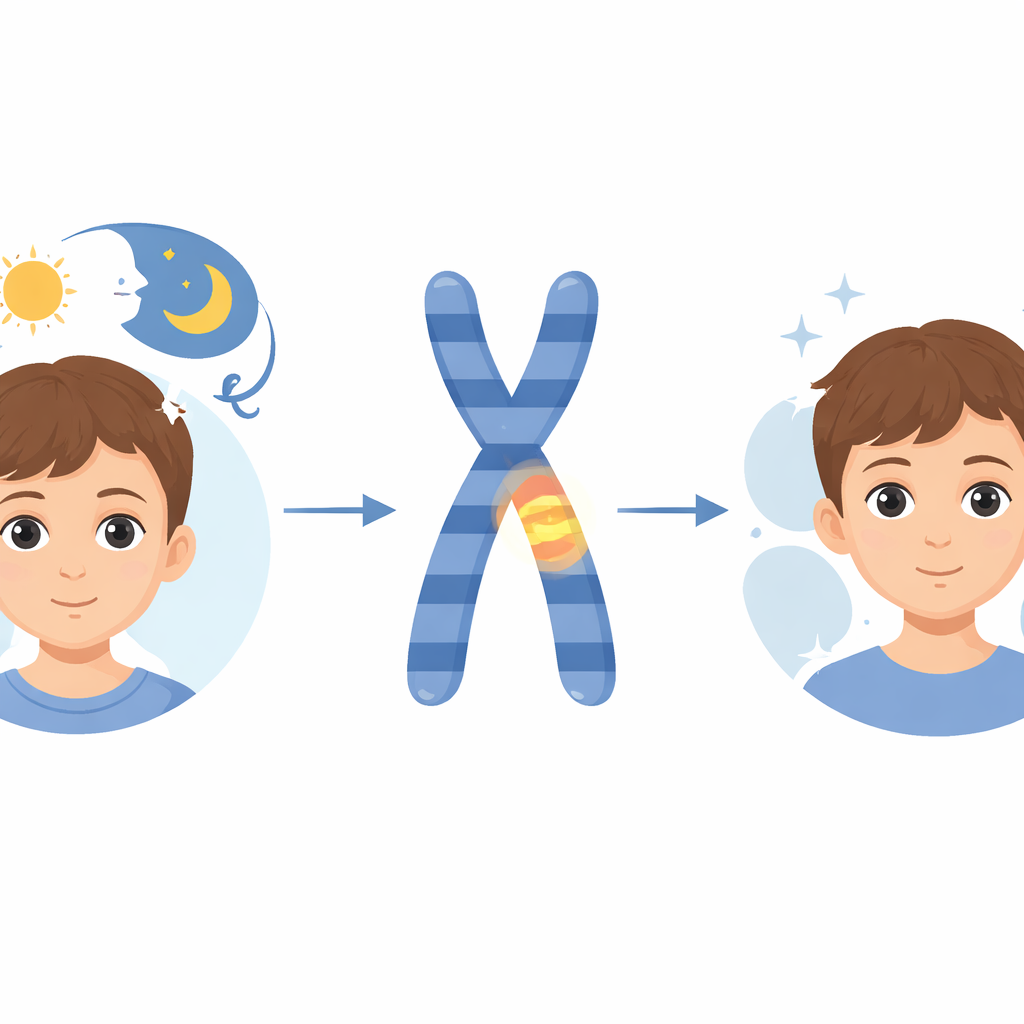
Cyclic strabismus is a puzzling eye condition in which a child’s eyes alternate between straight and crossed on a strict daily schedule. One day, or even one half of a day, the child may see normally; the next, double vision returns. This paper describes a boy with this rare pattern and uncovers a previously unknown change in a single gene that may explain why his eye misalignment followed the body’s internal clock without affecting his intelligence or overall development.
A Rare On‑Again, Off‑Again Eye Problem
Strabismus, or eye misalignment, affects a few percent of people and can blur vision and depth perception. Cyclic strabismus is far rarer: affected children switch between periods of crossed eyes and perfectly straight eyes in a predictable 24–48 hour rhythm. In the case described here, an eight‑year‑old boy suddenly developed inward turning of one eye and double vision. Over time, his eye position settled into a precise half‑day cycle—crossed in the morning, straight in the afternoon—while brain scans and general health checks remained normal. Eventually the cycling began to break down, and standard eye‑muscle surgery permanently straightened his eyes and stopped the alternation.
Looking for the Cause in the DNA
Because strabismus can run in families, the researchers searched the boy’s DNA, and his parents’, using whole‑exome sequencing, which scans the protein‑coding portions of the genome. They found a single suspicious change in a gene on the X chromosome called OPHN1. This gene normally helps control how nerve cells shape their connections and is already known for causing a syndrome that includes intellectual disability and, often, constant strabismus. In this boy, however, the genetic change sat not in the gene regions previously tied to that syndrome, but in another portion called the PH domain. He had only the eye movement problem, while his development and thinking were normal.
A Tiny Change With a Bigger Grip on Cell Membranes
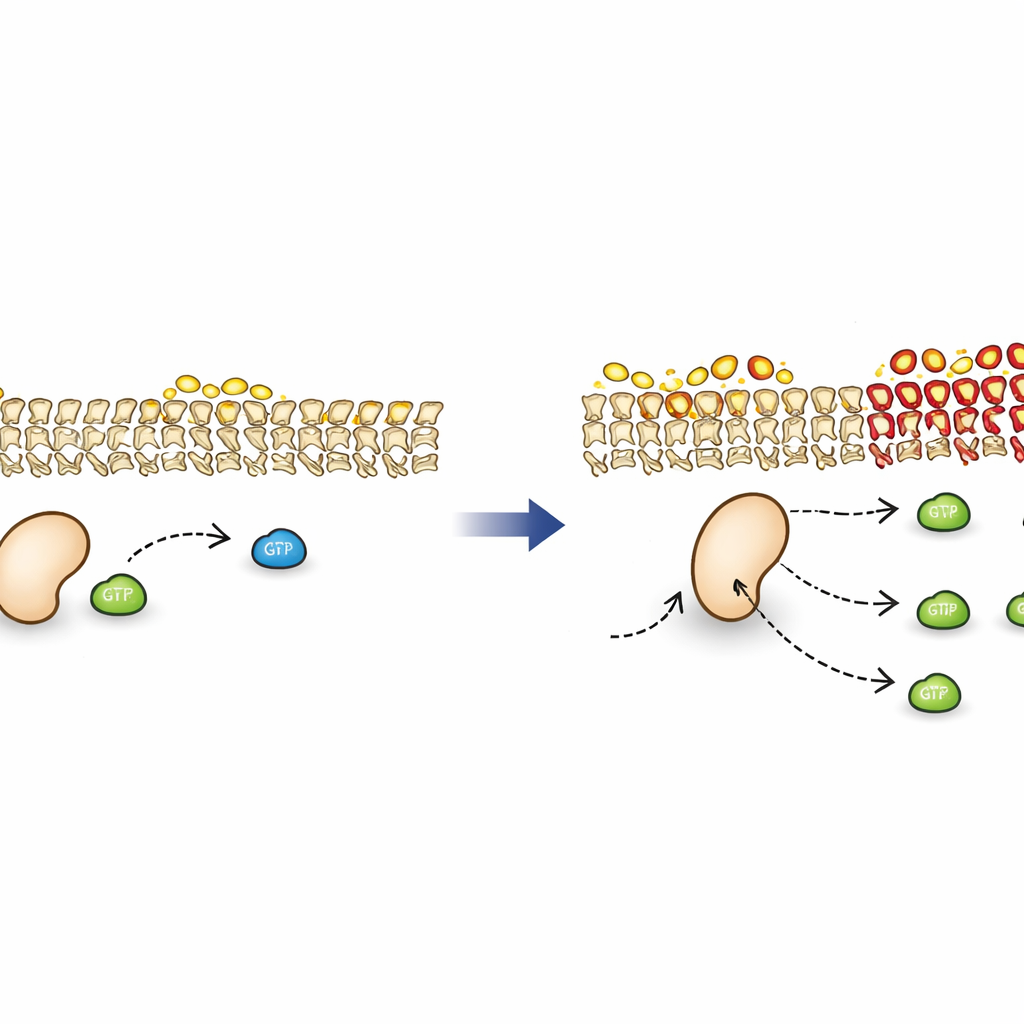
To see what this one‑letter DNA change actually did, the team produced the normal and altered OPHN1 proteins in cells and tested how they behaved. Using computer‑based 3D structure prediction and laboratory binding assays, they showed that swapping one amino acid (lysine) for another (asparagine) in the PH domain made the protein stick more strongly to specific fatty molecules, called PI4P and PI5P, in cell membranes. Unlike many disease‑causing mutations, which weaken or destroy protein function, this one appeared to be a gain‑of‑function change: the altered protein clung more tightly to certain lipids than the normal version did, without obvious loss of its basic activity.
Connecting Brain Lipids to the Body Clock
The authors then asked how stronger binding to these membrane lipids could cause eye misalignment that follows a daily rhythm. Other studies have shown that levels of many brain lipids rise and fall over the 24‑hour day under control of circadian clock genes. The researchers propose that PI4P and PI5P likely fluctuate in a similar way. In their model, when these lipids are at baseline, the altered OPHN1 protein sits where it should in nerve cells that coordinate eye movements, keeping signaling balanced and the eyes straight. When lipid levels peak, however, the variant protein is pulled toward the areas rich in PI4P and PI5P. This shift in location temporarily disrupts the fine‑tuned signaling that keeps the eyes aligned, leading to brief periods of strabismus that match the daily cycle.
What This Means for Children With Shifting Eyes
This study introduces the first known OPHN1 variant that appears to cause cyclic strabismus without the broader OPHN1 syndrome. It suggests that, in some children, a small change in how a nerve‑cell protein interacts with daily swings in cell lipids can produce a striking on‑again, off‑again eye problem, while leaving thinking and development intact. Although more cases and experiments are needed to prove the hypothesis, the work points to the body’s internal clock and brain lipid chemistry as key players in at least some forms of strabismus, and it hints that careful genetic testing may one day help explain why a child’s eyes drift only at certain hours of the day.
Citation: Nishina, S., Kofuji, S., Matsubara, K. et al. A novel OPHN1 variant associated with cyclic strabismus but in the absence of OPHN1 syndrome. Sci Rep 16, 12200 (2026). https://doi.org/10.1038/s41598-026-48129-7
Keywords: cyclic strabismus, eye alignment, OPHN1 gene, circadian rhythm, brain lipids