Clear Sky Science · en
Effectiveness of intracanal cryotherapy in reducing post-endodontic pain in irreversible pulpitis: a systematic review and meta-analysis
Why cooling a tooth matters
Anyone who has endured a throbbing toothache knows how disruptive dental pain can be, especially after a root canal. Dentists are always looking for ways to make treatment more comfortable without relying solely on pain pills. This study looks at a simple idea: rinsing the inside of the treated tooth with very cold fluid—called intracanal cryotherapy—to see whether it can safely ease pain in the critical hours after a root canal for badly inflamed teeth.
The problem of the angry tooth nerve
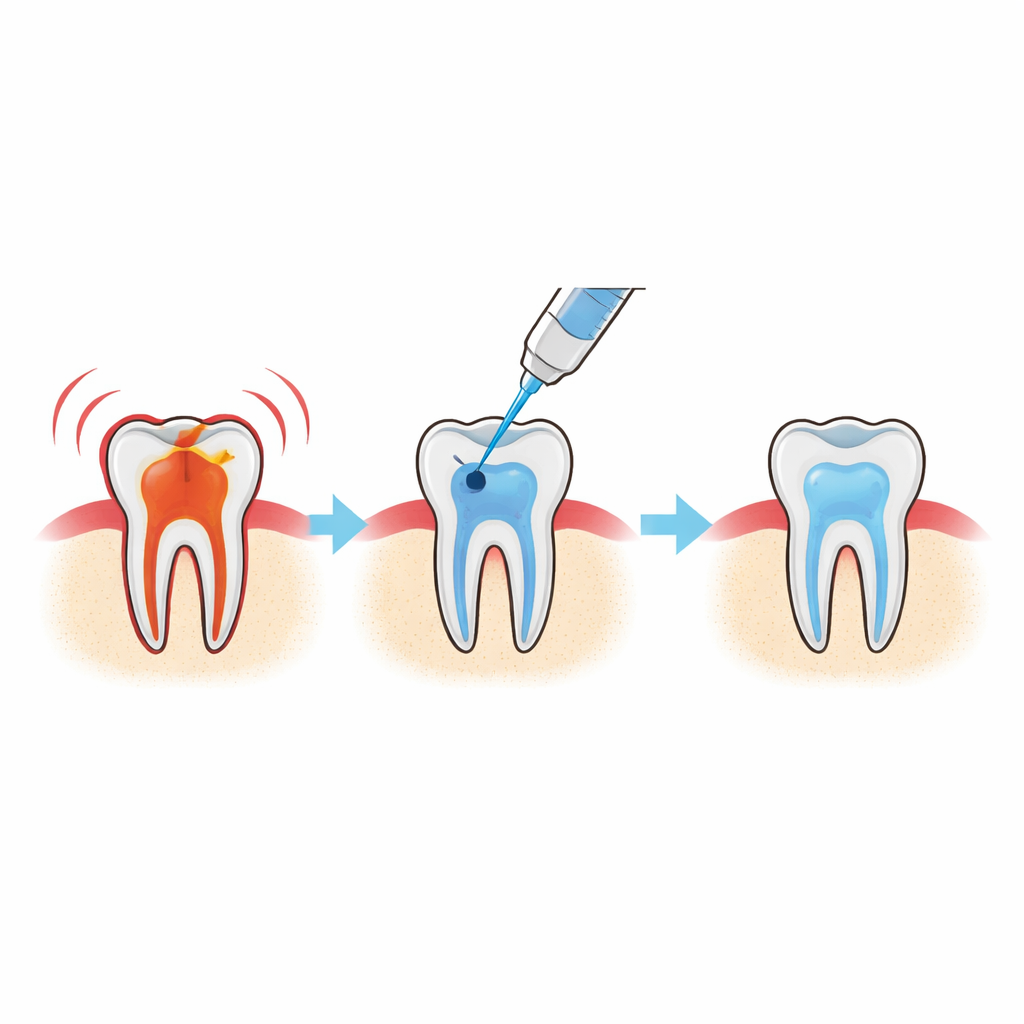
Irreversible pulpitis is a condition where the soft tissue inside a tooth becomes so inflamed that it cannot heal, often causing strong, lingering pain. Even when a root canal removes the diseased tissue, the surrounding area can stay irritated for a while, leading to soreness after treatment. This discomfort is driven by a mix of ongoing inflammation, irritated tissues around the root, and nerve activity triggered by the cleaning instruments and chemical solutions used during the procedure.
A cold rinse as a simple helper
Intracanal cryotherapy takes a familiar medical idea—using cold to calm pain—and applies it inside the tooth. At the end of a root canal, the canal is flushed with chilled saline or another cold liquid, usually around 2–4 °C, for a few minutes. This study gathered and analyzed results from 11 randomized clinical trials involving adults who underwent root canal treatment, many with painful irreversible pulpitis. The researchers compared teeth that received this cold final rinse with teeth treated using standard room-temperature solutions, tracking pain levels for up to a week.
What the studies found about early pain
Across the trials, most patients who received the cold rinse reported less pain in the first hours after treatment, especially within the first 6 to 12 hours. When the researchers combined the data from the better-designed trials, cryotherapy showed a clear, although moderate, reduction in early pain compared with standard care. In some studies, the cold rinse performed as well as or even better than common painkillers such as ibuprofen in the early period, and sometimes reduced the need for extra medication. However, not every trial showed a strong effect, likely because they used different liquids, temperatures, volumes, and application times.
Why cold may calm the tooth
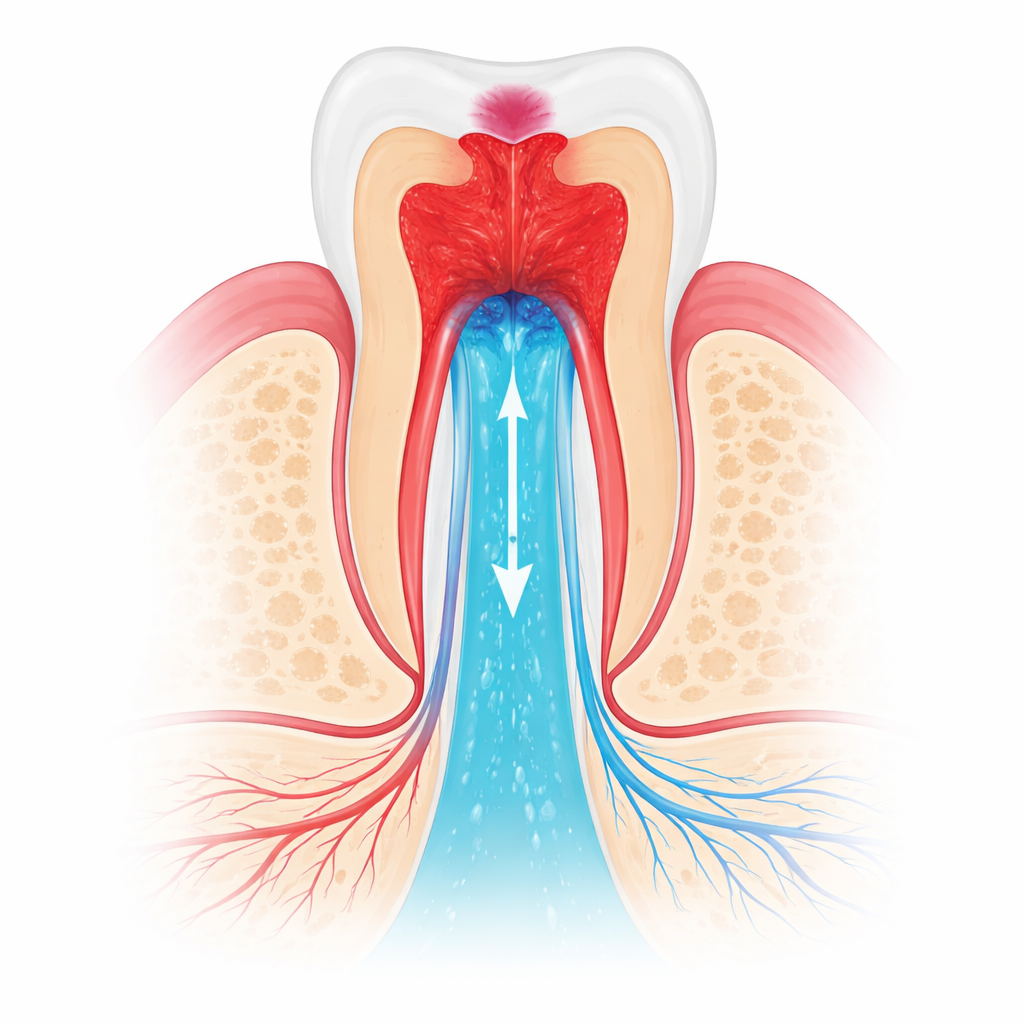
Cold affects tissues in several ways that make pain less likely. It narrows tiny blood vessels around the root, which can reduce leakage of fluid into the surrounding tissues and limit swelling. Cooling also slows the speed at which pain signals travel along nerve fibers, and can temporarily quiet some of the nerve endings that sense injury. At the same time, lowering tissue temperature reduces the local demand for oxygen and slows chemical reactions that drive inflammation. Together, these changes can make the area around the tooth less reactive and less painful soon after the procedure, without interfering with the cleaning and germ-killing steps of the root canal.
How long the benefit really lasts
One of the key findings of this review is that the advantage of intracanal cryotherapy is short-lived. By 24 hours after treatment, and certainly by 48 to 72 hours and beyond, pain levels in patients who received cold irrigation looked very similar to those in patients who had standard room-temperature rinses. By one week, pain was minimal in almost all groups, regardless of whether a cold rinse was used. This suggests that cryotherapy offers a window of extra comfort mainly in the first postoperative day, rather than a long-term difference in recovery.
What this means for patients and dentists
For patients facing a root canal on a very painful tooth, this study suggests that a simple cold rinse at the end of treatment can safely offer some extra relief in the crucial first 6 to 12 hours. The method is inexpensive, quick, and does not appear to reduce the effectiveness of the cleaning or disinfection. At the same time, the authors caution that existing studies are small and use varying protocols, so the strength of the evidence is still limited. Larger, well-designed trials are needed to pin down the ideal temperature, volume, and timing, and to see whether any longer-term benefits exist. For now, intracanal cryotherapy looks like a practical add-on that may make the immediate aftermath of a root canal a bit more comfortable, especially for teeth that hurt the most going in.
Citation: Mohamed, M., Abdelmajeed, A., Salah-Uddin Anwar Laithy, M. et al. Effectiveness of intracanal cryotherapy in reducing post-endodontic pain in irreversible pulpitis: a systematic review and meta-analysis. Sci Rep 16, 13386 (2026). https://doi.org/10.1038/s41598-026-47860-5
Keywords: root canal pain, dental cryotherapy, irreversible pulpitis, postoperative toothache, endodontic treatment