Clear Sky Science · en
Inhibition of CDK9 sensitizes multidrug resistant ovarian cancer cells to paclitaxel
Why this research matters for women’s health
Ovarian cancer is one of the deadliest cancers affecting women, largely because it is often discovered late and many tumors eventually stop responding to chemotherapy. This study explores a new way to make stubborn, drug‑resistant ovarian cancer cells vulnerable again to paclitaxel, a mainstay chemotherapy drug. By focusing on a cellular “switch” called CDK9 that helps cancer cells stay alive, the researchers suggest a strategy that could one day extend the effectiveness of current treatments and reduce relapse.
The problem of cancer cells that won’t listen
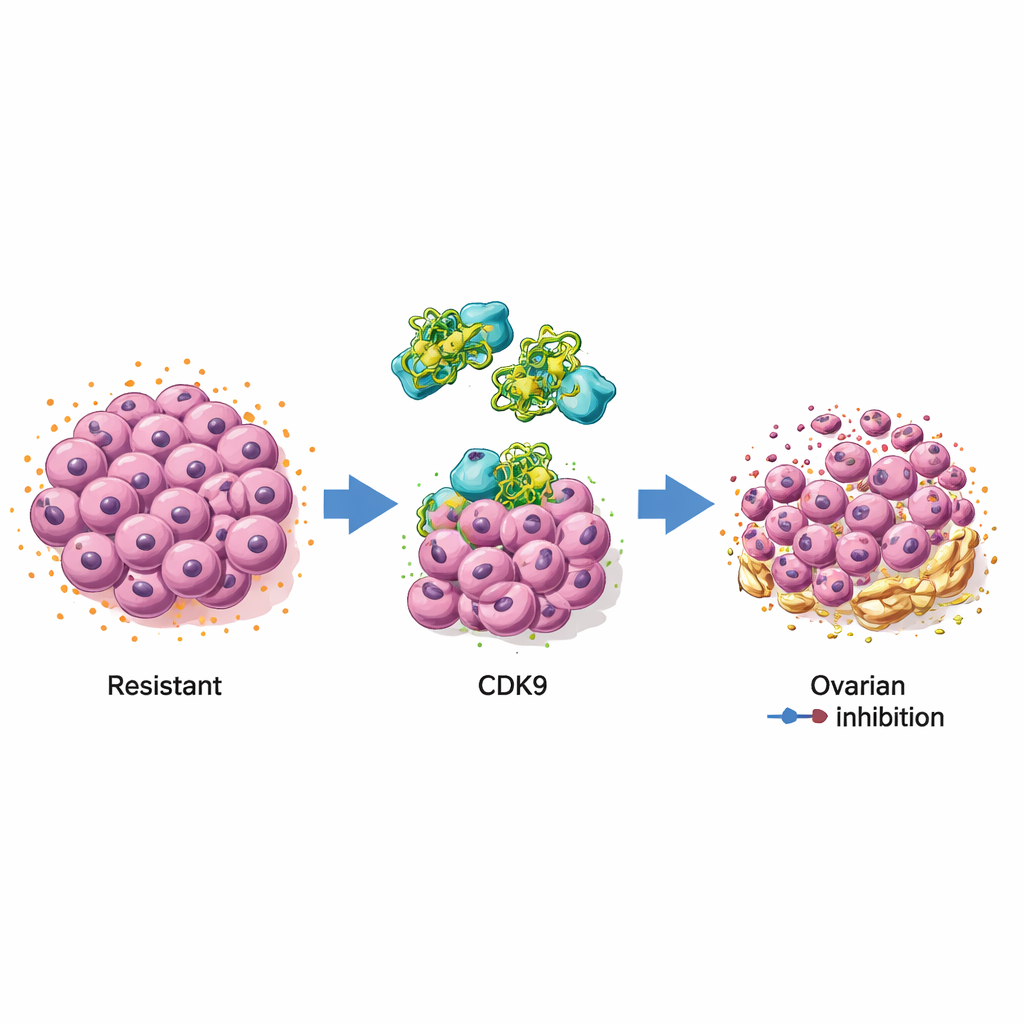
Most women with ovarian cancer initially respond to combinations of paclitaxel and platinum drugs, but many later face a heartbreaking return of the disease. Over time, tumor cells can become multidrug resistant, meaning they shrug off not only paclitaxel but several different chemotherapy agents. This resistance arises through many tricks, including pumping drugs out of the cell and activating powerful survival programs. The authors focused on CDK9, a protein that controls how genes are read and turned into survival molecules. Their earlier work showed that ovarian tumors with high CDK9 levels are more aggressive and more likely to come back, raising the question of whether blocking CDK9 might disarm resistance.
A key control knob inside cancer cells
To probe CDK9’s role, the team compared two standard ovarian cancer cell lines with versions that had been made highly resistant to paclitaxel. The resistant cells grew happily in drug concentrations that killed their more sensitive counterparts. When the researchers looked at protein levels, the resistant cells consistently carried more CDK9, as well as higher activity of molecules linked to gene reading (RNA polymerase II) and a signaling protein called Stat3, both of which help fuel growth and survival. This pattern suggested that resistant cells rely especially heavily on CDK9‑driven transcription programs to cope with chemotherapy stress.
Turning down CDK9 to reawaken drug response
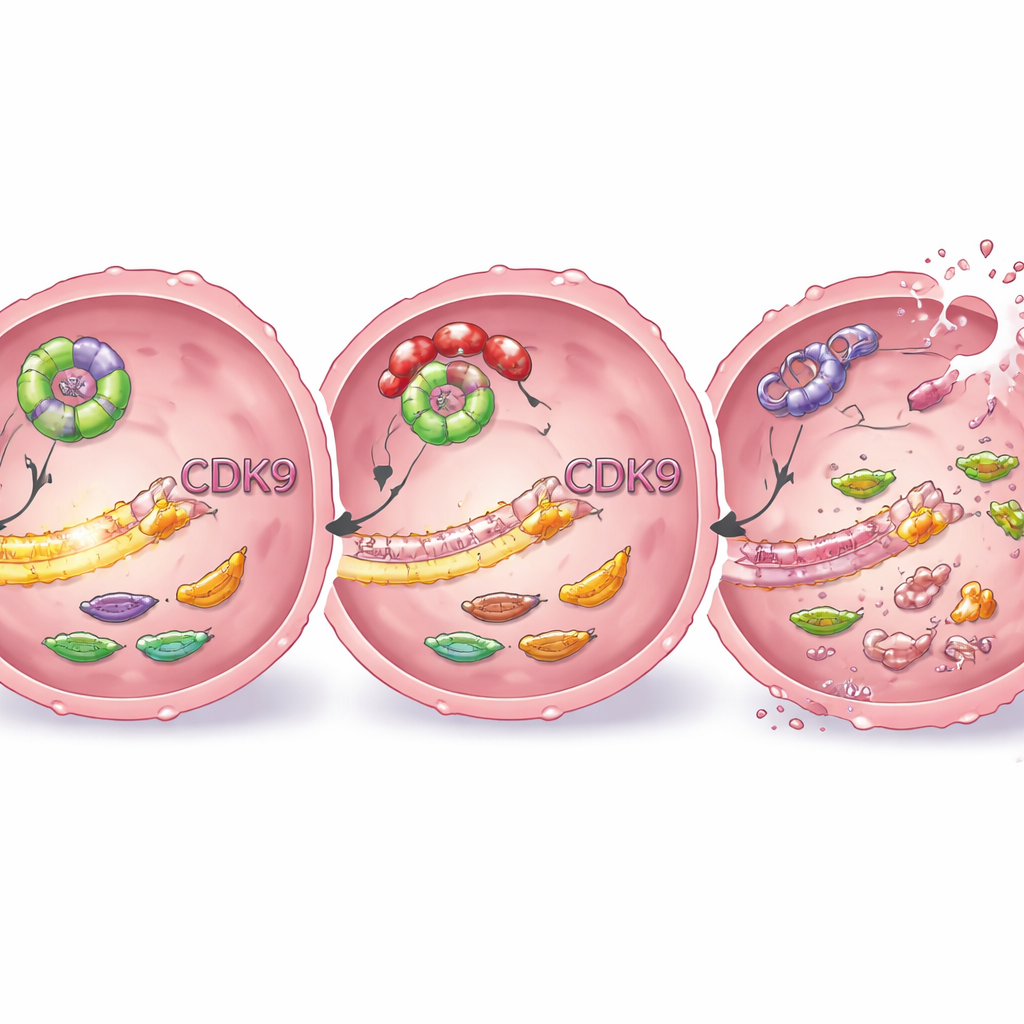
The scientists then tested what happens when they reduce CDK9 activity. Using a genetic tool (siRNA) to silence CDK9, or treating cells with a selective CDK9‑blocking compound called LDC067, they saw a clear drop in the activated form of RNA polymerase II and Stat3. At the same time, levels of pro‑survival molecules, such as Mcl‑1, fell, while pro‑death signals like Bax and cleaved PARP rose—clear hallmarks of apoptosis, the cell’s self‑destruct program. Importantly, once CDK9 was dialed down, the previously resistant cells became much more sensitive to paclitaxel. When both paclitaxel and the CDK9 inhibitor were used together, the combination killed far more cancer cells than either treatment alone, showing strong synergy across multiple drug doses.
Slowing growth, spread, and 3D tumor‑like clusters
Beyond simply killing individual cells, the researchers asked whether blocking CDK9 also weakens behaviors associated with real tumors in the body. In three‑dimensional cultures that mimic how cancer cells form compact spheroids, the resistant cell lines normally created large, growing clusters. Under CDK9 inhibition, these spheroids stayed much smaller over two weeks, and long‑term colony‑forming ability dropped sharply. In wound‑healing tests, where a gap is scratched into a sheet of cells, CDK9‑blocked cells migrated much more slowly than untreated ones, hinting that CDK9 also supports the mobility that underlies metastasis and recurrence.
What this could mean for future treatments
Taken together, the findings paint CDK9 as a central helper that drug‑resistant ovarian cancer cells use to keep dividing, avoid death, and move. By shutting down CDK9—either with targeted genetic tools or with a small‑molecule inhibitor—the researchers were able to restore paclitaxel sensitivity, trigger cell suicide, and curb growth and migration in resistant cells. While these results come from laboratory models rather than patients, they suggest that adding a CDK9‑targeting drug to standard chemotherapy could one day help overcome resistance and improve outcomes for women with recurrent ovarian cancer.
Citation: Wang, J., Hornicek, F.J., Shi, H. et al. Inhibition of CDK9 sensitizes multidrug resistant ovarian cancer cells to paclitaxel. Sci Rep 16, 11671 (2026). https://doi.org/10.1038/s41598-026-47843-6
Keywords: ovarian cancer, drug resistance, CDK9, paclitaxel, targeted therapy