Clear Sky Science · en
Effect of glucose on medium chain triglyceride induced ketosis in healthy adults in a randomized, double-blind, controlled study
Why this study matters for everyday eating
Low-carb and ketogenic diets promise sharper thinking and better health by raising “ketone” levels in the blood. Many people now add medium-chain triglyceride (MCT) oils, especially pure C8 oil, to coffee or shakes to boost ketones without strict dieting. Yet real-life breakfasts almost always include some sugar or starch. This study asked a simple but practical question: how much ordinary sugar (glucose) can you eat with C8 oil before your body’s ketone production is noticeably dampened?
Fats that quickly turn into brain fuel
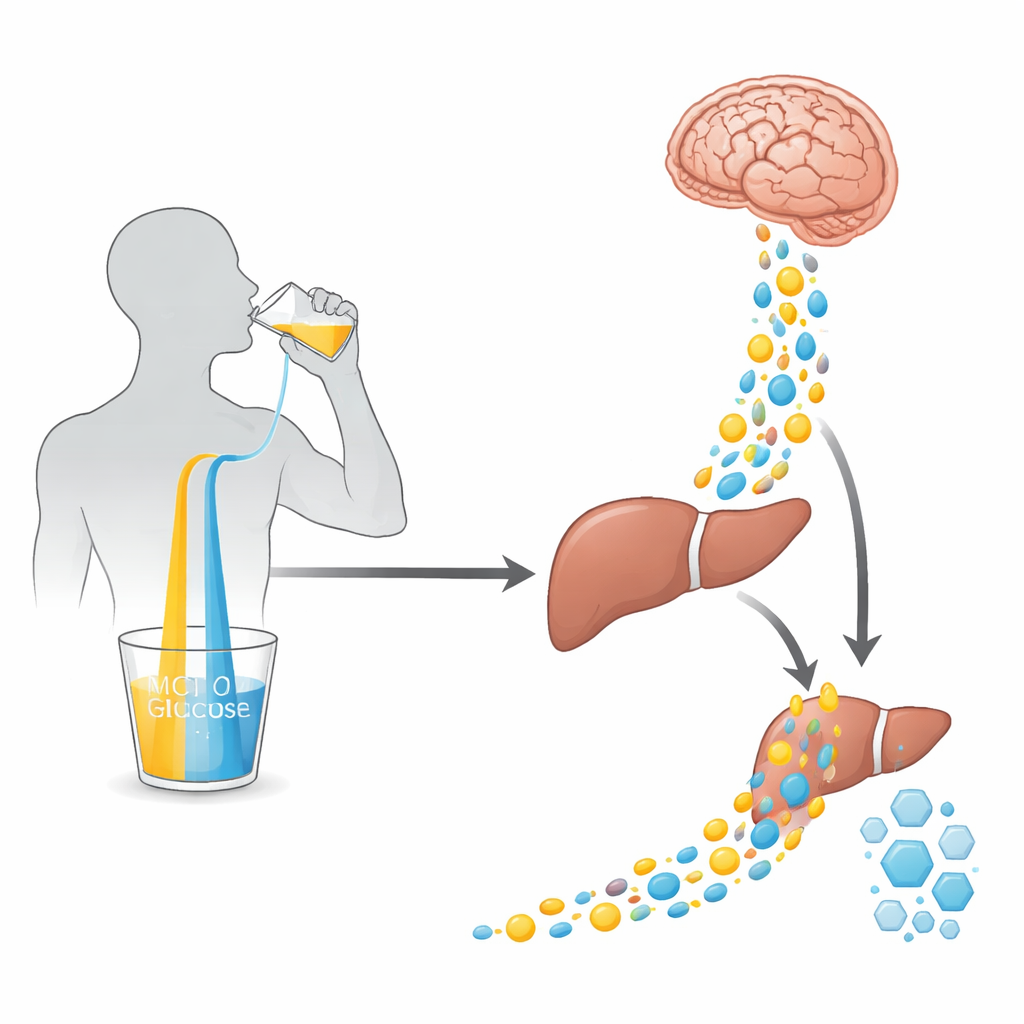
MCTs are special fats found in coconut and palm kernel oils that the body handles differently from most dietary fat. They go straight from the gut to the liver, where they are rapidly burned and can be converted into ketone bodies—small molecules that travel in the blood and can fuel organs such as the brain and muscles. The C8 form of MCT is known to be especially good at raising ketones. In contrast, eating carbohydrates like sugar leads to a burst of the hormone insulin, which encourages the body to burn sugar and store fat, and usually suppresses ketone production. Until now, however, researchers had not carefully mapped how different amounts of sugar interact with a fixed amount of C8, or what happens if both are increased together.
How the experiment was done
The research team studied eleven healthy young women who visited the lab on six separate mornings after an overnight fast. On each visit they drank 250 milliliters of a flavored beverage that always contained fat but differed in how much C8 oil and glucose it supplied. In three “cut-off” drinks, the C8 dose was kept constant while glucose ranged from low to high. In three “linearity” drinks, both C8 and glucose were raised together in a 1:1 ratio. Blood samples were taken repeatedly over five hours to track levels of the main circulating ketone, beta-hydroxybutyrate (βHB), along with blood sugar and insulin. In a subset of sessions, the team also used indirect calorimetry—a hood that measures oxygen use and carbon dioxide output—to estimate whether the body was mainly burning fat or carbohydrate.
What happens when sugar rises but C8 stays the same
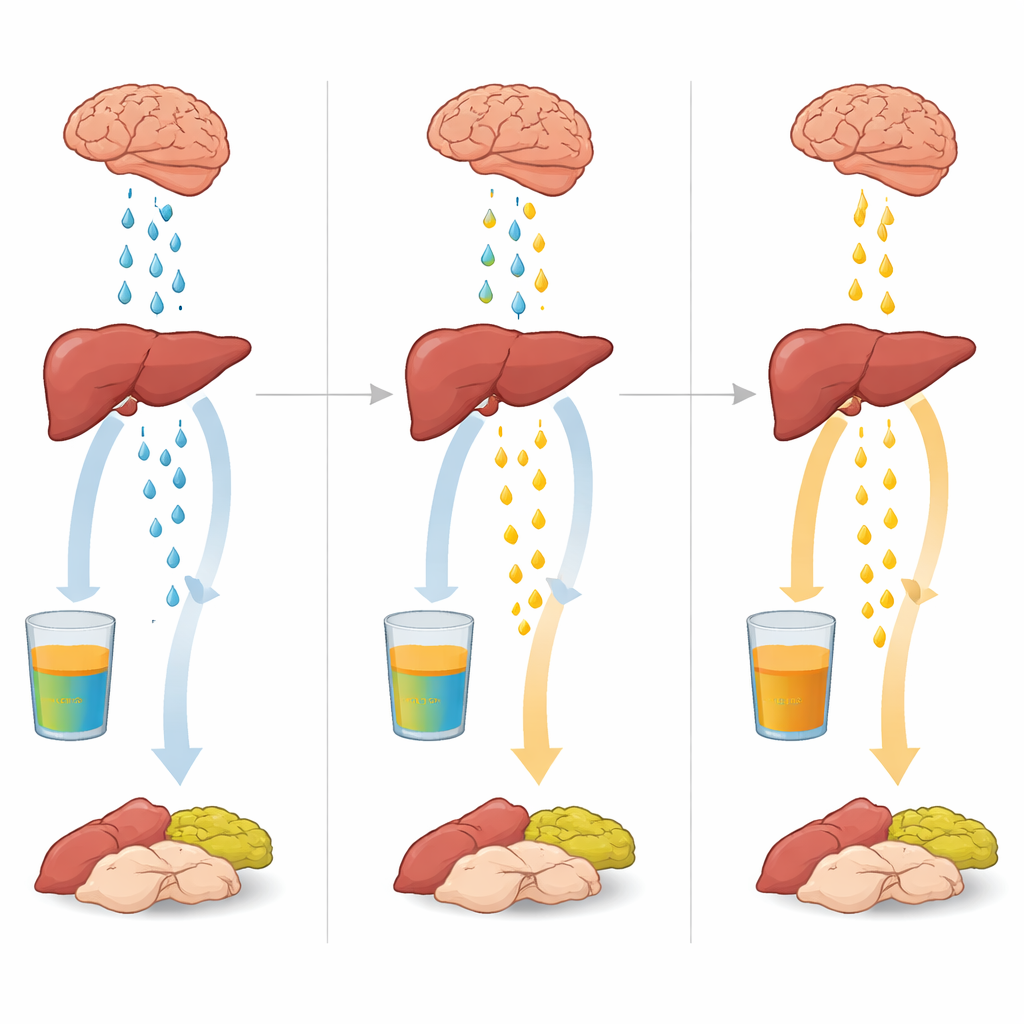
When participants drank C8 oil with little or moderate glucose, blood ketones rose clearly above the control drink made with conventional sunflower oil. Ketone levels peaked between two and three hours after the drink and the total ketone exposure over time (the area under the curve) was significantly higher at the lowest glucose dose than in the control condition. As more glucose was added while keeping C8 constant, ketone levels still increased but became noticeably lower, and the overall ketone exposure dropped by about 10% and then nearly 30% at the highest sugar dose. Statistical analysis showed a moderate negative link: the more glucose was added to a fixed amount of C8, the less ketone output the liver produced, even though this trend just missed strict significance thresholds in this small sample.
What happens when C8 and sugar rise together
The picture changed when both C8 and glucose were increased in lockstep. In these 1:1 drinks, higher doses led to higher peak ketone levels and substantially larger total ketone exposure, with a moderate positive correlation between C8 dose and ketone production. In other words, when sugar intake rose in step with C8 instead of outpacing it, the extra C8 more than compensated for sugar’s dampening effect on ketones. Blood sugar and insulin spiked about 30 minutes after all C8-plus-glucose drinks, then sugar dipped below starting levels around one hour before returning to normal. Higher C8 doses, even at the same glucose dose, tended to produce a slightly deeper temporary drop in blood sugar and somewhat higher insulin exposure, hinting that C8 itself may modestly stimulate insulin release.
Comfort, side effects, and what it means in practice
Most participants tolerated the drinks well. Mild to moderate stomach cramps, discomfort, or nausea appeared in some sessions, typically starting an hour or more after drinking and lasting up to two hours, but these effects did not clearly worsen with higher C8 doses. Energy-use measurements suggested that at the very highest glucose dose, the body shifted somewhat toward burning more carbohydrate and less fat, consistent with lower ketone output. Overall, the results suggest that when C8 and glucose are consumed together after an overnight fast, ketone production remains fairly robust if the ratio of C8 to glucose is around 1:1 or 1:2 by weight. When glucose reaches about three times the C8 dose, ketone levels are clearly blunted. For everyday life, this implies that adding a modest amount of fast-acting sugar to a C8-based drink will not completely “switch off” ketones, but piling on sugar relative to C8 will make the liver favor sugar burning over ketone production.
Citation: Frenser, M., Fobker, M., Feuerborn, R.A. et al. Effect of glucose on medium chain triglyceride induced ketosis in healthy adults in a randomized, double-blind, controlled study. Sci Rep 16, 12049 (2026). https://doi.org/10.1038/s41598-026-47702-4
Keywords: ketone bodies, medium-chain triglycerides, C8 oil, glucose intake, ketogenic diet