Clear Sky Science · en
Translating predictive models into clinical practice: fast-and-frugal trees for postoperative delirium using routine data
Why this matters for patients after surgery
Waking up from surgery confused, agitated, or unable to focus is more than just a rough recovery—it can be a sign of postoperative delirium, a common complication especially in older or frail patients. Delirium is linked to longer hospital stays, loss of independence, and even higher risk of death. Many hospitals have complex computer tools that could, in theory, flag who is at risk. Yet these tools rarely reach the bedside, because they are hard to use in the fast pace of real-world care. This study explores whether very simple, easy-to-remember decision rules can help busy clinicians spot high‑risk patients using only the information they already collect every day.
Confusion after surgery and why it is hard to foresee
Postoperative delirium is a sudden disturbance in attention and awareness that can develop in the hours after anesthesia. It is particularly common among older adults and people with multiple medical problems. Researchers have long known that factors such as advanced age, overall physical status, existing illnesses, and signs of memory or functional problems all raise that risk. Many prediction tools have been built around these factors, but they often demand lengthy questionnaires, special tests, or sophisticated software. In routine care, where staff juggle many tasks and patients, such demands mean that even guideline‑recommended screening is often skipped or applied inconsistently.
Simple decision trees built from everyday hospital data
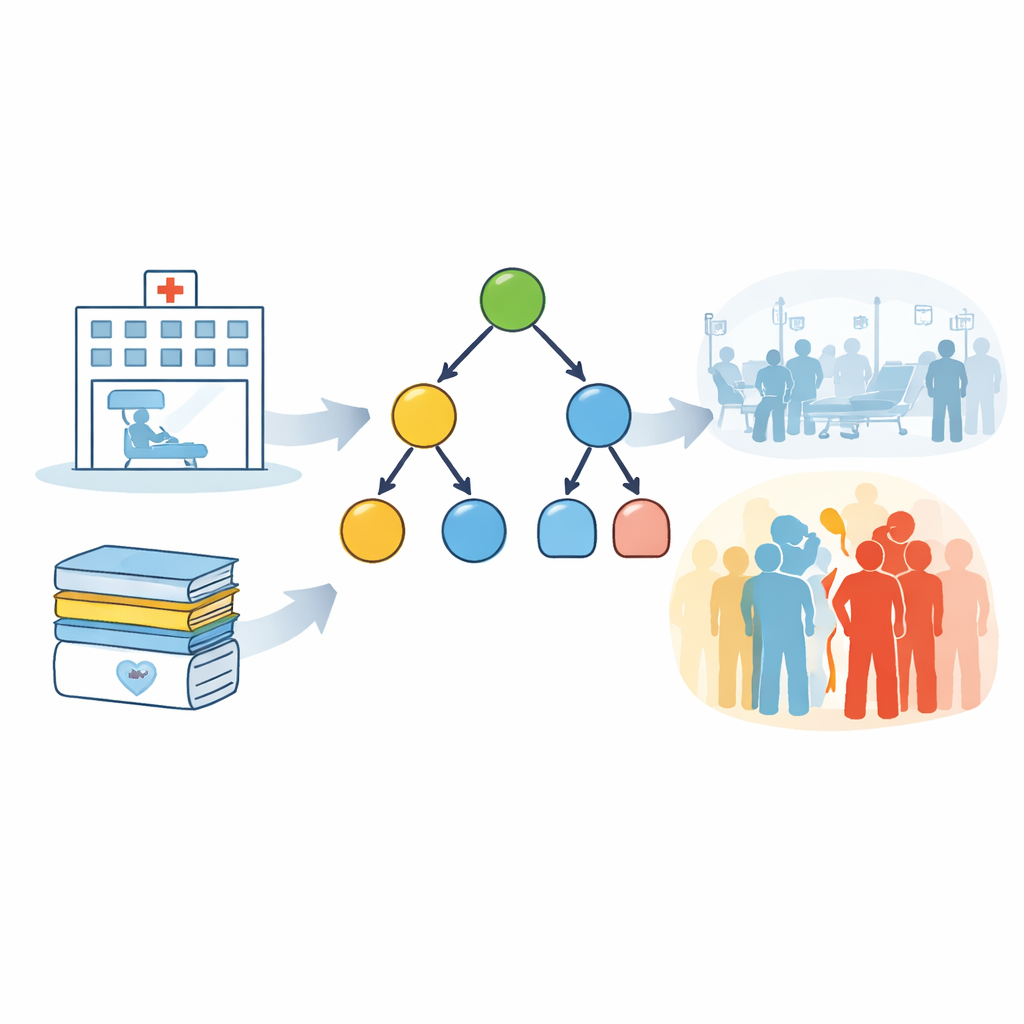
The authors focused on a stripped‑down type of decision aid called a "fast‑and‑frugal tree." Instead of crunching dozens of numbers, these trees rely on just a few key cues checked one after another, and they allow a decision as soon as a clear risk signal appears. Using electronic health records from more than 61,000 adults having non‑cardiac, non‑brain surgery at a large German hospital, the team tested whether trees previously designed in carefully controlled research settings would still work in the messy world of routine documentation. They also compared these simple trees with more complex methods such as logistic regression, random forests, and support vector machines, and then built updated trees tuned specifically to the real‑world data.
How well did the simple rules perform?
When the original decision trees were applied to the hospital data as‑is, their performance dropped, reflecting differences between clean research records and everyday charts. However, when the researchers kept the tree structure but adjusted the cut‑off values—for example, slightly changing the age or health‑score thresholds—their ability to distinguish patients who did and did not develop delirium improved. The updated trees reached a "balanced accuracy" of about 58% before surgery and 60% when information from during surgery, such as anesthesia duration, was included. Importantly, this performance was on par with the much more intricate machine‑learning models, which did not offer a meaningful advantage despite their complexity and tendency to overfit the training data.
The few clues that matter most
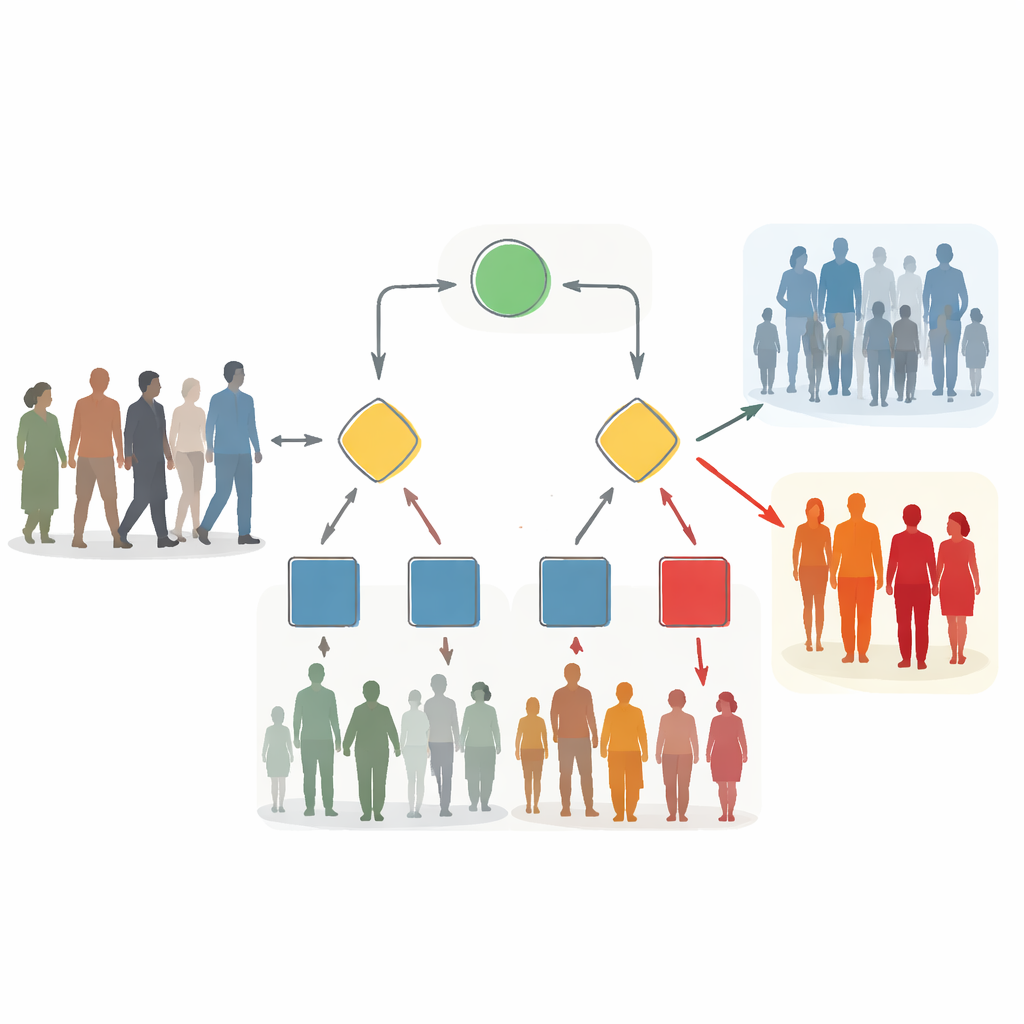
The final trees boiled risk assessment down to just three pieces of information. Before surgery, they used age, an overall physical status score assigned by the anesthesiologist, and whether the operation involved the limbs or musculoskeletal system. When information from the operating room was added, age, length of anesthesia, and the presence of pre‑existing medical conditions emerged as the most informative cues. On average, the trees needed only about one and a half to two of these cues per patient to reach a decision, representing a reduction of nearly all the information that is theoretically available. This suggests that, in real practice, a small set of robust indicators captures most of what routine data can tell us about delirium risk.
What this means for everyday care
The study shows that even though no current model predicts postoperative delirium with high precision, very simple decision trees can match the performance of advanced algorithms while being far easier to understand and use. Rather than acting as crystal balls, these trees serve as cognitive aids that help clinicians consistently line up well‑known risk factors in a sensible order, making it more likely that at‑risk patients are recognized and offered closer monitoring or preventive measures. For patients and families, this could translate into earlier conversations about risk, more tailored care, and possibly fewer cases of distressing confusion after surgery—all without the need for new technology, extra testing, or complicated scoring systems.
Citation: Wegwarth, O., Balzer, F., Boie, S.D. et al. Translating predictive models into clinical practice: fast-and-frugal trees for postoperative delirium using routine data. Sci Rep 16, 12731 (2026). https://doi.org/10.1038/s41598-026-47452-3
Keywords: postoperative delirium, surgical risk prediction, clinical decision tools, electronic health records, fast-and-frugal trees