Clear Sky Science · en
Celastrol attenuates Th1- and Th2-driven skin inflammation in 2D and 3D in vitro models
Why calming angry skin matters
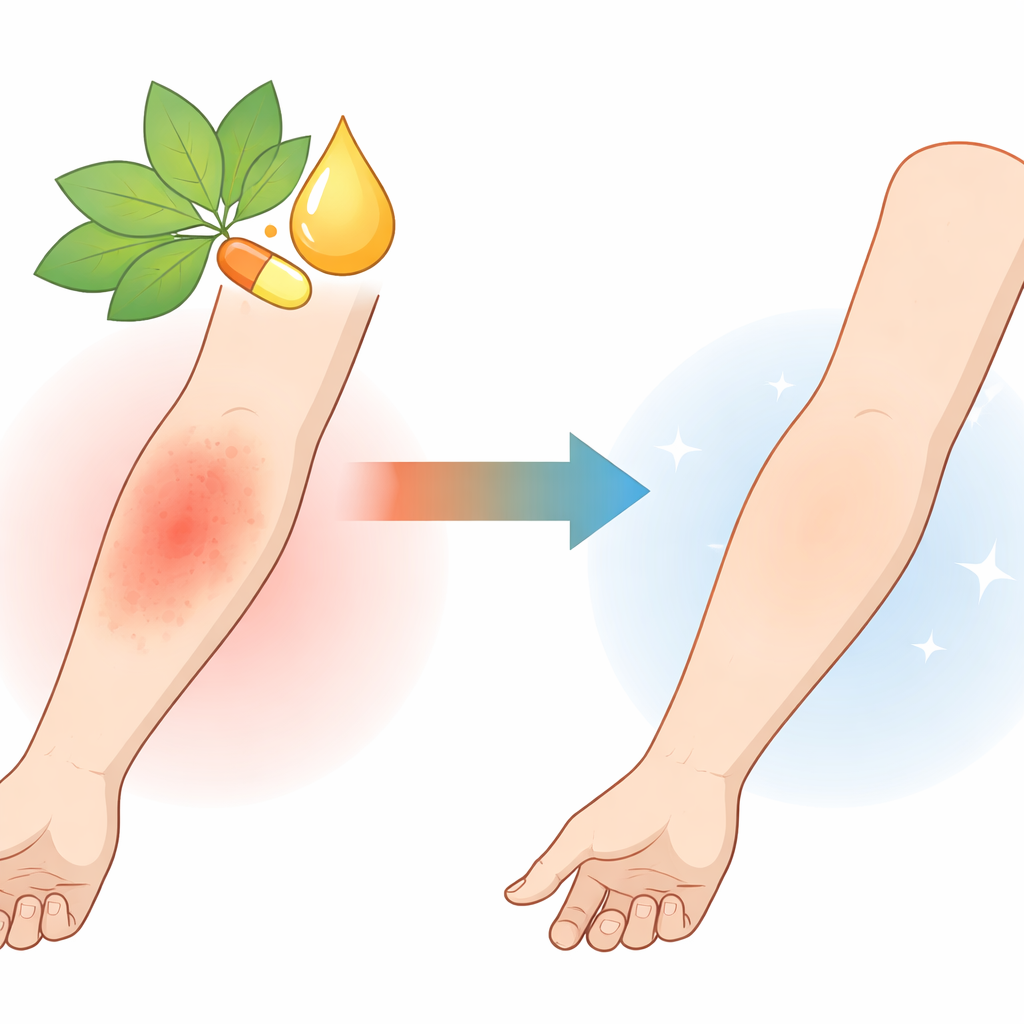
Itchy, inflamed skin conditions such as eczema can be miserable, disrupting sleep, work, and everyday comfort. Many people rely on creams that contain steroids or other strong drugs, which can cause side effects when used for a long time. This study explores whether celastrol, a molecule derived from plants used in traditional Chinese medicine, can safely quiet inflammation in laboratory models of human skin that mimic key features of atopic dermatitis, a common form of eczema.
A plant compound under the microscope
Celastrol comes from plants long used to treat immune and inflammatory disorders. Modern research has linked it to wide-ranging anti-inflammatory actions, but most work has focused on animal studies or on diseases such as arthritis and psoriasis. The authors wanted to know whether celastrol could also dampen the type of chronic skin inflammation seen in atopic dermatitis. To do this, they combined simple flat cell cultures with a more life-like three-dimensional skin model built from human cells, allowing them to probe both basic responses and tissue-level effects.
Testing celastrol in simple skin cell layers
First, the team grew two key skin cell types—keratinocytes, which form the outer barrier, and fibroblasts, which sit in the supporting layer beneath. They triggered a long-lasting inflammatory state by adding messenger molecules that mimic signals from overactive immune cells. Under these conditions, the cells released large amounts of pro-inflammatory substances, especially IL-6 and IL-8, which are known to call in and activate immune cells. When celastrol was added at non-toxic doses, both cell types secreted far less of these inflammatory messengers, and the effect became stronger as the celastrol concentration increased. Fibroblasts, which normally release much higher levels of these substances than keratinocytes, also showed a marked reduction, suggesting that celastrol can act on multiple players within inflamed skin.
From flat dishes to a living-like skin model
Next, the researchers turned to a more advanced three-dimensional skin model that contains both layers of skin and develops features resembling atopic dermatitis when exposed to a cocktail of type 2 immune signals. This model not only produces inflammatory messengers, but also switches on genes that are considered hallmarks of the disease. The team first confirmed that if these disease-driving signals were stopped, the model could largely revert toward a healthier state, indicating that it is suitable for testing potential treatments. They then applied celastrol directly onto the surface of diseased skin models at a concentration that did not damage the tissue, even though it was much higher than what the flat cell cultures could tolerate.
How celastrol reshaped inflammatory signals
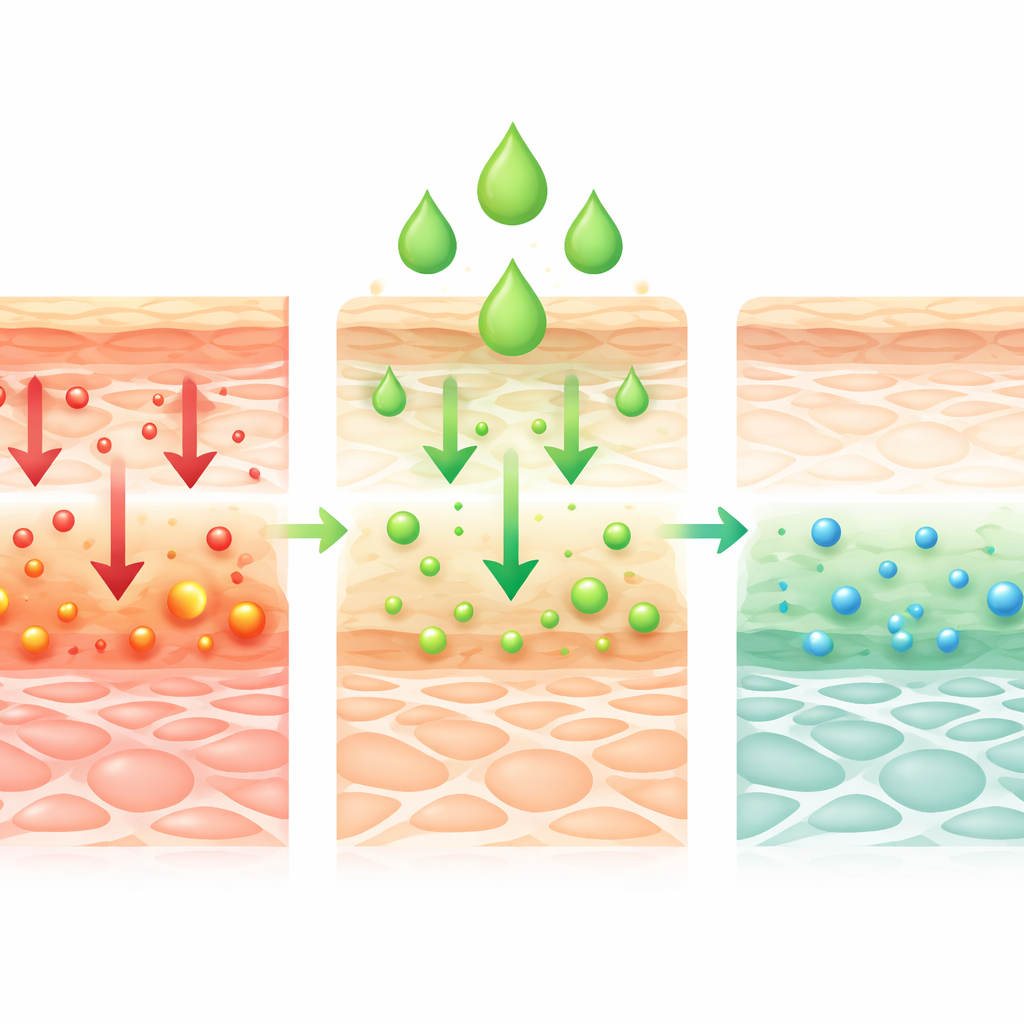
In the three-dimensional atopic dermatitis model, topical celastrol clearly soothed the inflammatory environment. Levels of IL-8, IL-6, and IL-1α released into the surrounding liquid all dropped compared to untreated diseased models. Inside the tissue, the activity of several inflammation-related genes, including those encoding IL-1β, IL-6, IL-8, and IL-23, was also reduced. These changes occurred despite the fact that the disease-driving immune signals were kept on throughout the experiment, a tough test for any anti-inflammatory treatment. However, celastrol did not lower the expression of certain long-term disease markers that are tightly linked to the presence of those external immune signals, underscoring that it mainly suppresses the intensity of inflammation rather than fully resetting the disease program in this setting.
What this could mean for future skin treatments
Taken together, the results show that celastrol can strongly tone down inflammatory messengers in both simple and complex human skin models, even under conditions that continually push the tissue toward disease. Because celastrol acts on many control switches inside inflammatory pathways, it may be particularly suited for chronic skin conditions driven by multiple overlapping signals. The work is still at an early, exploratory stage, and important questions remain about optimal dosing, safety, and precise mechanisms in real patients. Nonetheless, the findings support celastrol as a promising natural starting point for developing new topical treatments that could one day offer people with atopic dermatitis and related skin diseases an alternative or complement to current anti-inflammatory drugs.
Citation: Reddersen, K., Morgner, B., Werz, O. et al. Celastrol attenuates Th1- and Th2-driven skin inflammation in 2D and 3D in vitro models. Sci Rep 16, 11382 (2026). https://doi.org/10.1038/s41598-026-47386-w
Keywords: atopic dermatitis, celastrol, skin inflammation, 3D skin model, topical therapy