Clear Sky Science · en
The East Asian climate-warfare nexus underwent a paradigm shift across pre-industrial and industrial eras
Why climate and conflict are linked
From ancient dynasties to modern nation states, East Asia has seen its share of wars, rebellions and invasions. At the same time, the region lives under dramatic swings in temperature, rainfall and monsoon storms. This study asks a question with clear relevance today: how have shifts in climate and changes in society worked together to shape the timing and intensity of warfare in East Asia over the past six hundred years, and what does that history suggest about future risks in a warming world?
Two very different eras in one long record
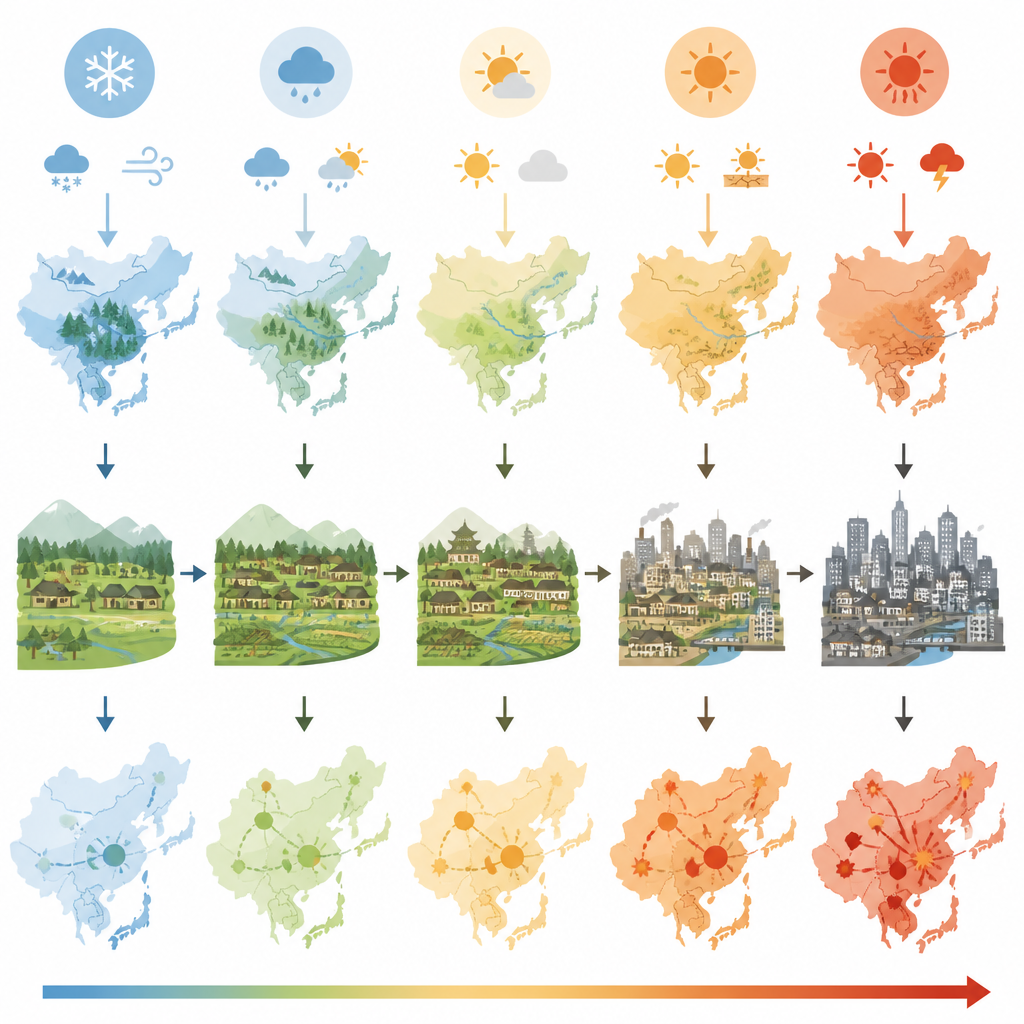
The authors assembled annual records from 1400 to 1980, combining reconstructed temperature and rainfall, estimates of population, cropland, grazing land and cities, and a catalog of wars that caused at least dozens of battle deaths per year. They then split the timeline into a pre industrial period dominated by natural climate swings and an industrial period shaped by human made warming. By comparing these eras with the same data and methods, they could see how the link between climate and conflict changed as East Asian societies transformed from mainly farm based kingdoms to industrial, urban states.
When cold years fed crisis loops
In the pre industrial centuries, East Asia behaved like a classic pressure cooker society in which population pressed against limited farmland. The analysis shows that colder conditions, after other influences are accounted for, were followed a couple of years later by more wars. The authors argue that this lag reflects the time it took for poor harvests to exhaust food stores, drive up prices, trigger famine and then fuel rebellion and invasions. Land and cities also mattered. Expanding cropland tended to dampen warfare by easing food pressure, while growth in built up areas was linked to more conflict once basic population and farming trends were removed. Causal tests reveal that warfare did not just respond to climate and land; it also pushed back, helping to reshape population and land use in a tight feedback loop.
From slow pressure to fast, complex reactions
With the rise of industry and rapid urban growth after the mid nineteenth century, this pattern changed sharply. Temperatures began to climb steadily, and warfare shifted from regular cycles of mid sized conflicts to clusters of massive wars. Yet simple statistical links now show fewer wars in years with higher temperatures, and population growth and expansion of farms and cities coincide with a long term decline in war frequency. Deeper causal analysis helps make sense of this. Direct, delayed climate impacts on war weaken, while new social forces take center stage. Grazing land and urban areas become the main land based drivers, and the time lag from cause to effect shrinks to about one year, pointing to faster, more complex social responses to shocks.
Climate as a threat multiplier, not a single cause
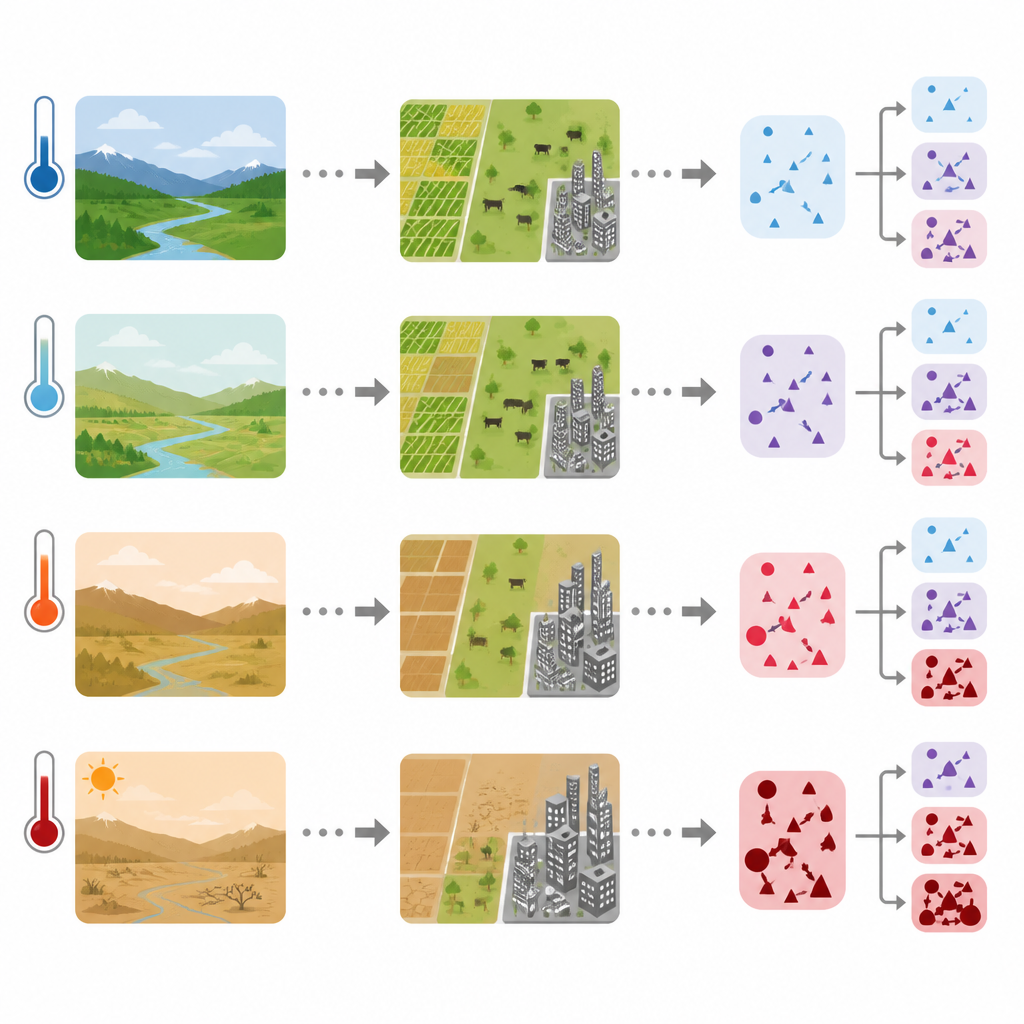
The study finds that temperature still influences conflict in the industrial era, but no longer as a simple on off switch. Instead, it acts as a threat multiplier, nudging already stressed systems toward unrest when combined with floods, droughts, rapid urban growth, frontier competition and political tensions. Historical cases such as the Boxer Rebellion show how extreme weather, displacement and anger at foreign powers combined to spark violence. At the same time, better technology, markets and state capacity appear to have weakened the old loop in which wars routinely crashed food systems and populations.
What this history means for today
For non specialists, the key message is that the link between climate and war is neither fixed nor straightforward. In earlier centuries, cold spells could directly push fragile farming societies into crisis and conflict. In the modern era, societies became more resilient but also more complex, so that climate shocks work through tangled social and economic pathways and can produce sudden, non linear jumps in risk. This history suggests that as human driven warming continues, we should watch not only the thermometer but also how climate extremes interact with food systems, cities, borders and political fault lines, and design policies that reduce the chance that environmental stress tips into violent conflict.
Citation: Chang, H., Fang, M. The East Asian climate-warfare nexus underwent a paradigm shift across pre-industrial and industrial eras. Sci Rep 16, 15965 (2026). https://doi.org/10.1038/s41598-026-47182-6
Keywords: climate and conflict, East Asia history, warfare patterns, climate extremes, social resilience