Clear Sky Science · en
Research on identification method and application of unsafe behavior of coal mine personnel
Why watching miners on camera can save lives
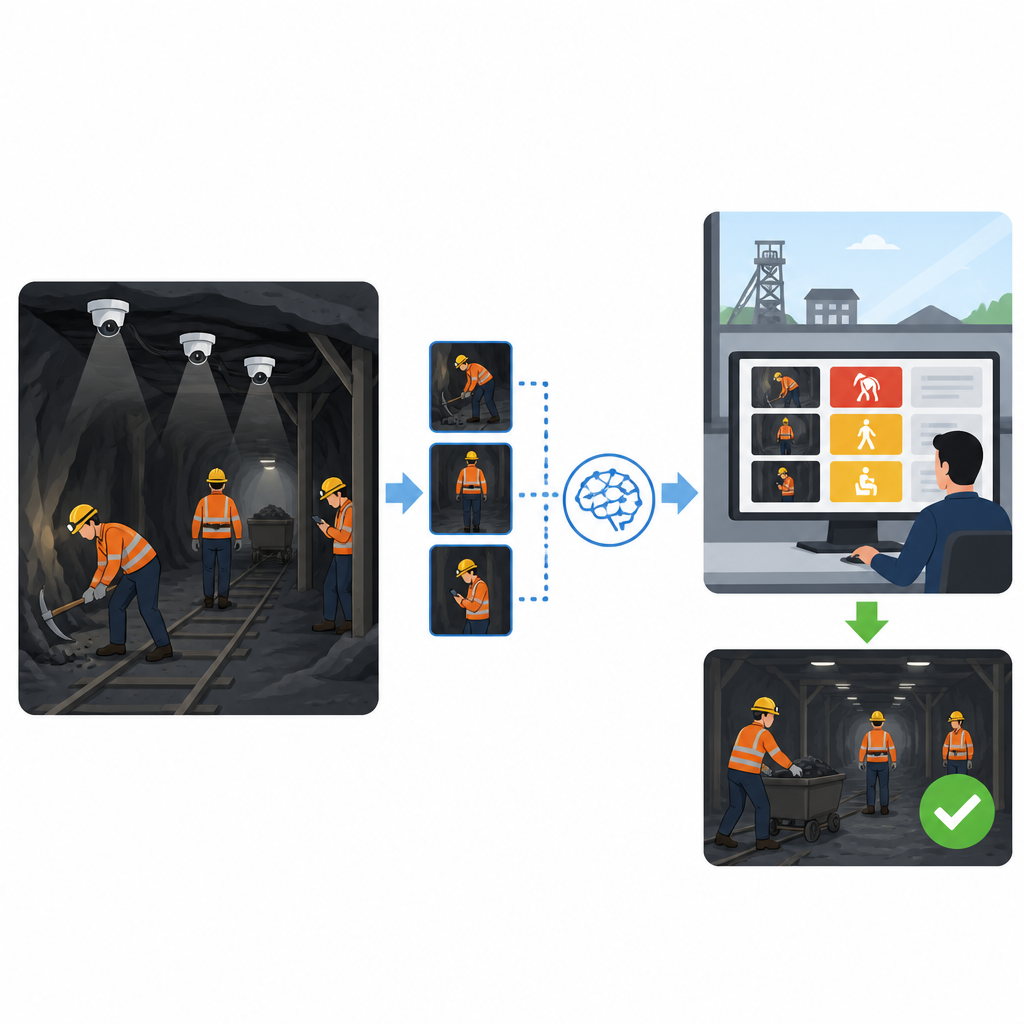
Deep underground, coal miners work in cramped, dark tunnels where a single misstep can trigger a serious accident. This study shows how smarter computer vision can scan mine video feeds in real time, spot risky behavior such as missing helmets or entering danger zones, and help stop incidents before they happen. By turning grainy underground footage into clear signals for safety teams, the research points to a future where technology constantly guards workers far below the surface.
Three kinds of risky choices underground
The authors begin by asking what “unsafe behavior” actually looks like in a coal mine. They group the most common problems into three easy-to-understand types. Object-type issues involve equipment and gear, such as not wearing a helmet or leaving tools scattered where they can trip someone. Action-type issues are about what people do, including slipping, climbing fences, or riding on conveyor belts instead of using proper walkways. Area-type issues focus on where people go, such as stepping into marked danger zones or leaving assigned posts without permission. This simple framework helps link everyday habits to very real accident risks.
Building a realistic picture of life in a mine
To teach a computer to recognize danger, the team first had to assemble a large and varied set of images. They gathered real surveillance video from working mines and staged additional scenes in a laboratory setting to mimic underground conditions. From these sources they built a 31,000-image dataset that covered items, actions, and hazardous areas. They then expanded it with tricks like flipping images and changing brightness to imitate different camera angles and lighting levels. Because underground cameras often struggle with dust, vibration, and low light, the researchers also used a deep learning method called DnCNN to remove noise from the images, making helmets, bodies, and equipment outlines easier for algorithms to see clearly.
Teaching machines to see unsafe behavior
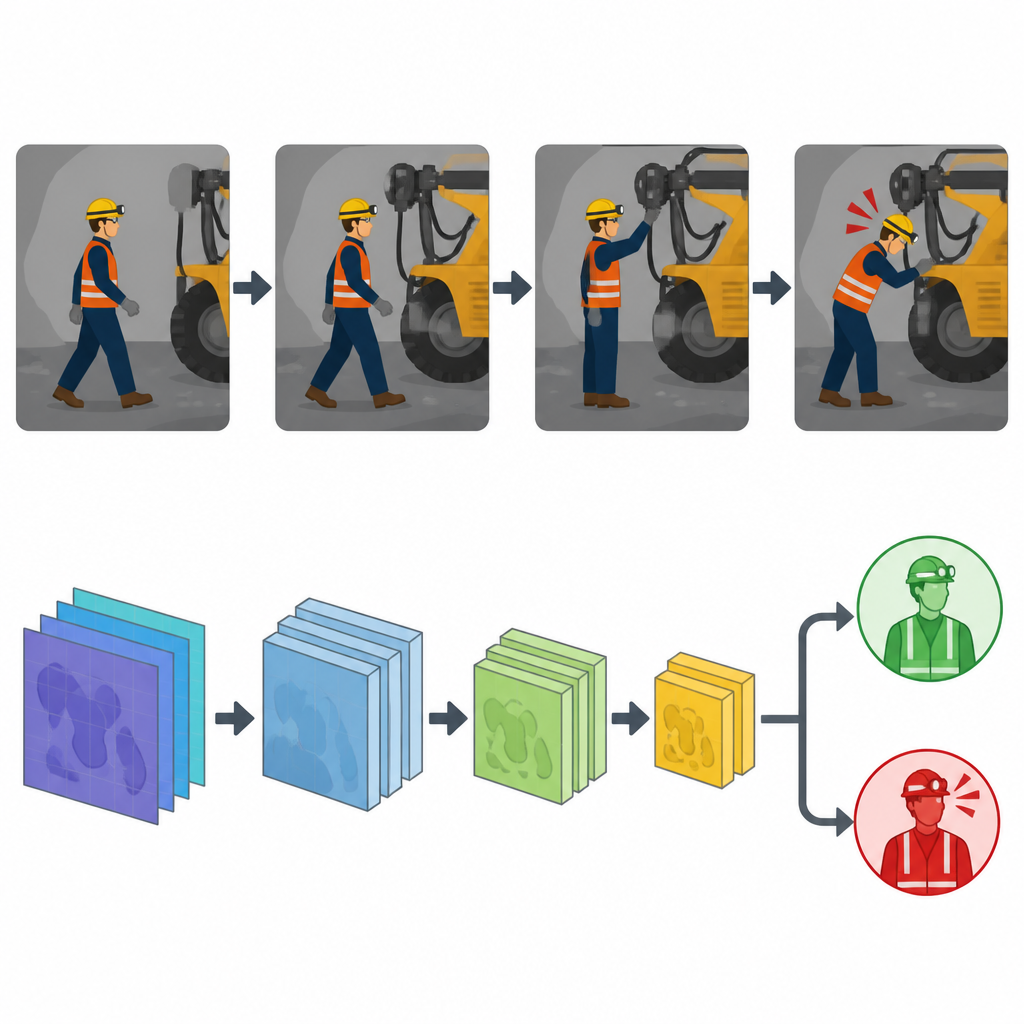
On top of this cleaned and enriched dataset, the authors designed an unsafe behavior recognition system based on an upgraded version of the YOLOv11 object detection model. One part of the system focuses on spotting people and equipment, including whether a miner is wearing a helmet or standing near a particular machine. Another part, called YOLOv11-Pose, tracks key points of the body, such as shoulders, knees, and hands, and uses their positions over time to infer actions like walking, bending, or falling. By combining these two views, the system can tell not only who and what is present, but also what they are doing and whether they are inside a risk zone.
Fine-tuning the digital safety guard
The team further strengthened the model so it would work reliably in cluttered tunnels. A feature enhancement module helps the network focus on important regions of each frame while ignoring unhelpful background details. They also used a method called K-means++ to better match the model’s internal “anchor” boxes to the typical sizes and shapes of miners and equipment seen in the mine videos, which improves detection of small or distant figures. Through many rounds of training and testing, including comparisons with earlier versions of YOLO and other common models, their enhanced system reached high accuracy: a mean average precision of 95.7 percent, with similarly strong precision and recall, even when multiple miners, complex backgrounds, and low light were present.
From smart alerts to safer shifts
In everyday use, this technology could run on edge devices near the cameras, scanning live video and sending quick alerts when it spots a miner without a helmet, someone riding a moving belt, or a person stepping into a danger zone. The study shows that with the right data preparation and model design, automated systems can recognize a wide range of unsafe behaviors almost as they happen. While the authors note that more work is needed to handle even more complex scenes and to deploy the system at scale in working mines, their results suggest that continuous, intelligent monitoring can become a powerful partner to training and rules in keeping miners safe.
Citation: Juan, L., Zhu, Q., Jiang, D. et al. Research on identification method and application of unsafe behavior of coal mine personnel. Sci Rep 16, 15909 (2026). https://doi.org/10.1038/s41598-026-47077-6
Keywords: coal mine safety, unsafe behavior detection, computer vision, YOLOv11, worker monitoring