Clear Sky Science · en
Evaluation of enamel surface after interproximal reduction using different methods, with and without polishing: an in vitro study
Why Smoothing Between Teeth Matters
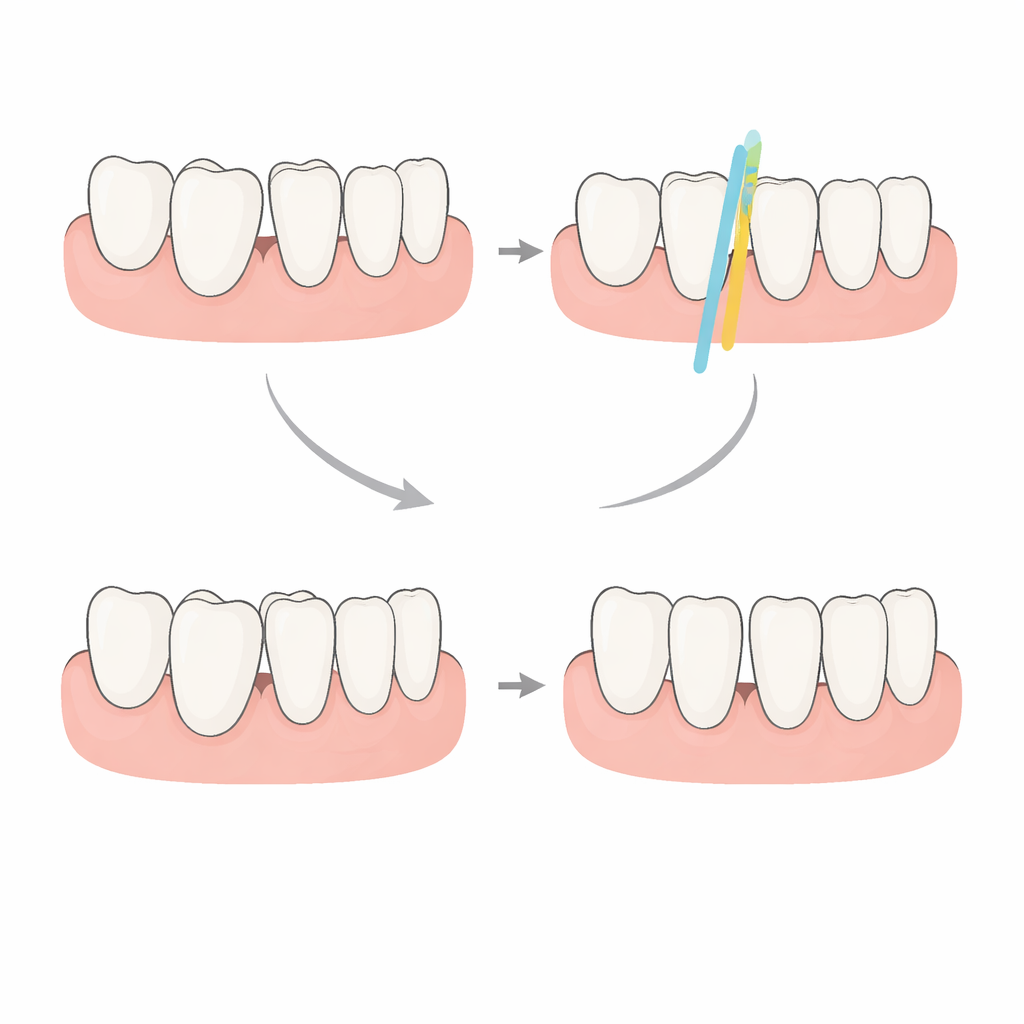
Many modern orthodontic treatments, especially clear aligners, rely on a procedure called enamel stripping or interproximal reduction (IPR) to create tiny amounts of extra space between teeth. While this helps straighten crowded smiles without pulling teeth, it also raises a common worry: does shaving enamel make the teeth rougher and more vulnerable to decay? This study explores how different IPR tools affect the outer tooth surface and whether a short polishing step can restore a smooth, healthy finish.
Making Space Between Teeth
IPR is a long‑standing technique in which dentists remove a fraction of a millimeter of enamel from the sides of teeth where they touch. That slim reduction can add up to several millimeters of space along the dental arch, enough to ease crowding, improve stability after treatment, and refine tooth shape. However, the same sanding or cutting that creates space can also leave microscopic grooves and scratches. Rough surfaces tend to hold more dental plaque, which in turn increases the risk of cavities and gum inflammation. Dentists therefore want IPR systems that are efficient yet as gentle as possible on the enamel surface.
How the Study Was Done
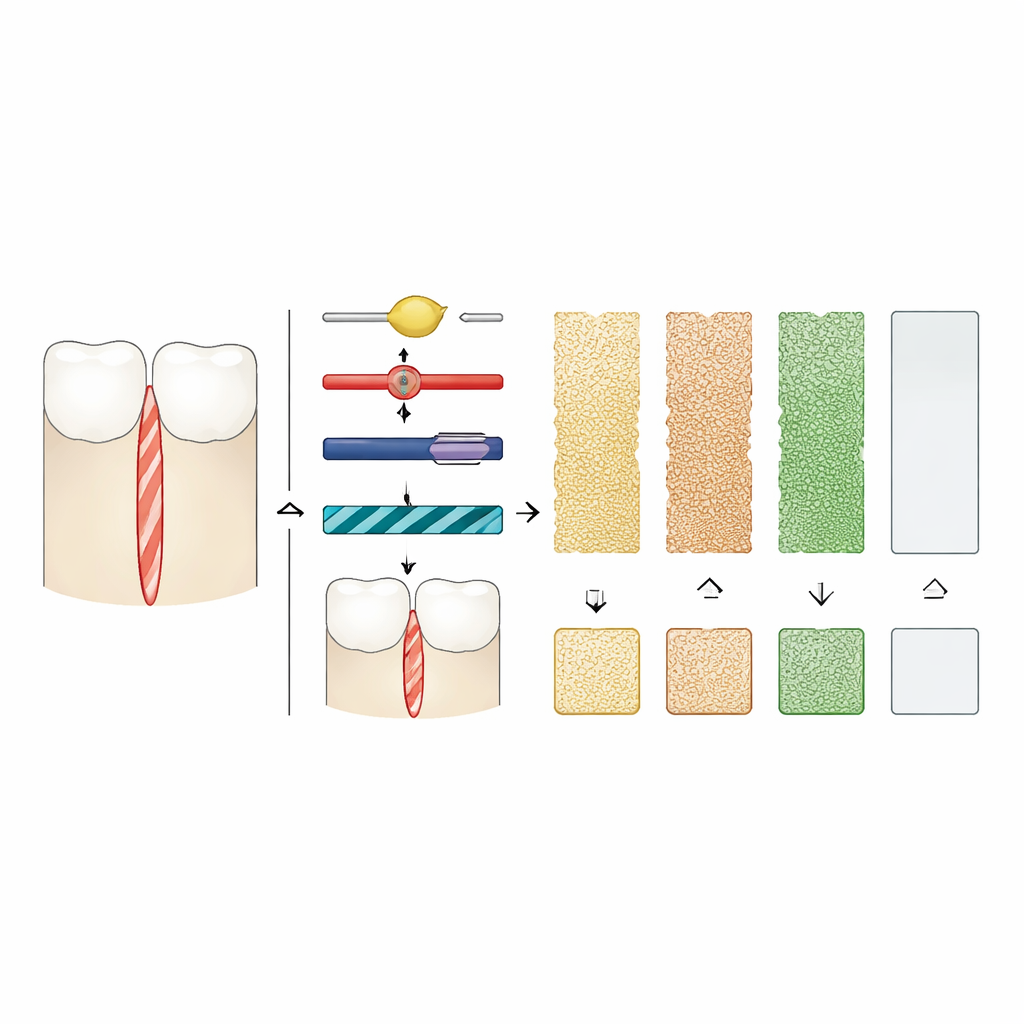
To investigate these issues under controlled conditions, the researchers used freshly extracted premolars with intact outer surfaces. Each tooth provided two contact surfaces, giving 108 enamel samples in total. One group was left untouched as a benchmark, while the others underwent IPR with one of four common methods: a high‑speed diamond bur, a rotating diamond disc, a hand‑held abrasive strip, or a powered oscillating strip. On every stripped tooth, one surface was only reduced, and the other was reduced then polished with a fine finishing disc for 20 seconds, mimicking a brief but realistic clinical step. The team then examined the enamel with three advanced tools: atomic force microscopy to measure microscopic roughness, energy‑dispersive X‑ray spectroscopy to check the relative amounts of key elements like calcium and phosphorus, and scanning electron microscopy to visualize the surface texture.
What Happened to the Enamel Surface
All four IPR methods made enamel measurably rougher than untouched surfaces, confirming that stripping inherently disrupts the outer glaze. On average, the roughness values still stayed below commonly cited levels associated with a sharp jump in plaque build‑up, but they were clearly higher than the control enamel. Among the tools, most produced comparable roughness, with one important difference: the diamond disc left the roughest enamel, while the oscillating metallic strip produced significantly smoother surfaces. When polishing was added, every group showed a marked drop in roughness. Yet the best combination—both in numbers and in microscope images—was IPR with an oscillating strip followed by polishing, which yielded the most uniform, gently textured enamel with few remaining furrows or debris.
Changes in Tooth Chemistry
Beyond texture, the researchers also looked at whether thinning the enamel changed its basic makeup. They measured the proportions of calcium and phosphorus, the main building blocks of tooth mineral, along with oxygen, carbon, and sodium. Compared with untouched enamel, stripped surfaces showed statistically significant shifts in these elemental concentrations, including higher ratios of calcium to phosphorus and changes in carbon content that likely reflect removal of the outermost, more organic‑rich layer. These findings suggest that IPR does not just scratch the surface; it also subtly alters which mineral layer is exposed. However, polishing did not reverse these chemical shifts—it mainly improved the physical smoothness that bacteria encounter.
What This Means for Patients and Dentists
For patients, the central message is reassuring but nuanced. Creating space between teeth by carefully removing small amounts of enamel does roughen and slightly alter the surface, regardless of the instrument used. Yet, when dentists follow IPR with a proper polishing step, the enamel becomes much smoother again, which should help keep plaque accumulation under control. Among the tested methods, powered oscillating strips, finished with fine polishing discs, gave the most favorable blend of space creation and gentle surface treatment. The work was done in the lab rather than in the mouth, so real‑world factors like saliva and natural repair processes were not fully captured, but the results strongly support the idea that if enamel must be reduced, it should always be polished—and that choice of instrument matters.
Citation: Omar, L.M., El Gazzar, R.I. & Montasser, M.A. Evaluation of enamel surface after interproximal reduction using different methods, with and without polishing: an in vitro study. Sci Rep 16, 12224 (2026). https://doi.org/10.1038/s41598-026-46967-z
Keywords: interproximal reduction, enamel roughness, orthodontics, tooth polishing, clear aligners