Clear Sky Science · en
The impact of environmental knowledge on green purchasing intention: a higher-order model
Why what we know can change what we buy
Every time we shop, we make small choices that add up to big impacts on the planet. This study looks at how what college students know about the environment shapes their desire to buy greener products, such as low-pollution goods or items that are easier to recycle. Understanding this link can help schools, governments, and companies encourage everyday habits that are kinder to the Earth.
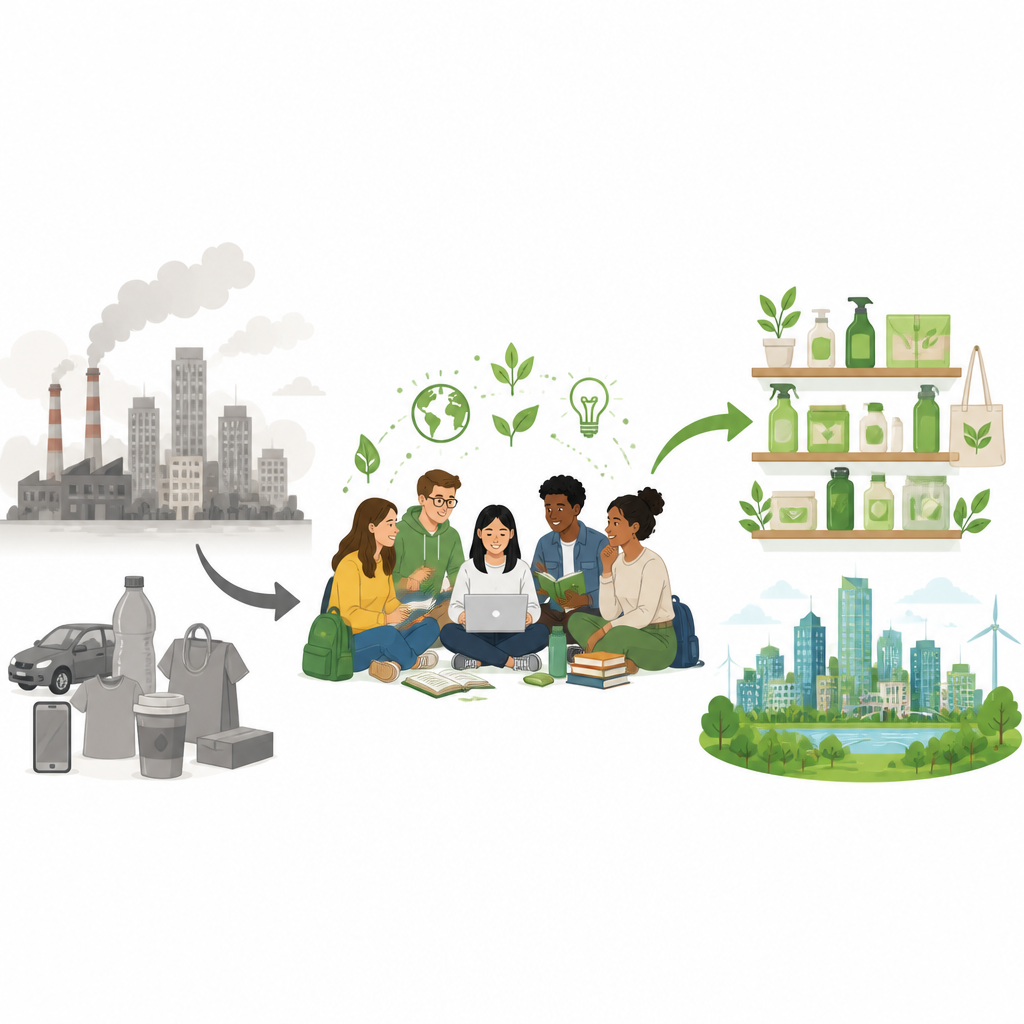
Young shoppers at the center of change
The researchers focused on undergraduate students in Liuzhou, an industrial city in southern China that is actively trying to clean up its economy. Students are a key group because they are open to new ideas, have many ways to learn about environmental issues, and will soon become the main consumers in society. The team surveyed 343 students from different years and fields of study, asking about their knowledge of environmental problems, their feelings toward green products, the social pressures they sense, and how easy they think it is to buy green items.
More than just facts in a textbook
The study treated environmental knowledge as more than just memorized facts. It included both what students felt they knew and what they could objectively understand about issues like pollution, climate change, and resource use. This knowledge turned out to have a clear positive link with students’ willingness to buy green products. Students who knew more were better at spotting environmental risks and more likely to let those concerns guide what they put in their shopping baskets.
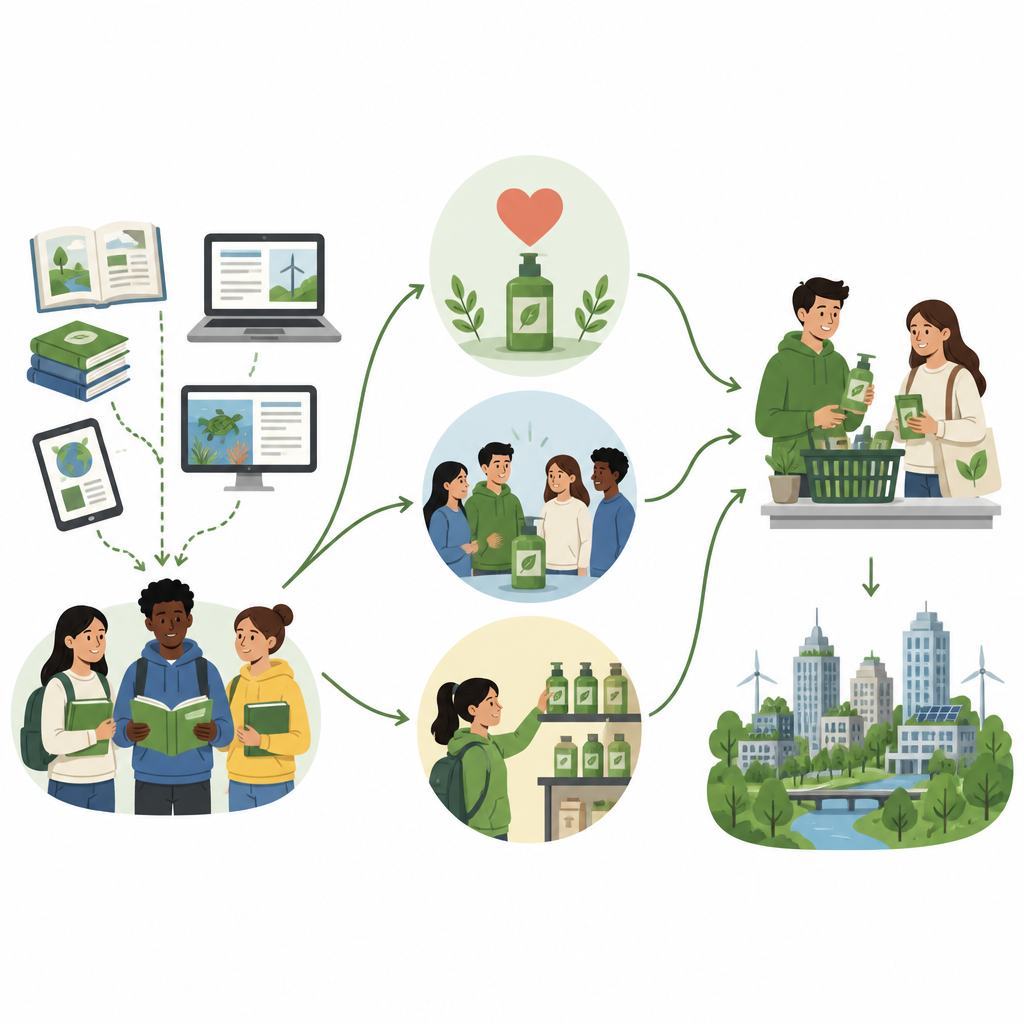
How attitudes, friends, and confidence matter
The researchers went a step further and asked how, exactly, environmental knowledge turns into buying intentions. They found three important paths. First, knowledge boosts positive feelings toward green products, making students see them as valuable and worthwhile. Second, it sharpens their sense of social expectations, so they notice when friends, family, or society at large favors greener choices. Third, it raises their confidence that they can actually buy green goods, by helping them feel more capable of finding, choosing, and affording these products. All three channels made students more willing to choose green options, but this sense of control was the strongest link.
Measuring patterns behind the numbers
To uncover these patterns, the team used a statistical approach that looks at how several psychological factors fit together into a larger picture. Their model showed that environmental knowledge explains a meaningful share of differences in how students think about green products, how strongly they feel social pressure to buy them, and how able they feel to act on their concerns. Together, these factors explained nearly two thirds of the variation in students’ intentions to buy green products, suggesting that this way of looking at behavior captures something real about how choices are formed.
What this means for everyday green choices
In simple terms, the study finds that teaching young people about environmental issues does more than fill their heads with information; it nudges their values, their sense of what others expect, and their belief that their own choices matter. When those three pieces line up, students are much more likely to want green products. For educators, policymakers, and businesses, the message is clear: combine solid environmental education with supportive social messages and easier access to green goods, and those small shopping decisions can start to add up to a cleaner, more sustainable future.
Citation: Liu, M., Lyu, B. & Suwandej, N. The impact of environmental knowledge on green purchasing intention: a higher-order model. Sci Rep 16, 15801 (2026). https://doi.org/10.1038/s41598-026-46964-2
Keywords: environmental knowledge, green purchase intention, college students, sustainable consumption, China