Clear Sky Science · en
Elemental composition and physicochemical properties postharvest of the yerba mate produced in different cultivation systems and environments
Why the way we grow yerba mate matters
For millions of South Americans, sharing a gourd of yerba mate is part of daily life and culture. But beyond its earthy taste and social ritual, the plant behind the drink quietly reflects the fields where it was grown. This study asked a simple question with big implications for farmers and consumers alike: how do farming practices and local conditions shape the chemistry, color, and key compounds in yerba mate after harvest?
Looking closely at the leaves
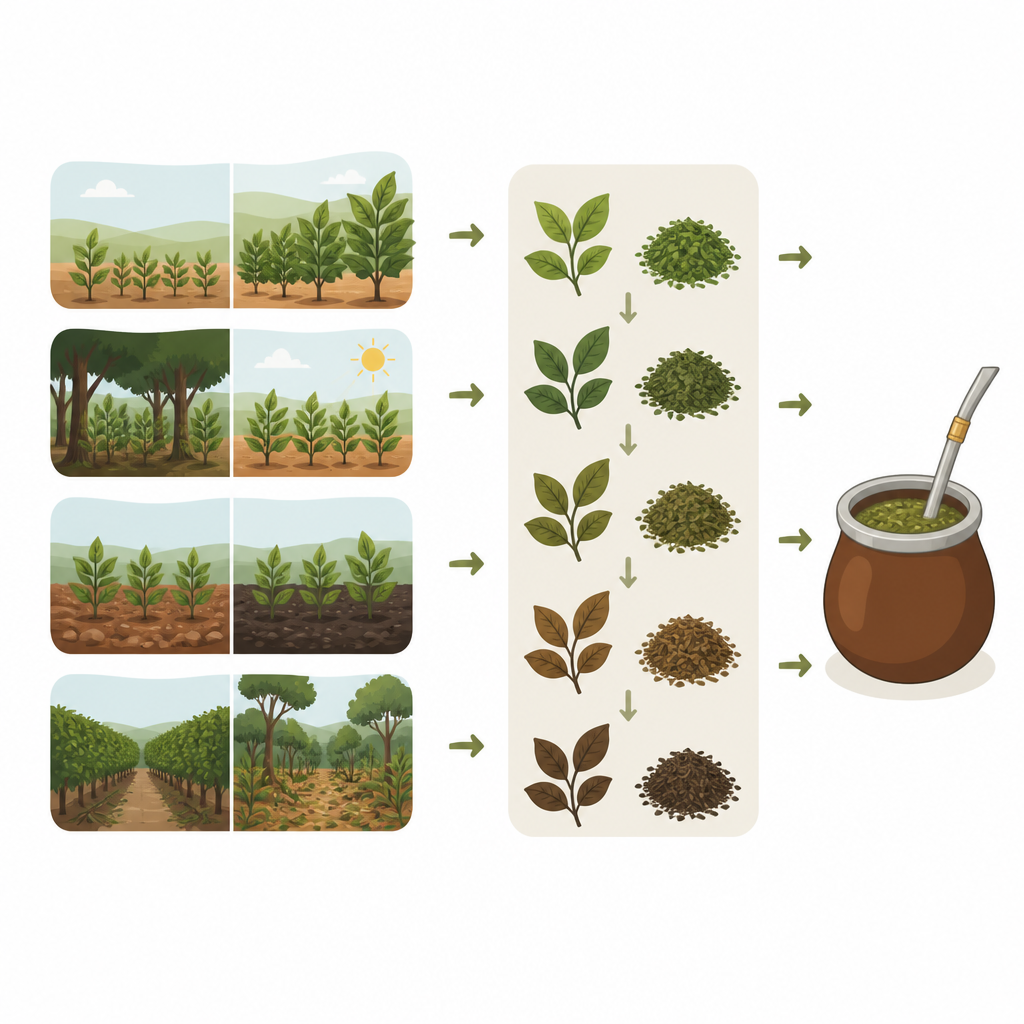
The researchers collected industrially processed yerba mate from dozens of farms in southern Brazil during both summer and winter. Each batch came with detailed records about how the plants were grown: the age of the plantation, whether the trees grew in shade or full sun, how they were pruned, the type of soil, the fertilizers used, and how weeds were controlled. In the lab, the team ground the leaves into fine powder and measured a wide range of traits, from mineral elements such as calcium, magnesium, and aluminum to properties like acidity, color, protein, starch, and moisture. They also focused on well-known bioactive compounds such as caffeine, saponins, and antioxidant molecules.
How fields imprint minerals and color
The study showed that the field leaves a clear fingerprint on the finished product. Older plantations, especially those over about 20 years, tended to accumulate more aluminum and arsenic in the leaves, while younger stands contained more calcium and strontium. Shading and soil type also made a difference: partial shade favored higher levels of beneficial minerals like calcium, potassium, and magnesium, whereas red, clay-rich soils were linked to higher water content, caffeine, and saponins. Weed control methods mattered too. Areas managed with both mowing and herbicides showed lower aluminum levels, but all cleaning strategies were associated with cadmium values above the strict Brazilian legal limit, highlighting a potential safety concern that depends on local soil and product regulations.
The story behind flavor and foam
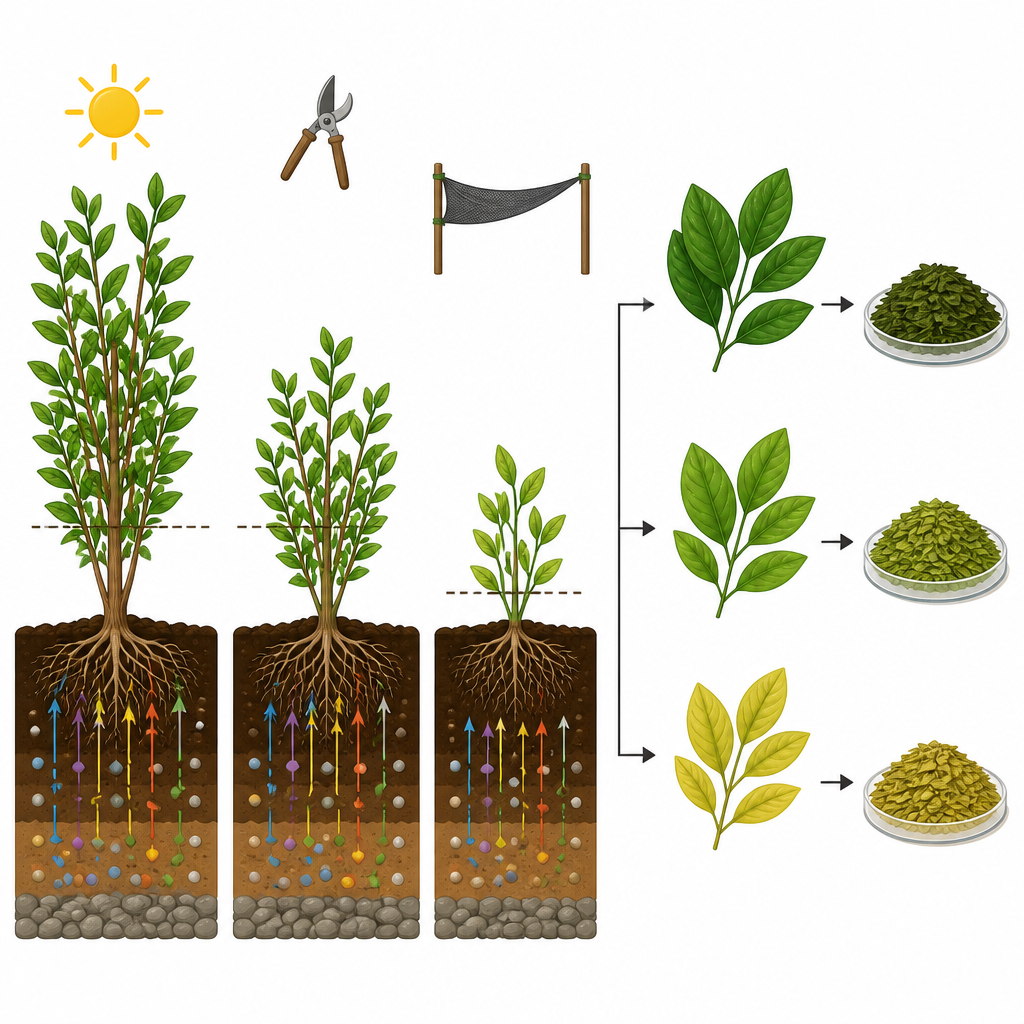
Several farming choices were closely tied to compounds that influence taste, aroma, and the foamy “crema” prized in traditional mate. Caffeine and saponins varied with plant age, pruning, shading, and fertilization. Older plants generally held more caffeine and saponins, which can boost bitterness and foam. Upper-branch pruning produced leaves with more caffeine and saponins than lower pruning, and shaded plants tended to yield more saponins than those in full sun. Fertilizer type also played a role: fields with mixed or organic fertilization often had lower levels of potentially toxic metals and somewhat lower caffeine and saponins, while still supporting strong antioxidant activity. Color, a key quality cue for different markets, shifted with age, light, and pruning: intense light and older plants produced a more yellow, less vivid green, whereas certain fertilization regimes and soils kept the characteristic bright green tone.
Unraveling complex relationships
To make sense of so many measurements at once, the team used statistical tools that reveal how variables move together. They found that some minerals, such as magnesium, calcium, manganese, cobalt, and vanadium, tended to rise in tandem, while strontium often moved in the opposite direction to aluminum and arsenic. Caffeine, saponins, and even the small amount of starch in the leaves tended to increase together, hinting at shared pathways in the plant. Visual maps of the data showed that young and middle-aged plantations formed one cluster, whereas older stands formed another, confirming that plantation age, along with light and pruning, creates distinct “chemical personalities” in the final product.
What this means for drinkers and growers
For everyday mate drinkers, the study suggests that differences in flavor, foam, color, and even mineral content are not random: they arise from how and where the plants are grown and managed. For farmers and processors, the work points to practical levers they can adjust to steer quality, from choosing partial shade and balanced fertilization to tailoring pruning strategies and soil management. Overall, the research shows that the postharvest quality of yerba mate is tightly linked to agricultural practice and environment, especially plantation age and pruning style, providing a roadmap for producing safer, more consistent, and better targeted products for different tastes and markets.
Citation: Nunes, M.T., Ferreira, C.D., de Moraes Flores, E.M. et al. Elemental composition and physicochemical properties postharvest of the yerba mate produced in different cultivation systems and environments. Sci Rep 16, 15369 (2026). https://doi.org/10.1038/s41598-026-46932-w
Keywords: yerba mate, plantation age, shading, soil and fertilization, caffeine and saponins