Clear Sky Science · en
Hepatic metabolites indicate differences during late mid-lactation in Holstein cows with different levels of pasture inclusion
Why cow diets and livers matter to your milk
Behind every glass of milk lies a complex story inside the cow’s body, especially in the liver, the main hub that handles nutrients from feed. This study asks a simple but important question for farmers, consumers, and the environment: when dairy cows eat more fresh pasture versus more barn-mixed feed, how does their liver respond, and what might that mean for efficiency, waste, and long term health?
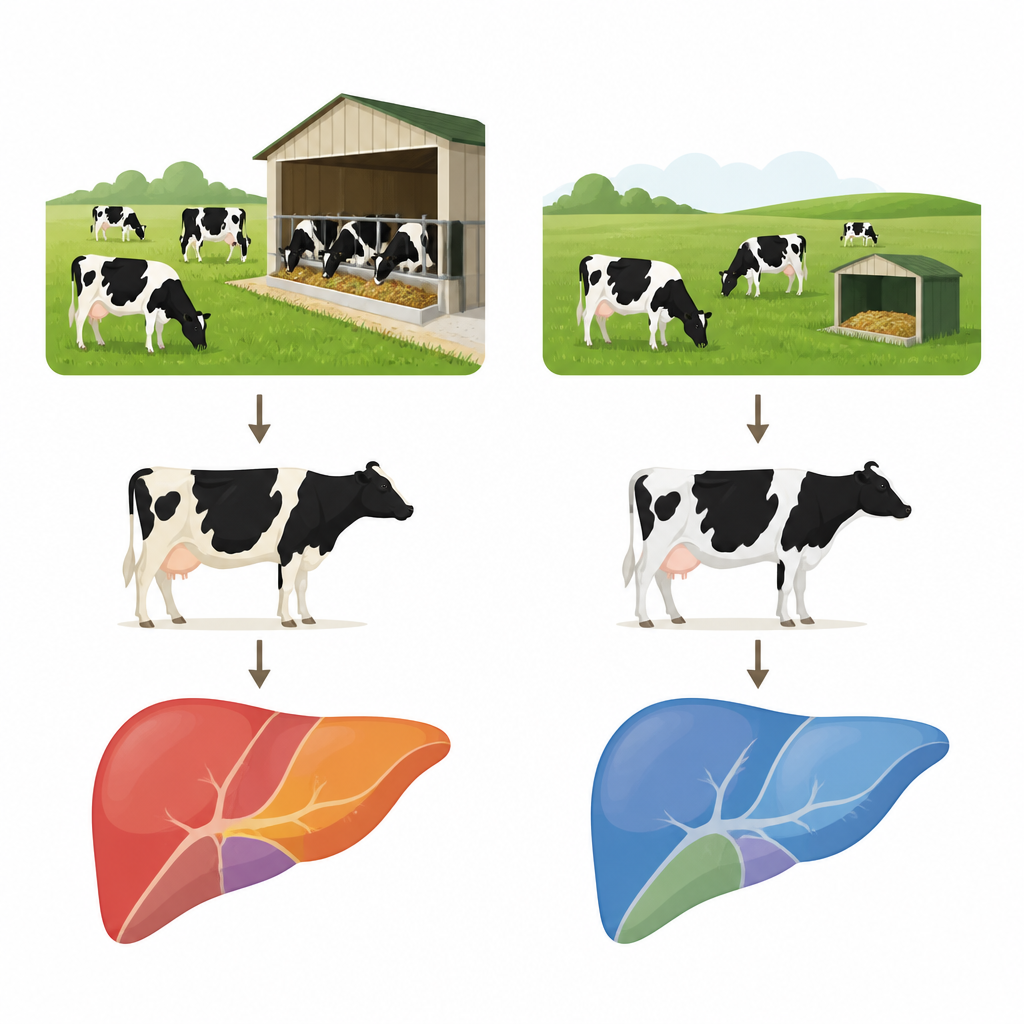
Two ways to feed the same kind of cow
Researchers in Uruguay followed 16 Holstein cows during mid-lactation, when milk yield is still high but the early stress of calving has eased. All cows were of the same North American strain to avoid genetic noise. One group grazed pasture but also received a carefully formulated total mixed ration in the barn, so grass provided about one third of their daily dry matter. The other group grazed as much pasture as possible and received extra concentrate and conserved forage only as needed. Milk output, milk fat and protein, and body condition were similar between the two groups, which let the scientists focus on what changed inside the animals rather than on obvious performance gaps.
Looking inside the blood and liver
To see how the cows’ bodies handled their different diets, the team collected blood samples and tiny liver biopsies around 180 days into milk production. They measured common blood markers such as urea and creatinine, and used advanced tools to profile small molecules and gene activity in the liver. While milk production looked alike on the surface, blood urea nitrogen was clearly higher in cows eating more pasture, a sign that the body was processing and excreting more surplus protein. Inside the liver, hundreds of small compounds and key genes painted a detailed picture of how each feeding approach shaped metabolism.
Pasture plus mixed feed favors sugar use and fat building
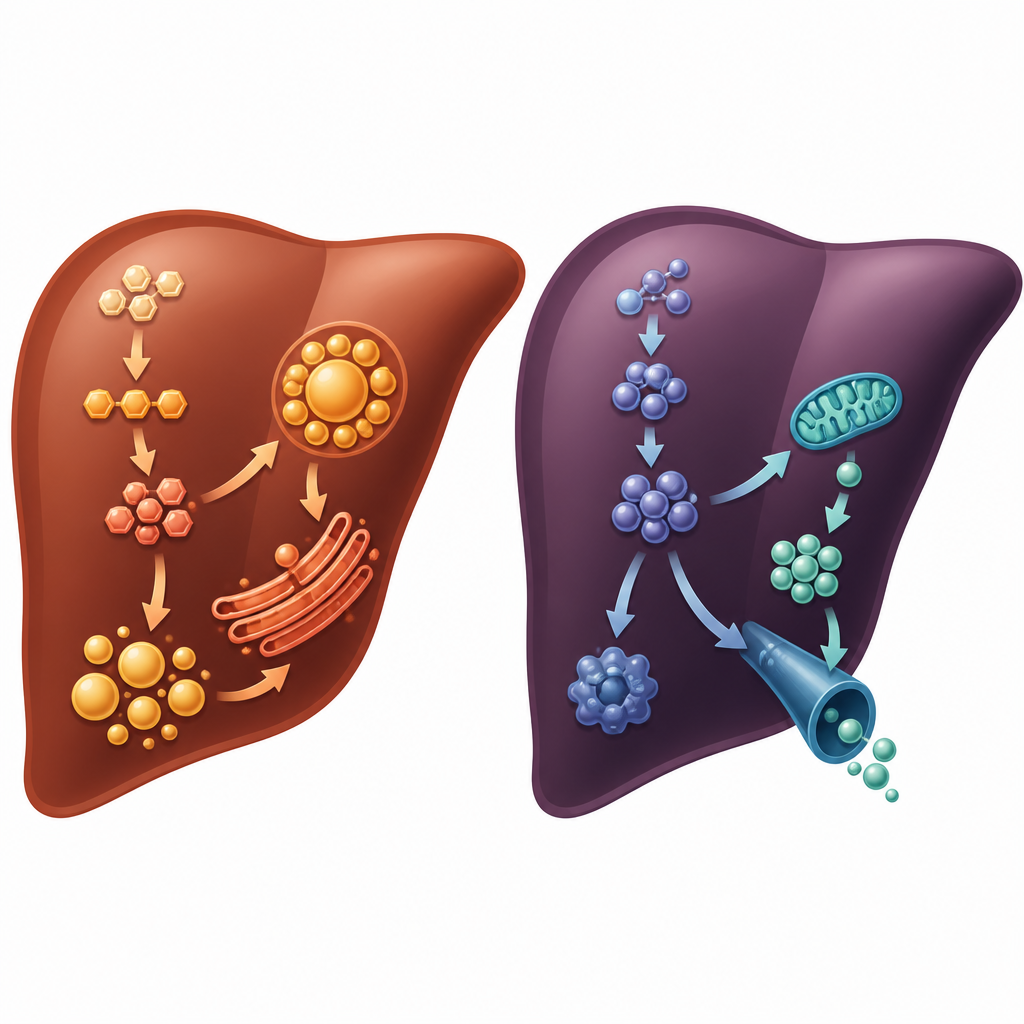
Cows that grazed some pasture but received substantial mixed feed showed higher levels of several sugar related molecules in their livers, including forms of glucose and sucrose. They also had greater activity of genes involved in a pathway that turns sugar into building blocks and energy for making fats. Two important genes that drive the creation of new fatty acids were more active in these cows, along with others that help channel glucose into a support pathway for fat and cell membrane production. Even though this internal fat making activity rose, it did not translate into more milk fat or obvious body fat, suggesting these changes help maintain liver cells and membranes rather than simply store extra energy.
Mostly pasture shifts the liver toward handling extra nitrogen
In contrast, cows that relied more heavily on pasture had liver profiles rich in nitrogen related compounds. Molecules such as citrulline, ornithine, glutamine, and creatinine, all linked to how the body disposes of surplus nitrogen, were more abundant. Combined with their higher blood urea nitrogen and slightly higher crude protein intake in parts of the season, this suggests that these cows’ livers were working harder to convert excess dietary protein into urea and other nitrogen containing products. Interestingly, the genes that encode the core nitrogen disposal machinery did not all increase in step, hinting that shorter term controls and substrate availability, rather than gene switches, may govern how strongly this pathway runs.
What this means for cows, farms, and the environment
Overall, the study shows that mid-lactation cows on a higher pasture diet lean toward increased nitrogen breakdown in the liver, while cows on a more balanced mix of pasture and barn feed channel more sugars into gentle fat and membrane maintenance inside liver cells. Both strategies supported similar milk yields, but they place different kinds of workload on the liver and may influence how much nitrogen leaves the farm as waste. For farmers seeking both animal welfare and environmental care, these findings highlight that the choice is not only about how much milk a cow gives but also how her liver copes with the diet that produces it.
Citation: García-Roche, M., Astessiano, A.L., Talmón, D. et al. Hepatic metabolites indicate differences during late mid-lactation in Holstein cows with different levels of pasture inclusion. Sci Rep 16, 15358 (2026). https://doi.org/10.1038/s41598-026-46842-x
Keywords: dairy cows, pasture feeding, liver metabolism, nitrogen metabolism, metabolomics