Clear Sky Science · en
Comparative analysis of immunogenicity of Chinese MMR and MR vaccines following primary vaccination in infants in Gansu Province
Why this vaccine study matters for families
Parents around the world rely on childhood vaccines to shield their children from measles, mumps, and rubella—three infections that can spread quickly and sometimes cause serious complications. In China, doctors can use either a two-in-one measles–rubella shot (MR) or a three-in-one measles–mumps–rubella shot (MMR) for a baby’s first dose. This study asks a practical question with real-world consequences: does adding mumps protection to that first shot slightly weaken the baby’s immune response to measles and rubella, or is protection essentially the same?
Two different shots, one shared goal
The researchers focused on infants aged 8–9 months in Gansu Province, a largely rural region in northwestern China. All 400 participating babies were healthy, had never received these vaccines before, and had no known history of measles, mumps, or rubella infections. The team randomly assigned half of the infants to receive the three-in-one MMR vaccine and the other half to receive the two-in-one MR vaccine, mirroring real options used in the national program. This randomized design makes the two groups comparable, so differences in immune response can be traced mainly to the type of vaccine, not to background factors like age or sex.
How the immune response was measured
To see how well each shot worked, the team collected a small blood sample just before vaccination and another sample 4–8 weeks afterward. In the lab, they measured levels of IgG antibodies—proteins the immune system makes after vaccination—to measles and rubella in both groups, and to mumps in the MMR group. Instead of just looking at average levels, they used a modern statistical approach to capture how antibody levels increased from baseline and how much they varied from child to child. This allowed them to compare how strongly each vaccine boosted defenses while also checking whether age, sex, or timing of blood collection played any meaningful role. 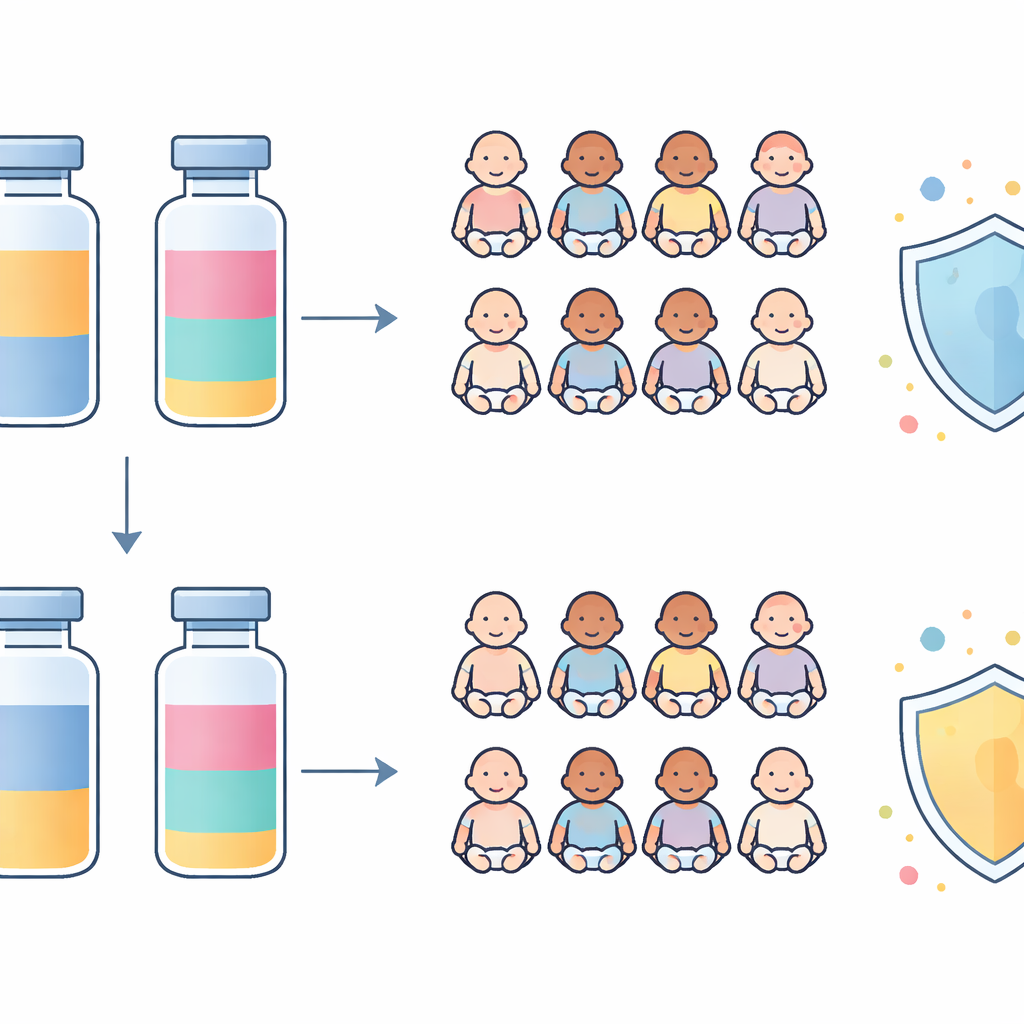
What the study found about measles protection
Both vaccines triggered a dramatic jump in measles antibodies, a strong sign of protection. On the surface, babies who received MMR ended up with slightly higher absolute measles antibody levels than those who received MR. But when the researchers accounted for the fact that MR infants started from a lower baseline, a different picture emerged: the MR vaccine produced a bigger relative jump in measles antibodies, about 248 times higher than before vaccination, compared with about 200 times in the MMR group. Using their statistical model, the team estimated that the measles antibody increase was about 34 percent higher in the MR group than in the MMR group. In simple terms, dropping the mumps component in that first shot gave measles a bit more “space” to grab the immune system’s attention.
Rubella and mumps responses in the real world
For rubella, the story was more balanced. Both vaccines boosted rubella antibodies strongly, and the differences between MR and MMR were small and not considered meaningful by the study’s criteria. As expected, only the MMR vaccine produced mumps antibodies, and these rose clearly from baseline, confirming that the three-in-one shot still offers worthwhile mumps protection. Across the three viruses, measles triggered the strongest average antibody response, rubella was in the middle, and mumps the lowest—yet still in a range considered effective. The researchers also found that measles responses varied the most from one infant to another, while mumps responses were more tightly clustered, hinting that personal factors influence measles immunity more strongly than the others. 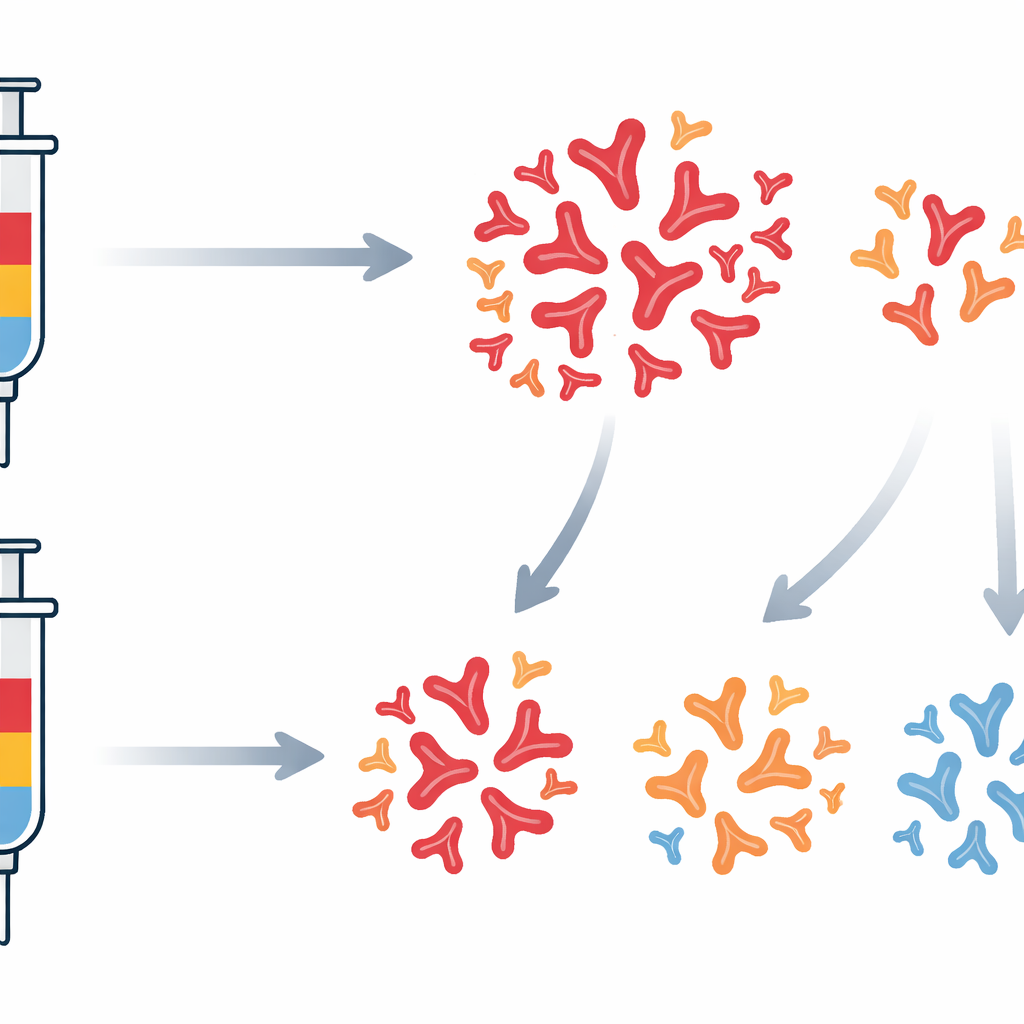
What this means for vaccine choices
For families and policy makers, the bottom line is reassuring but nuanced. Both MR and MMR vaccines worked well in 8–9-month-old infants, generating strong short-term protection against measles and rubella, and—when used—against mumps. At the same time, the study confirms a pattern seen in vaccine science: when more components are combined in a single shot, the immune response to any one part can be slightly lower. Here, that trade-off shows up as a modest advantage for the MR vaccine in boosting measles antibodies. In settings where measles control is the top priority and mumps is less of a concern, using MR for the first dose could help maximize measles immunity, with mumps protection added later or by other means. Where three-disease coverage in one visit is more important, MMR remains a strong, practical choice.
Citation: Liang, Xf., Zhang, Xs., An, J. et al. Comparative analysis of immunogenicity of Chinese MMR and MR vaccines following primary vaccination in infants in Gansu Province. Sci Rep 16, 10669 (2026). https://doi.org/10.1038/s41598-026-46826-x
Keywords: measles vaccination, MMR vs MR, infant immunization, vaccine immune response, China public health