Clear Sky Science · en
Modifying VEGF-A mRNA by combinatorial optimization to enhance therapeutic efficacy for myocardial infarction
Healing the heart after a major scare
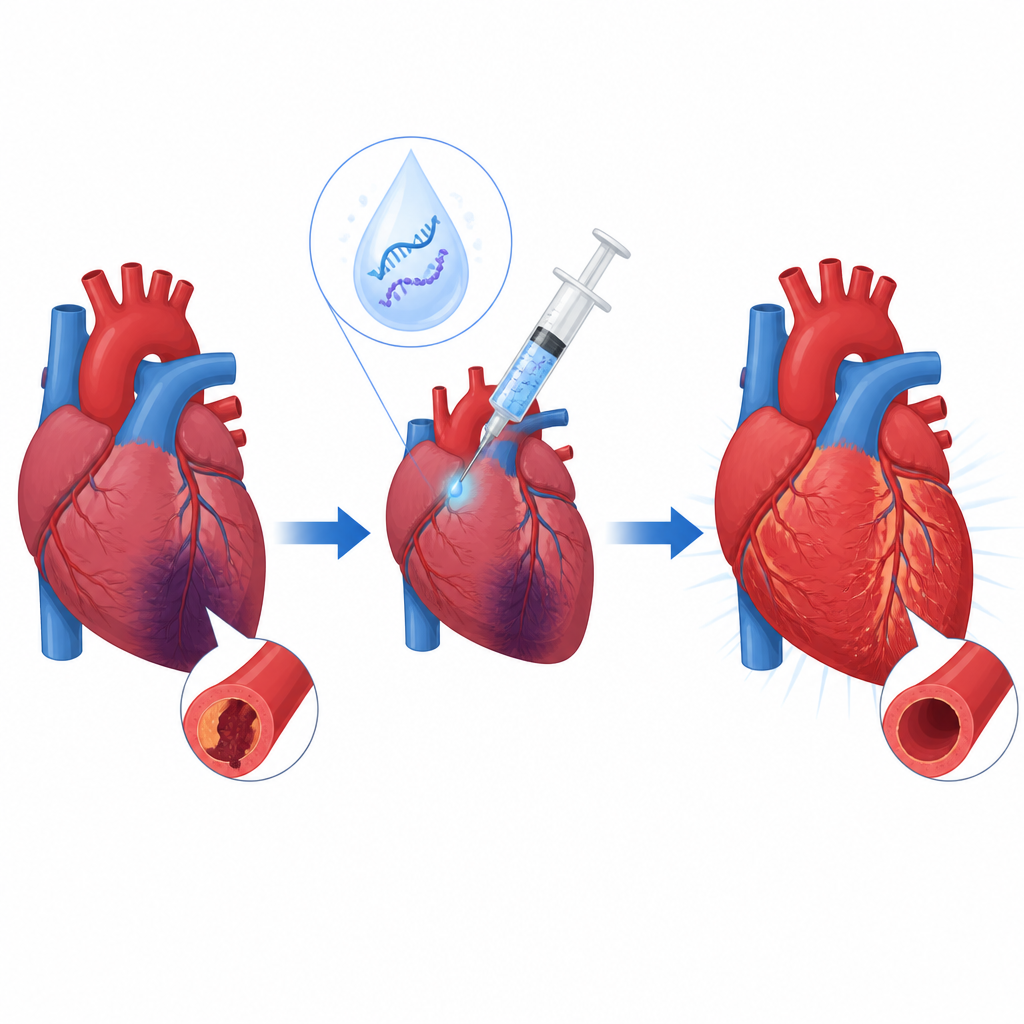
When someone has a heart attack, part of the heart muscle is starved of blood and oxygen, leaving a region of weak, scarred tissue that can set the stage for heart failure. This study explores a new way to help the heart heal itself using a lab-made message molecule called mRNA that tells cells to briefly produce extra amounts of a natural growth signal. By fine-tuning the structure of this mRNA, the researchers aim to boost blood vessel growth and limit scarring in damaged heart muscle, offering a potential future treatment that works with the body’s own repair systems.
Why new blood vessels matter
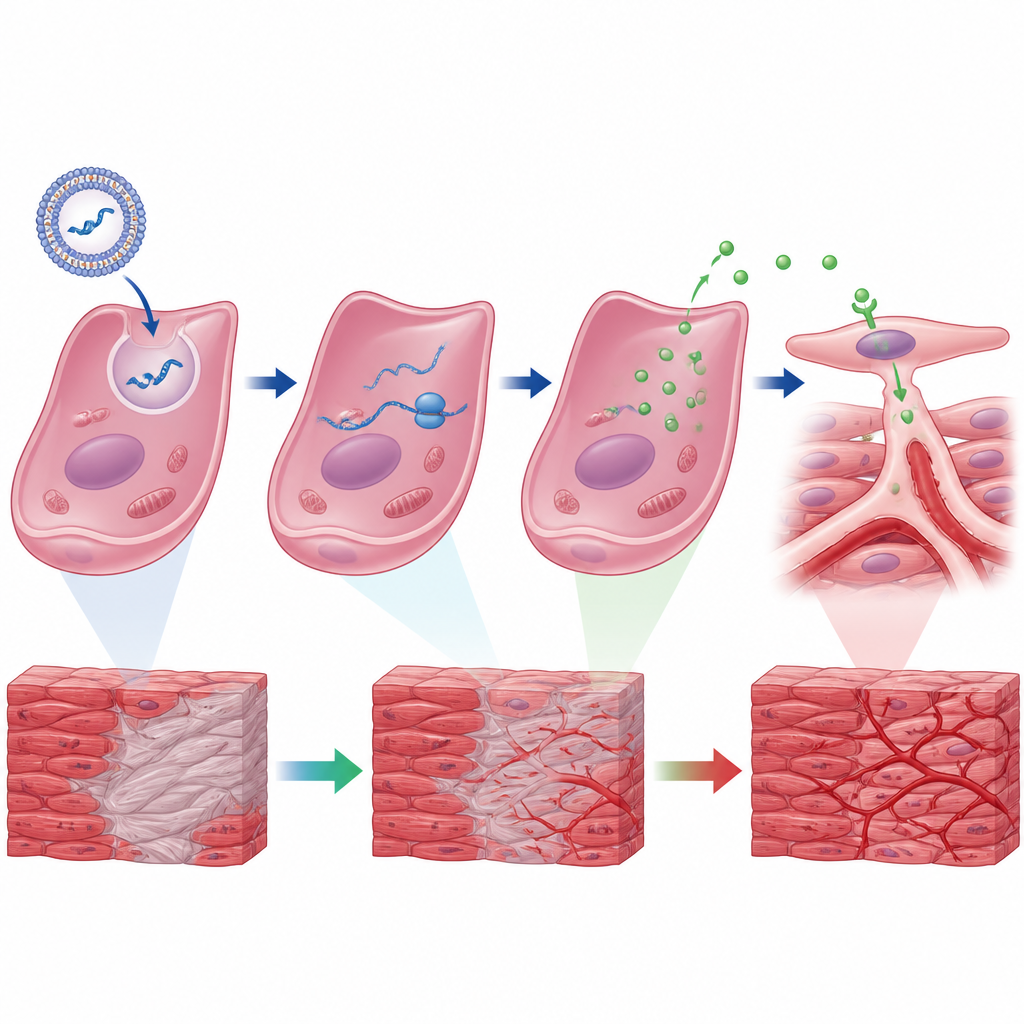
After a heart attack, the body tries to grow new blood vessels to feed the injured area, driven by a signal protein called VEGF-A. This natural response is strong at first but quickly fades, often leaving the heart under-supplied with blood and oxygen. Past attempts to deliver VEGF-A as a protein or through gene therapy had mixed results, partly because the boost in signal was either too brief or too uncontrolled. mRNA offers a middle path: it can be designed to make cells produce VEGF-A for a short, adjustable period without altering the DNA, which makes it attractive as a safer, more flexible treatment approach.
Building a better mRNA message
The team set out to design a VEGF-A mRNA called Km10566 that would be especially stable, efficient, and gentle on the immune system. They systematically mixed and matched dozens of design elements: the regions before and after the VEGF-A code, the exact choice of codons within that code, the length and shape of the tail at the end, and several chemical tweaks to the RNA building blocks themselves. Through cell tests, they found that one particular chemical change, known as N1-methylpseudouridine, gave the strongest VEGF-A production while calming immune alarm signals. The final Km10566 design produced about twice as much VEGF-A protein as a well-known comparison mRNA used in earlier clinical work.
Testing heart repair in rats
Next, the scientists tested Km10566 in rats that had a heart attack produced by tying off a major heart artery. Right after this injury, they injected a single dose of Km10566 directly into the heart muscle and tracked heart performance for three weeks. Compared with animals receiving only a buffer solution or the older VEGF-A mRNA, rats treated with Km10566 showed a clear rise in key pumping measures, such as how much blood the left ventricle could eject with each beat. The benefits appeared within two weeks and persisted through the end of the study, without enlarging the heart or altering heart weight relative to body size. A circular version of the message, designed to last longer, helped somewhat but did not match the improvement seen with Km10566.
Reading the heart’s repair signals
To understand what was happening inside the tissue, the team looked at genes tied to vessel growth and heart muscle recovery. In hearts treated with Km10566, certain repair markers that normally stay high when tissue is still in distress gradually quieted down over three weeks, suggesting that the injury response had moved toward resolution. A key receptor for VEGF-A fell more strongly and remained lower for longer in the Km10566 group than in comparison groups, consistent with better blood supply and less ongoing oxygen shortage. Another gene tied to the heart’s contractile machinery shifted later in the course, hinting at structural fine-tuning of the muscle once blood flow had improved.
Less scar tissue, healthier heart structure
Microscope studies of the rat hearts added more clues. Standard staining methods showed that all VEGF-A mRNA treatments reduced tissue damage compared with untreated animals, but Km10566 led to the most orderly, healthy-looking heart muscle fibers. When the researchers stained for collagen, the main ingredient of scar tissue, they found that hearts treated with Km10566 had a sharp and lasting drop in collagen content as early as one week after treatment. The older mRNA design needed more time to have a noticeable effect, and the circular construct landed in between. Because scar tissue stiffens the heart and limits its ability to pump, this reduction in collagen fits well with the improved heart function seen on ultrasound.
What this could mean for patients
Taken together, the results suggest that a carefully engineered VEGF-A mRNA like Km10566 can give the heart a short, strong pulse of its own vessel growth signal at just the right time after a heart attack. In rats, this one-time treatment improved pumping ability, reshaped the repair process at the gene level, and cut back on tough scar tissue in the healing region. Although more work in larger animals and humans is needed, the study points toward a future where a precisely tuned mRNA injection could become part of how doctors help damaged hearts regain strength while avoiding the long-term risks of permanent gene changes.
Citation: Wang, W., Zhan, Z., Chen, L. et al. Modifying VEGF-A mRNA by combinatorial optimization to enhance therapeutic efficacy for myocardial infarction. Sci Rep 16, 15254 (2026). https://doi.org/10.1038/s41598-026-46680-x
Keywords: VEGF-A mRNA, myocardial infarction, cardiac repair, angiogenesis, mRNA therapeutics