Clear Sky Science · en
Mindfulness and hope: distinct yet complementary relationships with psychological well-being
Why this study matters for everyday life
Many people turn to mindfulness to feel calmer and to hope to stay motivated about the future. This study asks whether these two mindsets really work together or if they quietly pull us in different directions. By looking at how mindfulness and hope each relate to mood, stress, and sense of control in college students, the researchers show that paying caring attention to the present and confidently aiming for the future can support well-being in different but matching ways.

Two different ways of meeting life
The authors focus on two simple ideas. Mindfulness is the habit of noticing what is happening right now with curiosity and kindness instead of judgment or distraction. Hope is the belief that you can find paths toward your goals and stay motivated to follow them. At first glance, these can seem like opposites: one invites letting go of striving, while the other centers on striving. Yet both have been linked in past research to less depression and anxiety and to greater satisfaction with life. The study set out to test whether these two strengths overlap, cancel each other, or form a helpful pair.
How the study was done
The researchers surveyed 145 undergraduates at a California university. Students filled out standard questionnaires that measured how mindful they tended to be in daily life, how hopeful they felt in the moment, and several markers of psychological health. These markers included symptoms of depression, anxiety, and stress, overall satisfaction with life, optimism, self-kindness, sense of control, and everyday signs of mental organization such as planning and impulse control. The team then used statistical analyses to see how mindfulness and hope, considered together, related to each of these outcomes.
What mindfulness and hope each bring
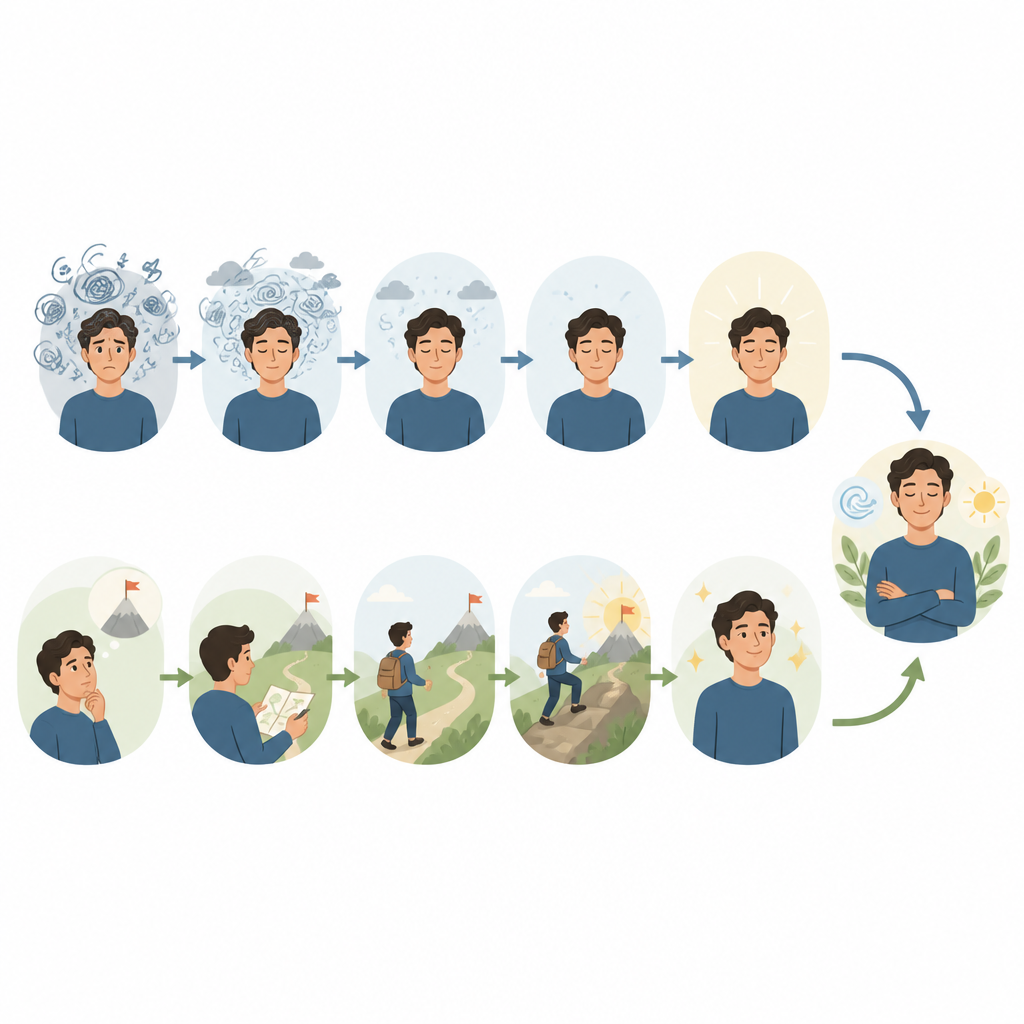
Mindfulness and hope turned out not to be meaningfully linked to each other in this group, suggesting that a person can be high in one and low in the other. Still, each was tied to better well-being. Both were related to less depression and stress, more optimism, greater self-compassion, and healthier ways of relating to control. Yet when the researchers looked more closely, unique patterns appeared. Mindfulness alone was strongly linked with lower anxiety, fewer impulsive behaviors, and less rigid, overcontrolling behavior in relationships. Hope alone was more closely tied to feeling satisfied with life and to confident, healthy assertiveness. The small amount of shared impact between mindfulness and hope across all measures suggests they are not just two names for the same trait.
How these strengths may work together
The findings support the idea that mindfulness and hope help in different but complementary ways. Mindfulness seems especially related to calming the mind and body, easing worry, and reducing hasty or reactive choices. Hope seems especially related to energizing people to move toward valued goals and to speak up for themselves in constructive ways. The authors suggest that combining these approaches could be useful in counseling or self-help programs, with mindfulness helping people face their current reality with clarity, and hope helping them chart and follow meaningful paths forward.
What this means for personal well-being
For a layperson, the takeaway is that living well may involve both a steady eye on the present and a caring gaze toward the future. Mindfulness can help you notice your thoughts, emotions, and habits without being pushed around by them, while hope can help you imagine worthwhile goals and believe you can reach them. This study shows that these two mindsets do not cancel each other out. Instead, they offer different routes to feeling less distressed, more satisfied, and more in control, suggesting that cultivating both may provide a broader toolkit for handling life’s challenges.
Citation: Feldman, D.B., Shapiro, S.L. & Dreher, D.E. Mindfulness and hope: distinct yet complementary relationships with psychological well-being. Sci Rep 16, 15398 (2026). https://doi.org/10.1038/s41598-026-46370-8
Keywords: mindfulness, hope, psychological well-being, college students, stress and anxiety