Clear Sky Science · en
Investigation of microbiological non-compliance of endoscopic final rinse water associated with opportunistic premise plumbing pathogens contamination in connecting tube
Hidden Germs in a Hospital Water Line
People often assume that medical instruments are perfectly clean, especially when they are used inside the body, as with gastrointestinal endoscopes. This study reveals how a seemingly minor piece of plumbing—a short length of pipe feeding purified water to cleaning machines—can quietly collect germs and threaten that safety. By tracing a mysterious spike in bacteria in a hospital’s endoscope rinse water, the researchers uncovered a hidden weak point in the water system and showed how a simple engineering fix greatly reduced the risk.
Why Clean Water Matters for Scopes
Flexible gastrointestinal endoscopes are used tens of thousands of times each year in a single large hospital. After each procedure, they go through a carefully designed series of steps: manual scrubbing, machine-assisted washing, disinfection, rinsing with purified water, alcohol flushing, and drying with air. The final rinse water is crucial because it is the last liquid to flow through the instrument before it is dried and stored. If this water carries too many microbes, it can undo much of the careful cleaning that came before and potentially expose patients to infections.
Tracking Down a Silent Source of Contamination
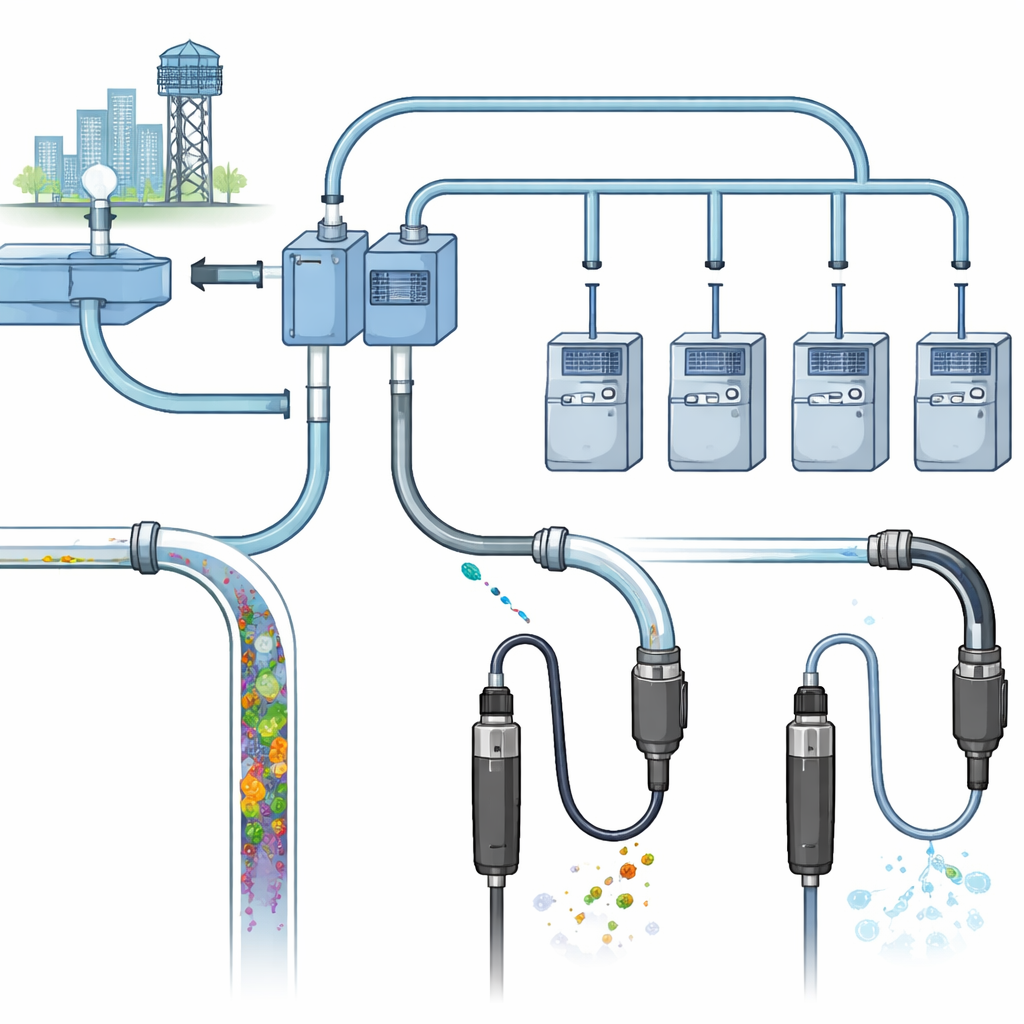
During routine checks in August 2024 at a large hospital in southeastern China, technicians discovered that purified water used for the final rinse of endoscopes suddenly failed safety standards. Almost two thirds of the 32 water samples taken from the endoscope reprocessing area contained excessive numbers of bacteria, sometimes so many that they could not even be counted. Yet when the team tested water coming directly from the main purified water circulation system—before it passed into the local plumbing feeding the reprocessors—it was consistently clean. This pointed to a problem somewhere between the main purified water loop and the individual washing machines.
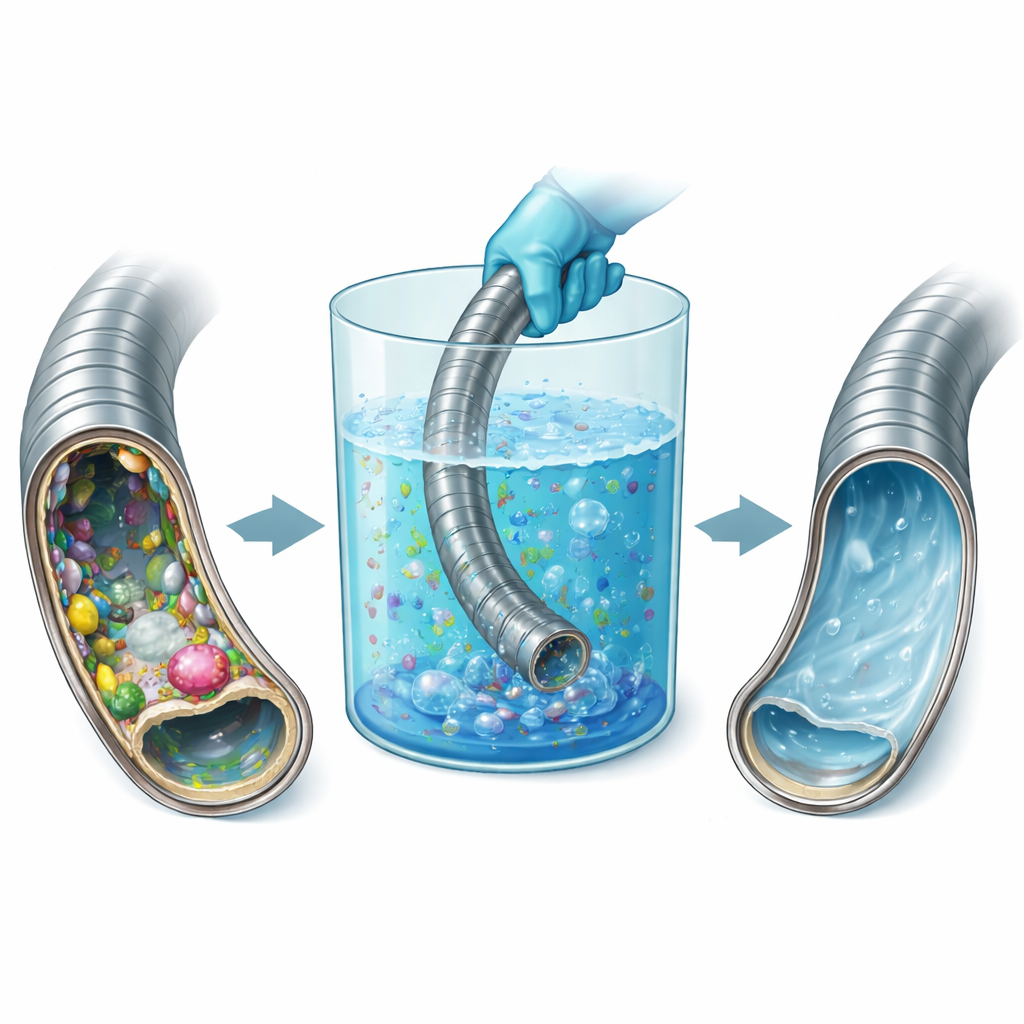
Closer inspection highlighted a series of ten flexible connecting tubes that linked the building’s purified water network to two manual washing stations and eight automated endoscope reprocessors. When these tubes were removed, their inner surfaces were visibly rough and dirty, with pools of stagnant water trapped inside. Tests of the leftover water from all ten tubes showed extremely heavy growth of so‑called opportunistic premise plumbing pathogens—environmental bacteria that thrive in man‑made water systems, especially where water can sit still and form slimy biofilms on pipe walls. Commonly detected species included Sphingomonas, Methylobacterium, Chryseobacterium, and Herbaspirillum, all of which have been involved in hospital infections elsewhere.
A Simple Engineering Fix with Big Impact
The hospital responded by replacing all ten suspect connecting tubes with new ones made entirely from smooth stainless steel, a material less friendly to biofilm growth than the earlier design, which had a plastic inner layer known to promote microbial buildup. When the researchers repeated their water testing at the same 32 locations after replacement, every single sample met the strict requirement of no more than 10 bacterial colonies per 100 milliliters. A few samples still contained very low numbers of bacteria, but well within acceptable limits. Follow‑up checks over the next year, combined with weekly disinfection of the new tubes by soaking them in chlorine solution, showed that water quality remained consistently high.
A Near‑Miss and a Warning
Interestingly, even while the rinse water was heavily contaminated, the 34 endoscopes checked in the study all passed microbiological testing, and no related patient infections were detected. The authors suggest this is likely because the scopes underwent an additional alcohol flush and careful drying after the final water rinse, steps that are known to strongly limit bacterial survival. In this sense, the episode was a near‑miss rather than an outbreak: the drying step “caught” the problem before it reached patients, but only by chance.
What This Means for Patient Safety
For non‑specialists, the take‑home message is that infection prevention in hospitals depends not only on disinfectants and careful staff, but also on the hidden plumbing behind the walls and under the counters. Even short lengths of tubing that are not routinely cleaned or replaced can become reservoirs for biofilm and water‑loving bacteria. This study shows that redesigning these overlooked links—shortening tubes, choosing less hospitable materials, and disinfecting them regularly—can transform unsafe rinse water into reliably clean water. In plain terms, paying attention to the small pieces of pipe that feed cleaning machines can make endoscopic procedures safer without changing anything about the procedure itself.
Citation: Liu, M., Zu, Q., Zheng, L. et al. Investigation of microbiological non-compliance of endoscopic final rinse water associated with opportunistic premise plumbing pathogens contamination in connecting tube. Sci Rep 16, 10783 (2026). https://doi.org/10.1038/s41598-026-46256-9
Keywords: endoscope reprocessing, hospital water systems, biofilm, opportunistic pathogens, infection prevention