Clear Sky Science · en
Enhancing tuber quality, storage performance and yield response of potato to combined foliar application of zinc sulphate and boric acid
Why Better Potatoes Matter
Potatoes sit near the top of the world’s comfort‑food list, but they are also a quiet workhorse for food security, especially in developing countries. Farmers and consumers alike want tubers that yield well in the field, stay firm in storage, and hold on to their nutrition. This study from Iraq and Iran explores a simple question with big practical consequences: can carefully timed leaf sprays of two tiny nutrients—zinc and boron—make potatoes more productive, more nutritious, and longer‑lasting in storage?
What the Researchers Tried in the Field
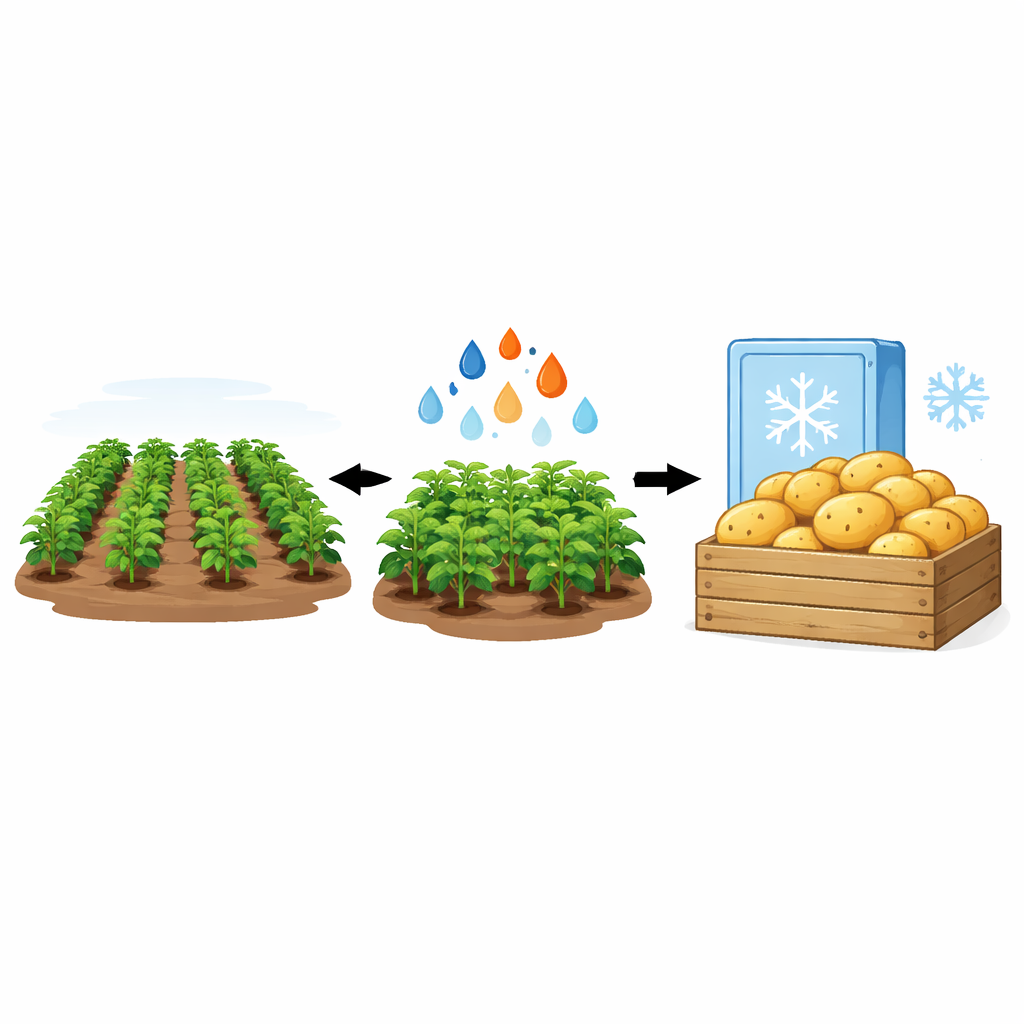
The team worked with a popular Dutch potato variety called Montreal, grown under real farm conditions at the University of Mosul during the 2024 spring season. Instead of adding fertilizer to the soil, they sprayed the leaves with different doses of zinc sulfate and boric acid, alone and in combination. Some plants received no extra micronutrients, while others got moderate or high levels of each nutrient. The sprays were applied three times during early growth, when the plants are rapidly building leaves and future tubers underground. This design let the researchers see not just if the nutrients helped, but which combination worked best.
How Tiny Nutrients Changed Plant Growth
The effects on plant growth were striking. As zinc and boron levels increased, potato plants grew taller, produced more stems, and unfolded larger leaves. These leafy canopies are like solar panels, capturing energy to build tubers. The most dramatic improvements came from the highest combined dose: 1000 milligrams per liter of zinc sulfate plus 100 milligrams per liter of boric acid. Plants receiving this mixture had roughly half again as many stems, much larger leaf area, and nearly double the number of tubers per plant compared with untreated controls. In other words, the foliage was not just greener; it was functionally more productive.
From Plants to Heavier, Stronger Tubers
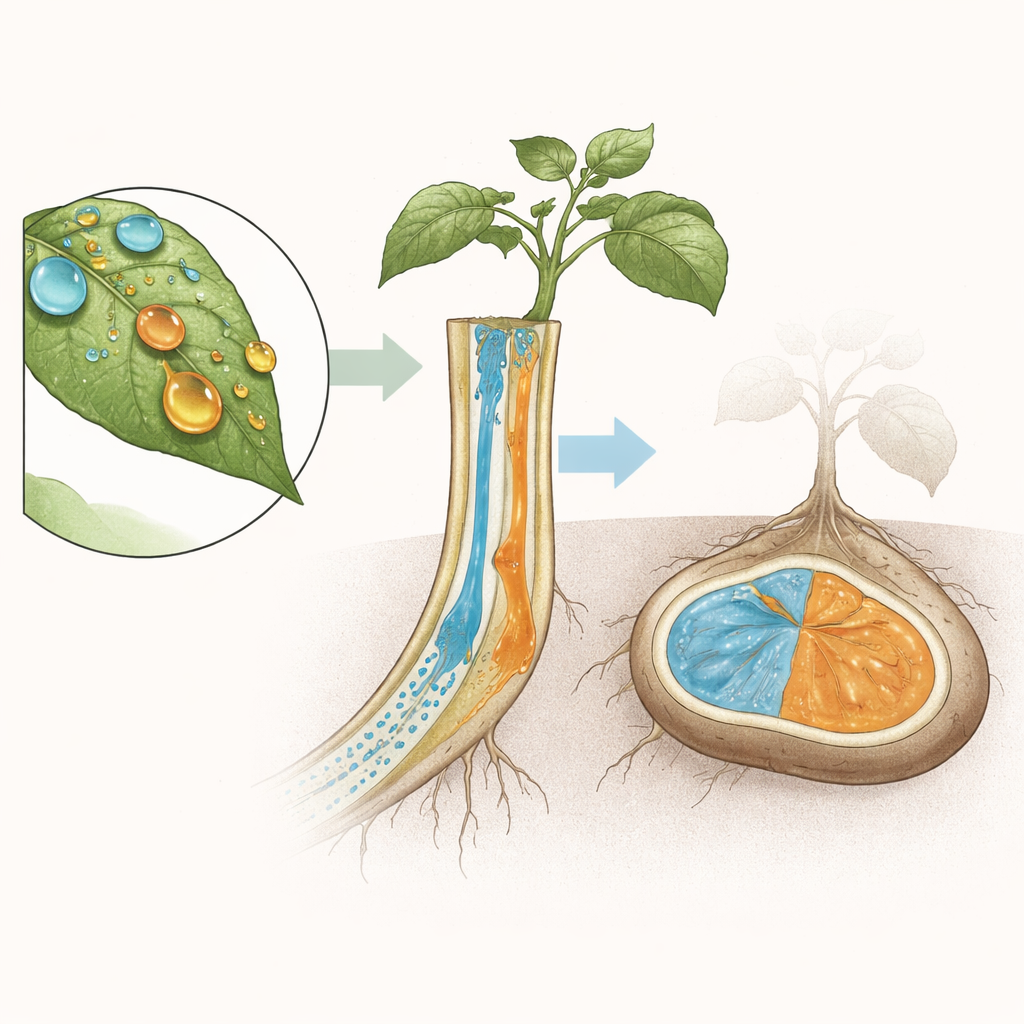
Those lush canopies translated into real gains in the harvest. The top nutrient mix produced the highest yield per plant and per hectare, with total tuber yield rising to about 70 tons per hectare—far above the unsprayed plots. The tubers themselves were denser and more robust. They contained more dry matter and starch, which are key for cooking quality and industrial uses like chips and fries. Firmness, a practical measure of texture and resistance to bruising, was also highest in the fully treated tubers. At the same time, the tubers accumulated more zinc and boron, meaning they were not only more abundant, but also slightly more nutritious from a micronutrient standpoint.
Keeping Potatoes Quality During Cold Storage
Because many potatoes are stored for months before reaching the plate, the team monitored quality during five months in cold storage. Under these conditions, untreated tubers lost almost 10 percent of their weight as water, softened noticeably, and showed shifts in sugars and solids that can harm taste and processing quality. In contrast, tubers from plants given the highest combined spray lost only about 5 percent of their weight and stayed significantly firmer. They also maintained higher dry matter, starch, and mineral contents, while accumulating fewer soluble solids, a pattern linked to better texture and reduced shrinkage. Statistical analyses confirmed that traits like boron content, leaf area, and dry matter were tightly linked to overall yield and storage performance.
What This Means for Farmers and Consumers
To a non‑specialist, the message is straightforward: a modest, well‑planned spray of zinc and boron on potato leaves can produce more potatoes that keep better in storage and offer improved nutritional value. The standout recipe—1000 milligrams per liter of zinc sulfate combined with 100 milligrams per liter of boric acid—gave the best balance of yield, firmness, and long‑term quality. By fine‑tuning these micronutrients, farmers can harvest heavier crops, reduce storage losses, and supply tubers that are better suited for cooking, processing, and feeding growing populations, all without major changes to existing field practices.
Citation: Agha, B.S., Ahmad, M.A., Jasim, E.AA. et al. Enhancing tuber quality, storage performance and yield response of potato to combined foliar application of zinc sulphate and boric acid. Sci Rep 16, 11927 (2026). https://doi.org/10.1038/s41598-026-46146-0
Keywords: potato yield, zinc and boron, foliar fertilization, tuber storage quality, micronutrient management