Clear Sky Science · en
Effects of speed–agility–quickness (SAQ) training on pre-planned change-of-direction speed in adolescent and young adult team ball sport athletes: a systematic review and meta-analysis
Why quick changes of direction matter
Watching a soccer forward cut past a defender or a basketball guard weave through traffic, it is easy to see that speed is not just about running in a straight line. Athletes also need to slow down, plant a foot, and explode in a new direction in a split second. This study asks a practical question for coaches, parents, and young players: does a specific style of practice called speed–agility–quickness, or SAQ training, really help teenagers and young adults change direction faster and sprint more quickly during their games?
The type of training under the spotlight
SAQ training bundles short sprints, quick cuts around cones, ladder footwork, and shuttle runs into focused sessions. These drills are designed to sharpen how fast athletes accelerate, brake, and move their feet. The researchers gathered results from 22 controlled trials of basketball, soccer, and handball players aged 9 to 26. In each trial, one group added SAQ-dominant sessions to their usual practice, while a comparison group carried on with normal routines such as basic conditioning, technical drills, or no extra work. The main outcome was performance on timed tests that require athletes to follow a set course with planned changes of direction, rather than reacting to an opponent or a moving ball. 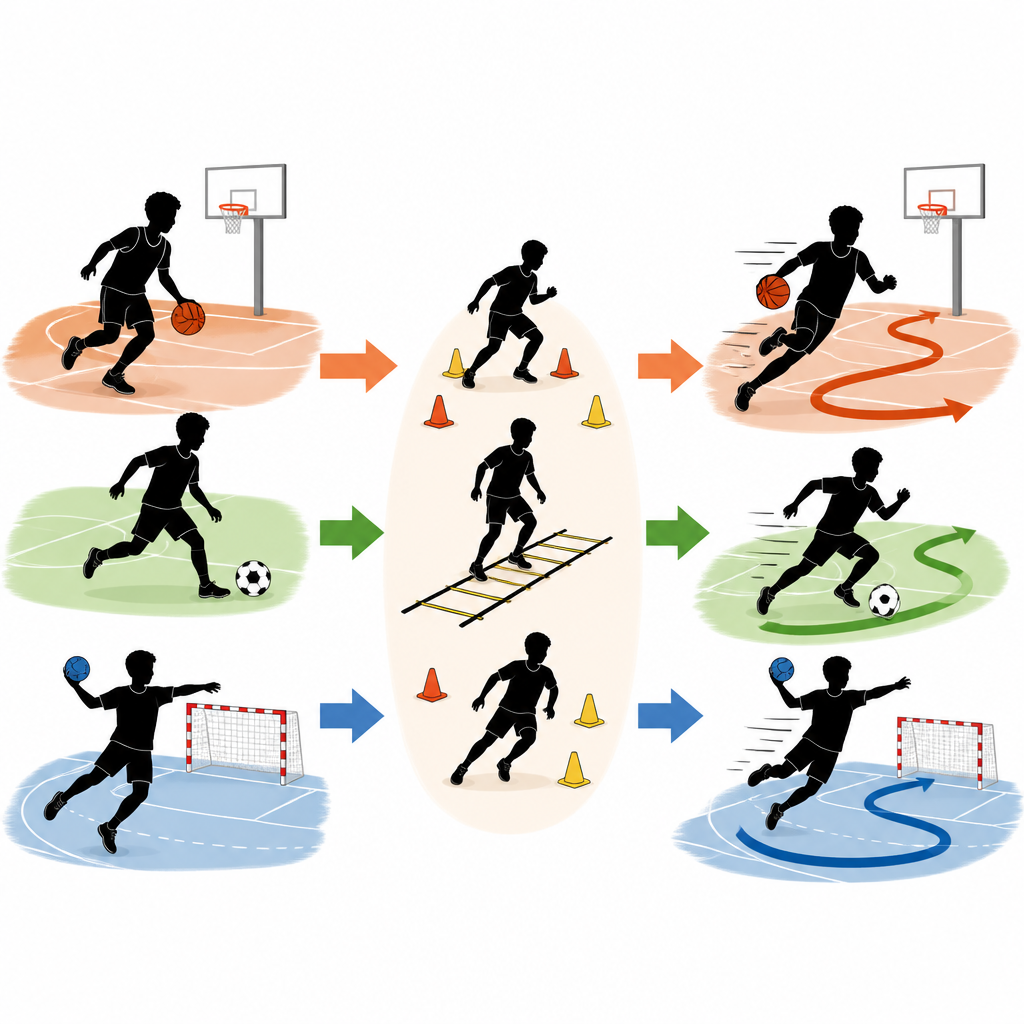
Pulling many small studies into a bigger picture
Because individual training studies often include only a few dozen players, their results can be noisy. To see the bigger picture, the authors used a technique called meta-analysis, which combines data from multiple trials into a single estimate. They found 17 trials that measured pre-planned change-of-direction speed and 9 that measured straight-line sprints over short distances. Across these studies, athletes who completed 4 to 12 weeks of SAQ training, usually one to four times per week, finished their change-of-direction tests meaningfully faster than those in the comparison groups. On average, the size of the improvement was in the moderate-to-large range, big enough to matter in tight match situations where a fraction of a second can decide who wins a loose ball.
Benefits seen across ages, sports, and training loads
The authors then looked at whether certain factors changed how well SAQ training worked. They compared younger and older players, school and elite levels, and different sports. They also contrasted programs with lower weekly SAQ time against those with higher weekly volumes. For planned change-of-direction tests, improvements appeared in all these groups, and statistical checks did not show clear differences between them. In other words, within the limits of the available data, SAQ training seemed to help a wide variety of team-sport athletes, from early teens to young adults, whether they played soccer, basketball, or handball, and whether they trained a little or a lot each week. 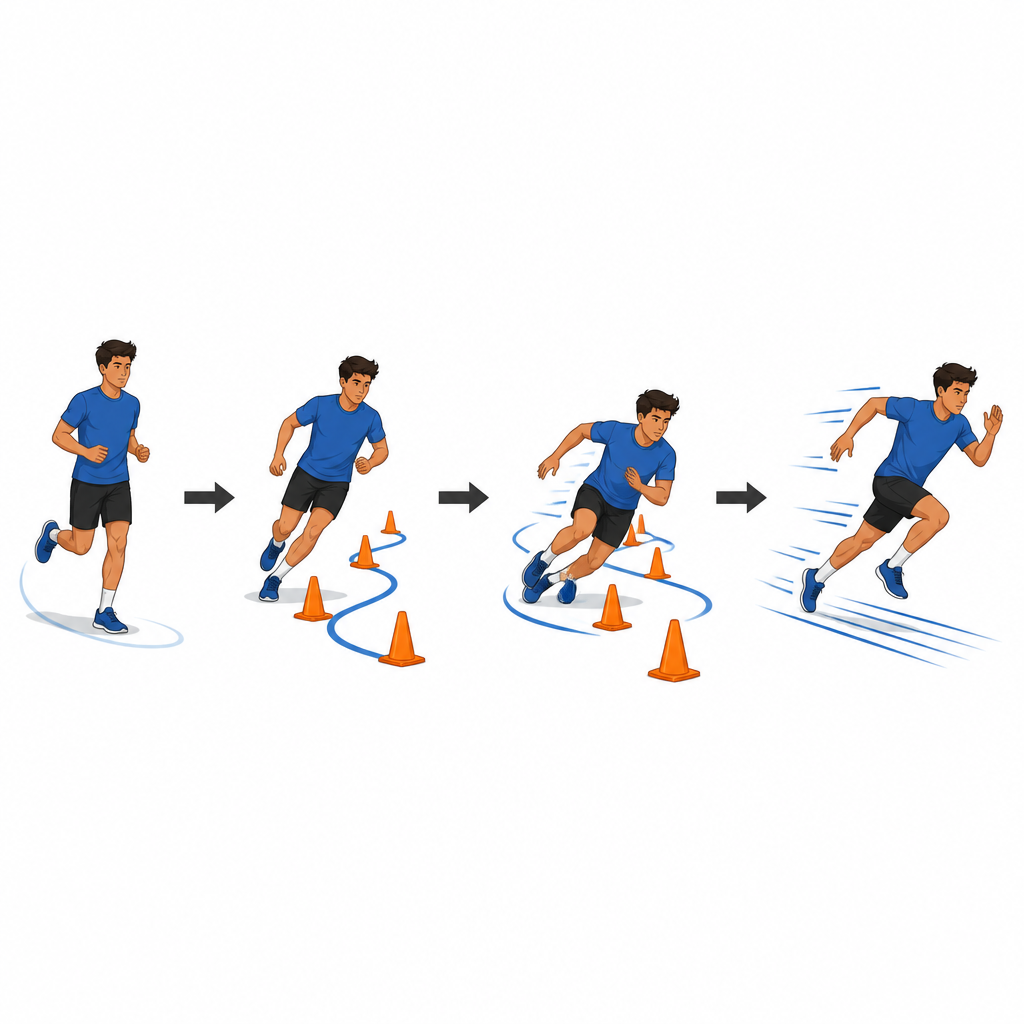
Extra gains for straight-line sprinting
Interestingly, the same training also improved short sprint times, even though SAQ drills focus heavily on cuts and turns. The combined data suggested a large benefit for straight-line speed. Here, there was some sign that doing more weekly SAQ minutes might produce bigger sprint gains, although this pattern was based on fewer studies and should be interpreted cautiously. The finding makes intuitive sense: many SAQ drills demand rapid starts and accelerations, which can carry over to the first few steps of a sprint, where races for the ball are often won or lost.
What to keep in mind about the evidence
The review also highlights caveats. The included trials used a mix of test layouts, some with zigzags, others with shuttles or L-shaped runs, so the exact task differed from study to study. Methods for assigning athletes to groups were not always described in full, raising some concern about study quality. There were hints that studies showing strong improvements were more likely to be published, which could exaggerate the overall effect. Even after adjusting for this possibility, however, SAQ training still showed clear advantages for both change-of-direction and sprint performance, just with slightly smaller estimated gains.
What this means for players and coaches
For coaches planning practices and for young athletes hoping to be more explosive on the court or field, the message is straightforward. Adding regular SAQ-style drills to weekly routines is likely to help players cut, stop, and re-accelerate more effectively, and it may also make them faster in short sprints. These benefits seem to apply across different ages and competitive levels, though the exact amount of improvement will vary from team to team. The authors suggest building SAQ work into normal conditioning, while future research fine-tunes how much training is needed and how well these test gains translate to smart, reactive moves against real opponents.
Citation: Ji, Y., Wang, B. & Yang, Q. Effects of speed–agility–quickness (SAQ) training on pre-planned change-of-direction speed in adolescent and young adult team ball sport athletes: a systematic review and meta-analysis. Sci Rep 16, 15526 (2026). https://doi.org/10.1038/s41598-026-46144-2
Keywords: agility training, youth athletes, team sports, sprint speed, change of direction