Clear Sky Science · en
Short video addiction is associated with students’ academic disengagement: a moderated mediation analysis
Why short videos matter for students
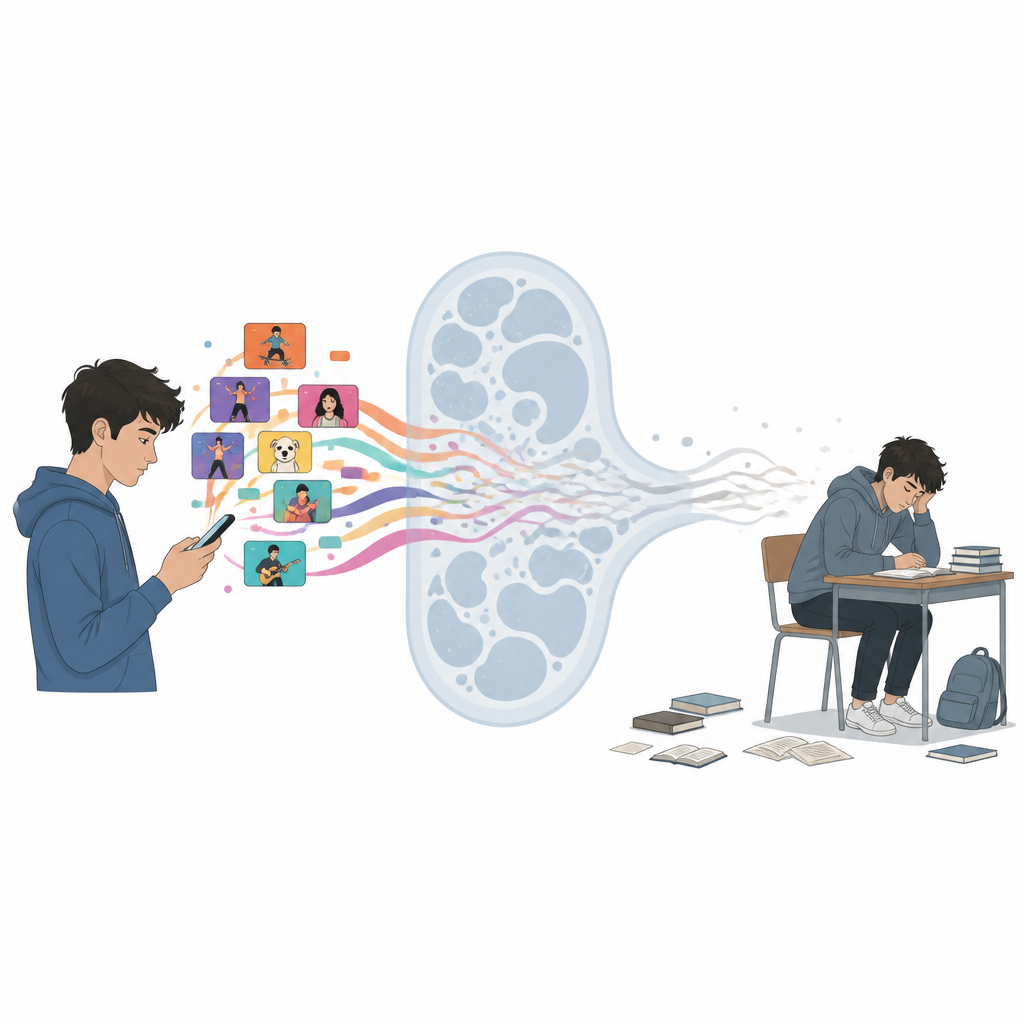
Short video apps promise quick laughs and easy escape, but for many students they also bring a quieter cost: drifting away from their studies. This article explores how heavy use of mobile short videos is linked to feeling tired of school, doing the bare minimum, and tuning out in class, and why inner strengths like self control and resilience do not always protect students in the way we might expect.
From quick clips to school fatigue
The researchers focused on vocational college students in China who are training to become preschool teachers. These students spend long hours in practice classrooms and kindergartens, where they must watch children closely, manage emotions, and keep up with coursework. At the same time, almost all of them carry smartphones filled with fast paced, attention grabbing videos. The study asked whether getting hooked on such videos is connected to feeling emotionally worn out by school and putting less effort into learning, a state the authors call academic disengagement.
How the study was carried out
The team surveyed 2,687 students using several questionnaires. One measured signs of short video addiction, such as feeling anxious without videos, using them to escape, losing control over viewing, and letting daily tasks slide. Another measured academic disengagement, including doing as little studying as possible and feeling exhausted by schoolwork. The students also reported on their general self control, such as resisting temptations and sticking to plans, and on their psychological resilience, meaning how easily they bounce back from stress. The researchers then used statistical models to see how these pieces fit together.
Self control as a missing link
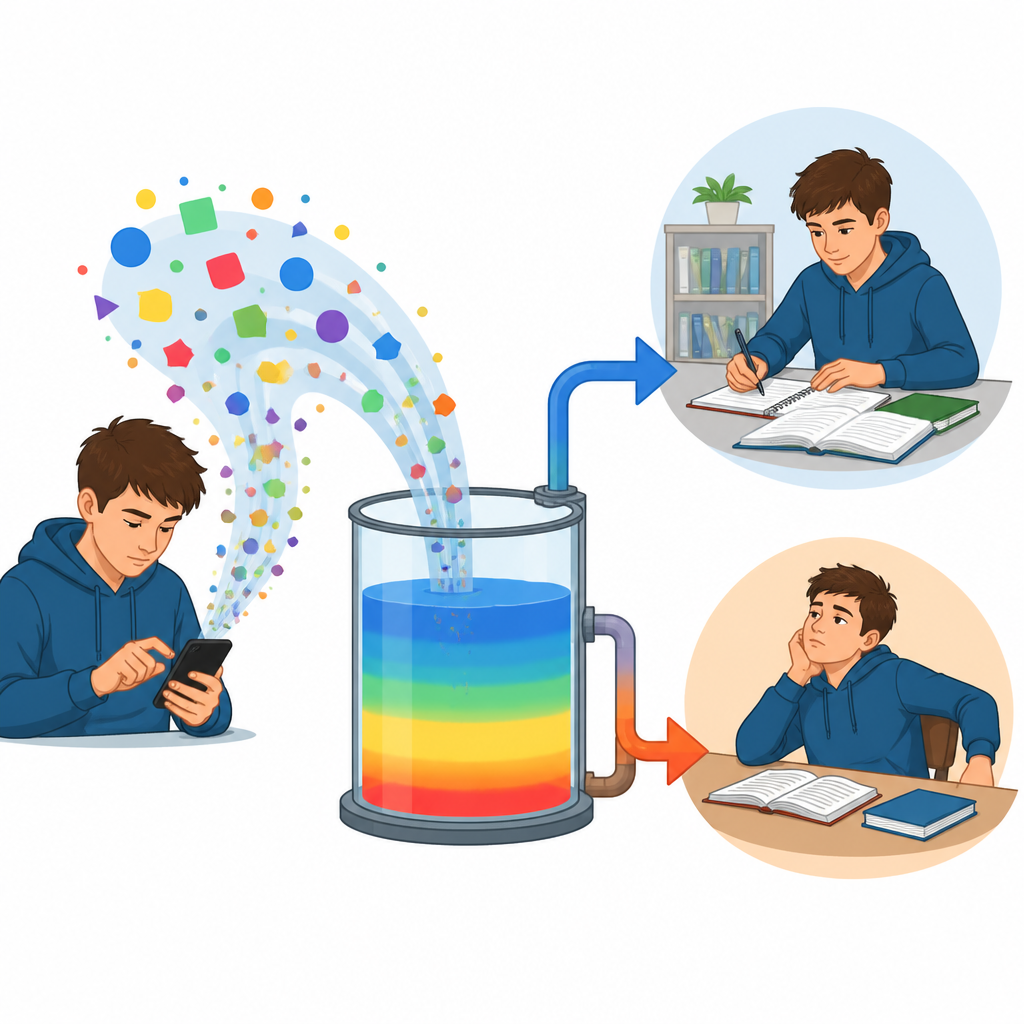
The results showed a clear pattern. Students with stronger signs of short video addiction were more likely to feel bored with school, put in low effort, and emotionally withdraw from learning. They also tended to report weaker self control. In turn, lower self control was tied to higher academic disengagement. When the researchers put these links into a single model, they found that part of the effect of short video addiction on school disengagement flowed through self control. In other words, heavy, hard to control video use seems to erode the inner brakes that help students stay on task, and this erosion makes it easier to give up on academic work.
When resilience helps and when it backfires
Psychological resilience is often seen as a shield against stress, but this study revealed a more complex picture. Among students with higher resilience, the harmful tie between video addiction and lower self control was actually stronger, not weaker. The authors suggest that resilient students may push themselves harder to resist constant digital temptations on top of already demanding training, which can drain their limited mental energy over time. At the same time, resilience strengthened the helpful effect of self control on school engagement: for students who could still manage their impulses, being resilient made that self control work better in keeping them involved in their studies.
What this means for students and educators
For a general reader, the takeaway is that short video addiction is not just about screen time, it is about how constant digital rewards can chip away at a student’s ability to focus and care about learning. Inner strengths like resilience do matter, but they can act like a double edged sword when students face nonstop tempting content. The authors argue that solutions should go beyond telling students to toughen up. Schools and training programs can help by reducing digital cues during key learning activities, teaching practical self control skills, and building in time for real recovery so that resilience supports, rather than strains, students’ limited mental resources.
Citation: Shi, Y., Hui, X., Li, G. et al. Short video addiction is associated with students’ academic disengagement: a moderated mediation analysis. Sci Rep 16, 15804 (2026). https://doi.org/10.1038/s41598-026-45914-2
Keywords: short video addiction, academic disengagement, self control, psychological resilience, vocational students