Clear Sky Science · en
Emergence of multidrug-resistant and virulent Escherichia coli with APEC‑associated traits in broiler chickens from Ismailia, Egypt
Why this matters beyond the chicken coop
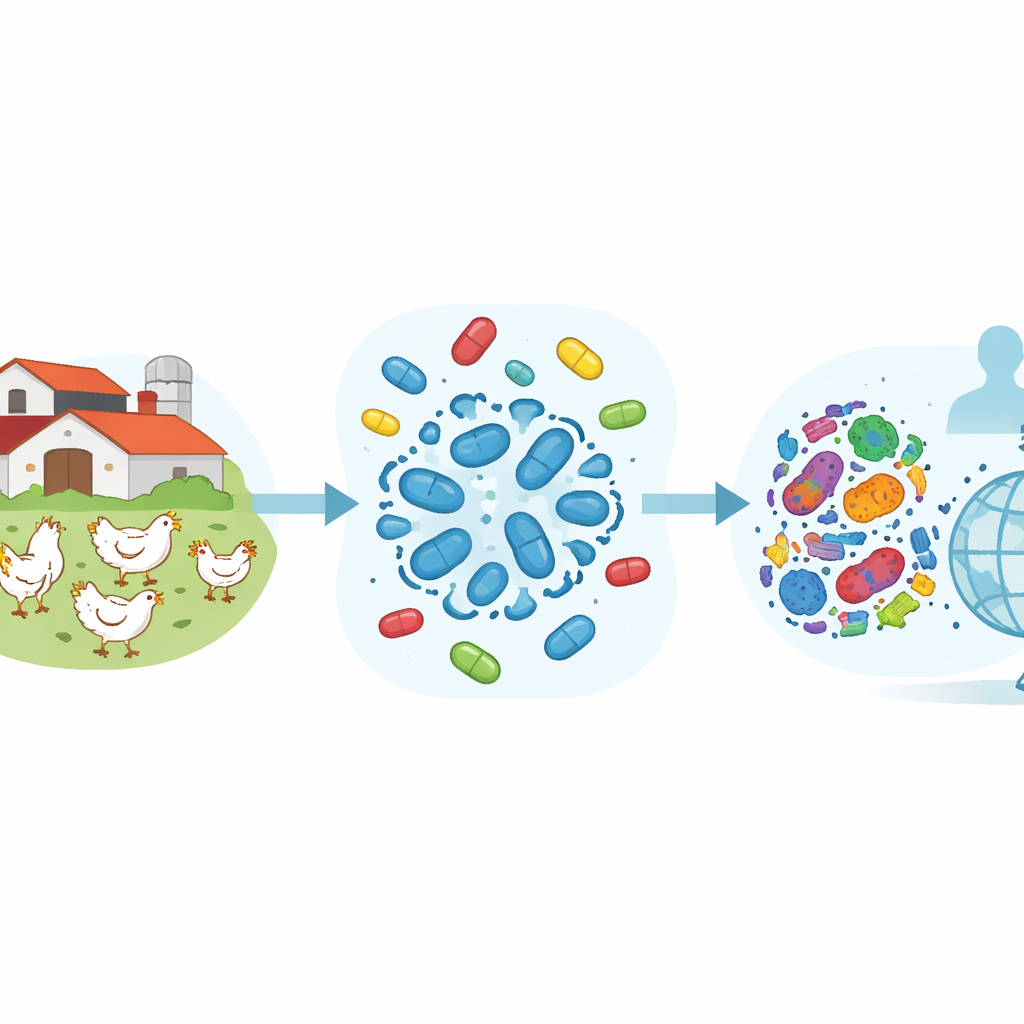
Chicken is one of the world’s most popular meats, and in many countries it is an everyday staple. But the same chickens that help feed people can also act as a factory for dangerous bacteria that no longer respond to common medicines. This study from Egypt looks closely at a worrying form of Escherichia coli (E. coli) found in broiler chickens and shows how it combines strong disease‑causing powers with resistance to many antibiotics, raising concerns for farmers, veterinarians, and public health officials alike.
Sick birds and hidden germs
The researchers focused on broiler chickens from two commercial farms in the Ismailia region of Egypt that were in the middle of disease outbreaks. Birds showed breathing problems, diarrhea, weakness, and poor growth. After the birds died, examinations revealed classic signs of a widespread E. coli infection, such as inflamed livers and hearts, swollen spleens, and cloudy air sacs. From 200 cloacal swabs taken from these sick birds, the team isolated 57 strains of E. coli, confirming their identity with standard lab tests and genetic checks. Every one of these strains showed features linked to the ability to invade tissues and cause serious disease.
Antibiotics that no longer work
The team then tested how these E. coli strains responded to nine antibiotics commonly used in poultry medicine, representing eight major drug classes. The results were stark: all isolates were resistant to ampicillin and tetracycline, drugs that have been used for decades in animals. Nearly all were also resistant to widely used third‑generation cephalosporins, such as cefuroxime and ceftriaxone, and to amoxicillin combined with a beta‑lactamase inhibitor. While some newer or more tightly controlled drugs, like the carbapenem imipenem and the fluoroquinolone levofloxacin, still retained partial effect, every single strain qualified as multidrug‑resistant, failing against at least three different classes of antibiotics. Measures of overall resistance suggested these bacteria came from environments with heavy and repeated antibiotic exposure.
Genes that arm and protect the bacteria
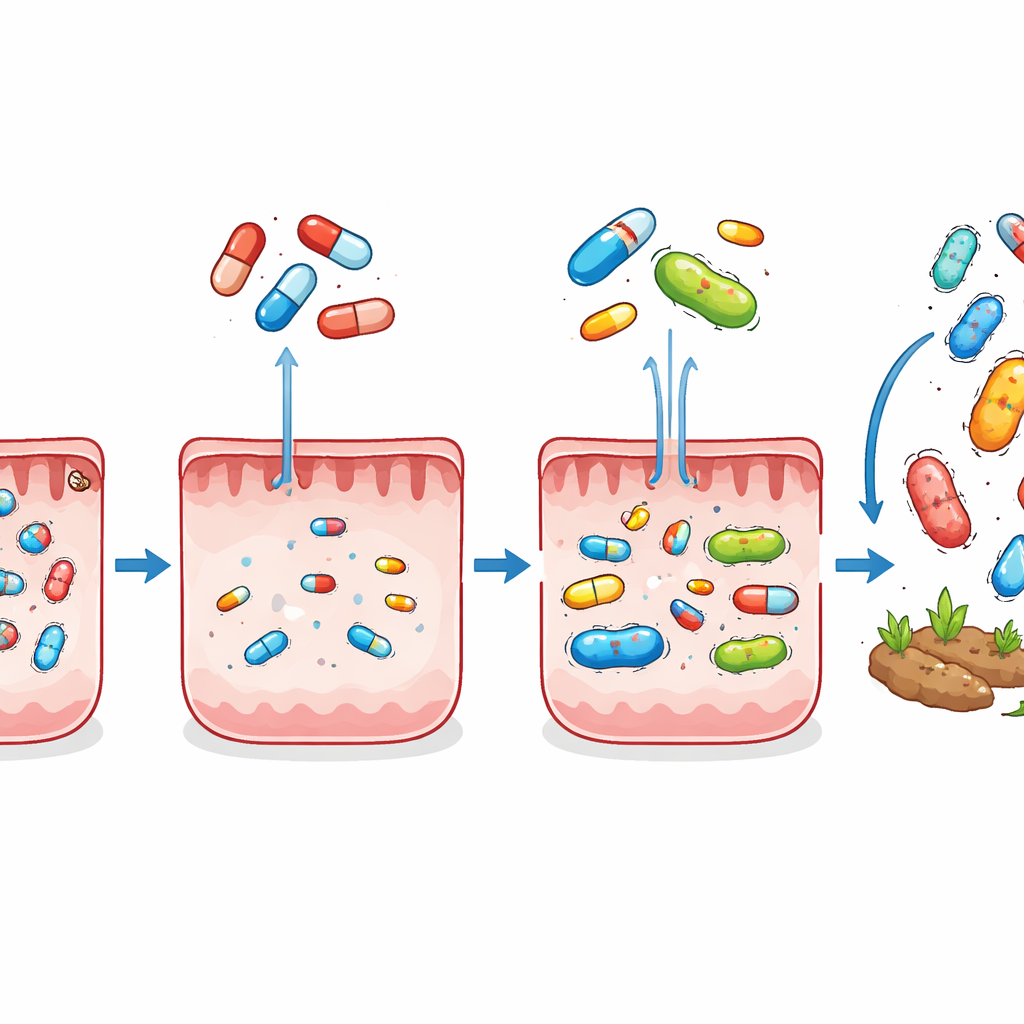
To understand why these bacteria were so hard to treat, the scientists looked for specific genes that give E. coli both its harmful traits and its ability to shrug off drugs. They found that all isolates carried key resistance genes called blaTEM and tetA, which protect against penicillin‑like drugs and tetracyclines. The majority also carried blaCTX‑M, a gene that enables the production of extended‑spectrum beta‑lactamases—enzymes that break down powerful cephalosporins—and aadA1, which confers resistance to certain injectable antibiotics. Worryingly, a sizeable fraction carried genes linked to resistance against last‑resort carbapenem drugs. On the virulence side, all isolates carried ompA, a gene that helps bacteria attach to and invade host cells, while many also carried iss, iutA, and iroN, which help the bacteria obtain iron and survive in the bloodstream. Most strains belonged to phylogenetic groups B2 and D, lineages that are also associated with severe infections in humans.
Dangerous combinations and patterns of spread
By comparing resistance patterns, genes, and virulence traits, the researchers found that many of these features tend to cluster together. Strains that carried more resistance genes also tended to harbor more virulence genes, suggesting that the same mobile genetic elements—such as plasmids—may be moving these traits around as a package. Some gene pairs were almost perfectly linked to resistance against particular drugs, meaning that a simple genetic test could predict which antibiotics would fail. When the team grouped strains based on all of these features, they identified several clusters of E. coli that appeared especially worrisome: they were highly resistant, highly virulent, and common in the flocks.
What this means for food, farms, and people
For a lay reader, the message is straightforward but sobering: chickens on the studied farms were carrying E. coli that are both very good at causing disease and very hard to kill with standard antibiotics. Because bacteria and their resistance genes can move from animals to people through meat, farm dust, water, and the wider environment, this is not only an animal‑health problem. The authors argue that tackling it requires a “One Health” approach that treats human, animal, and environmental health as interconnected. They call for more careful use of antibiotics in poultry, tighter farm hygiene and biosecurity, and ongoing genetic monitoring of bacteria. Without such steps, the barnyard could become an important source of hard‑to‑treat infections that eventually reach hospitals and households.
Citation: ELTarabili, R.M., Abo Hashem, M.E., Ahmed, M.A. et al. Emergence of multidrug-resistant and virulent Escherichia coli with APEC‑associated traits in broiler chickens from Ismailia, Egypt. Sci Rep 16, 12067 (2026). https://doi.org/10.1038/s41598-026-45788-4
Keywords: multidrug resistant E. coli, broiler chickens, antibiotic resistance, avian colibacillosis, One Health