Clear Sky Science · en
A non-randomised controlled study of the missing link person-centred care transition support intervention after stroke or TIA
Why the Move from Hospital to Home Matters
Leaving the hospital after a stroke or mini-stroke (often called a TIA) can feel like stepping off a cliff. People go from constant monitoring and clear routines to managing medicines, warning signs, and follow-up visits largely on their own. This study from three Swedish hospitals tested a new way to bridge that gap, aiming to make the first days at home safer, clearer, and less overwhelming for patients and their families.
What Happens After a Stroke Today
In Sweden, stroke care in hospital is generally swift and effective, and people often go home after only a few days. But stroke can leave lasting problems with memory, concentration, mood, and energy. Short stays mean there is little time to prepare patients and families for life at home. Although the health system is supposed to coordinate follow-up care, much of that responsibility still falls on patients and their loved ones. Many struggle to understand medical advice, keep track of medicines, and know whom to contact if something seems wrong. Earlier research shows that about one in three stroke survivors is not fully following all recommended prevention steps one month after leaving hospital.
A New Kind of Support: The "Missing Link"
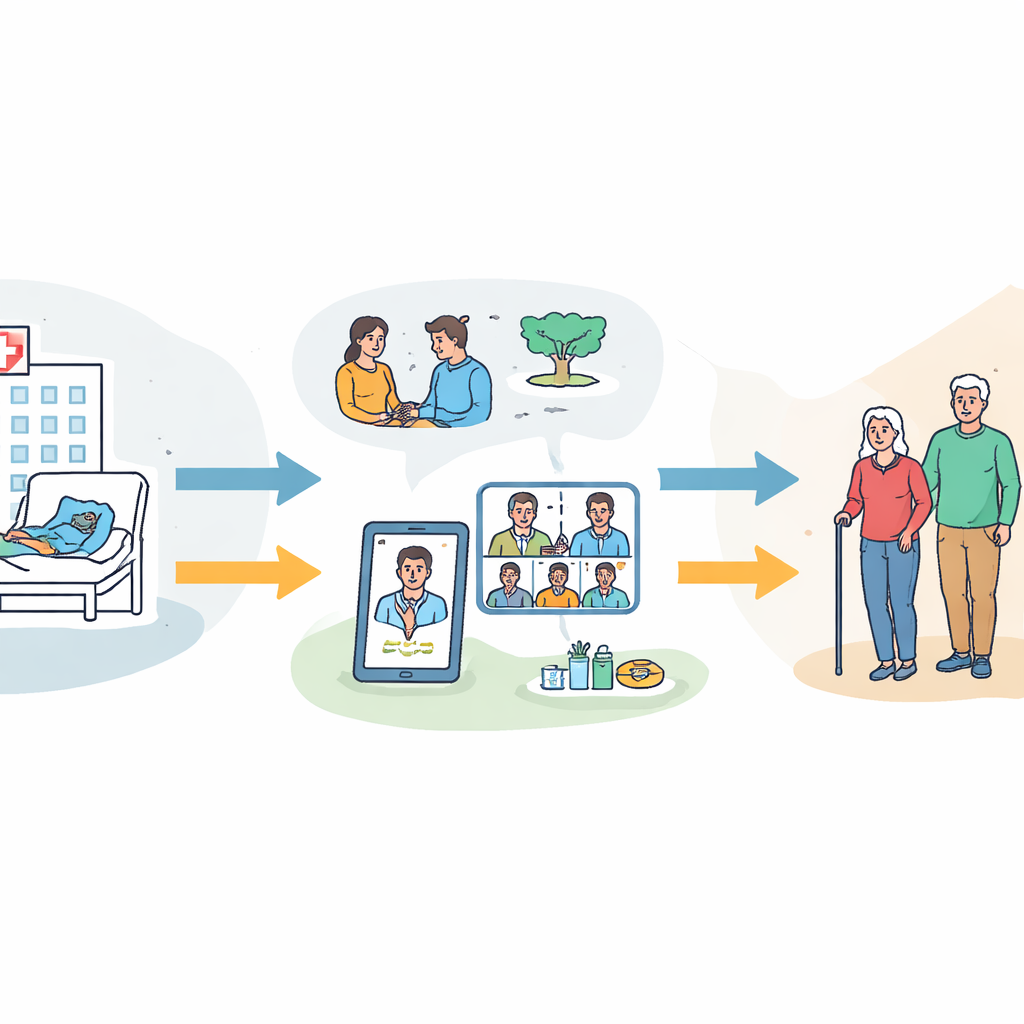
To tackle these challenges, the researchers designed a multistep support program called the Missing Link. Instead of relying on a quick talk and a standard discharge letter, staff at one hospital added a structured, person-centred approach. They held guided conversations that focused on each patient’s needs, worries, and preferences, and used a method called “teach-back” in which patients repeat key information in their own words. Patients also received clearer, individualized written information, short videos about their condition and follow-up care, and a digital “bridging” meeting that brought together the patient, family members, hospital staff, and the home rehabilitation team before the patient left the ward.

How the Study Was Carried Out
The team compared 75 people with stroke or TIA who received the Missing Link support with 88 people who received standard care at two other hospitals. All were adults going home and referred for rehabilitation at home. The researchers collected information during the hospital stay and then contacted patients one week after discharge. The main question was how the patients rated the quality of their transition from hospital to home, using a well-tested questionnaire. They also measured how confident patients felt about understanding and managing their health, including their medicines and follow-up plans.
What the Researchers Found
One week after leaving hospital, people in the Missing Link group rated the quality of their care transition higher than those who had standard care, even after accounting for differences such as age, health, and length of stay. They were more likely to say they knew what to do to manage their health and that they understood the possible side effects of their medicines. Measures of health literacy—how well people can find, understand, and use health information—were also better in the intervention group. However, there were no clear differences between groups in how faithfully people reported taking their medicines or how they rated the overall care and rehabilitation they received. The study also found that people living alone tended to feel less supported in their transition than those living with someone, suggesting that home circumstances matter.
Strengths, Limits, and What Comes Next
The study reflects real-life care, because the new approach was built into everyday routines at one hospital rather than tested under highly controlled conditions. Trained staff used role-play and reminders to keep the intervention consistent, and follow-up interviewers did not know which patients had received which type of care. Still, the study was not randomized, and most participants were Swedish-born, relatively well educated, and had mild strokes, so the findings may not apply to all stroke survivors. Health literacy was measured only after discharge, so it is unclear how much of the difference between groups was caused by the intervention itself.
What This Means for Patients and Families
For people recovering from stroke or TIA, the early days at home are a critical period. This study suggests that a person-centred, carefully structured transition—where staff check understanding, provide clear written and video information, and connect hospital and home teams before discharge—can make patients feel more prepared and in control. While more research is needed in larger and more diverse groups, the results point toward a simple message: when health professionals slow down, listen, and make sure information truly lands, patients are better equipped to navigate life after stroke.
Citation: Hess Engström, A., Laska, A.C., Flink, M. et al. A non-randomised controlled study of the missing link person-centred care transition support intervention after stroke or TIA. Sci Rep 16, 9698 (2026). https://doi.org/10.1038/s41598-026-45766-w
Keywords: stroke recovery, care transitions, patient-centred care, health literacy, hospital discharge