Clear Sky Science · en
Prehospital prediction of survival after out-of-hospital cardiac arrest using point-of-care testing and vital signs: a prospective, multinational study
Why quick answers after a cardiac emergency matter
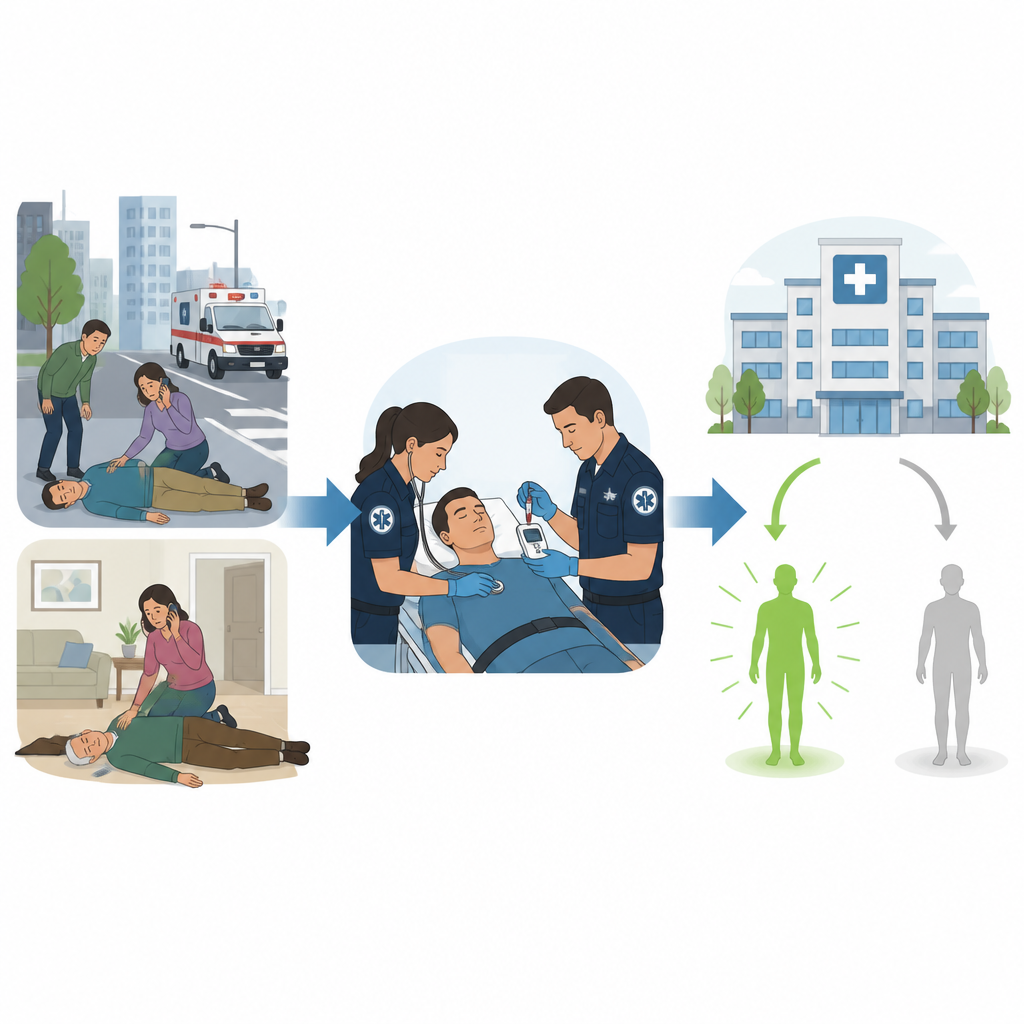
When someone collapses from a sudden cardiac arrest outside the hospital, emergency crews fight to restart the heart and rush the person to care. But even after the heartbeat returns, families and clinicians are left asking a painful question: what are the chances this person will leave the hospital alive? This study explores whether simple bedside checks and rapid blood tests done in the ambulance could offer an early, more objective glimpse of that outlook.
Looking for clues in the back of an ambulance
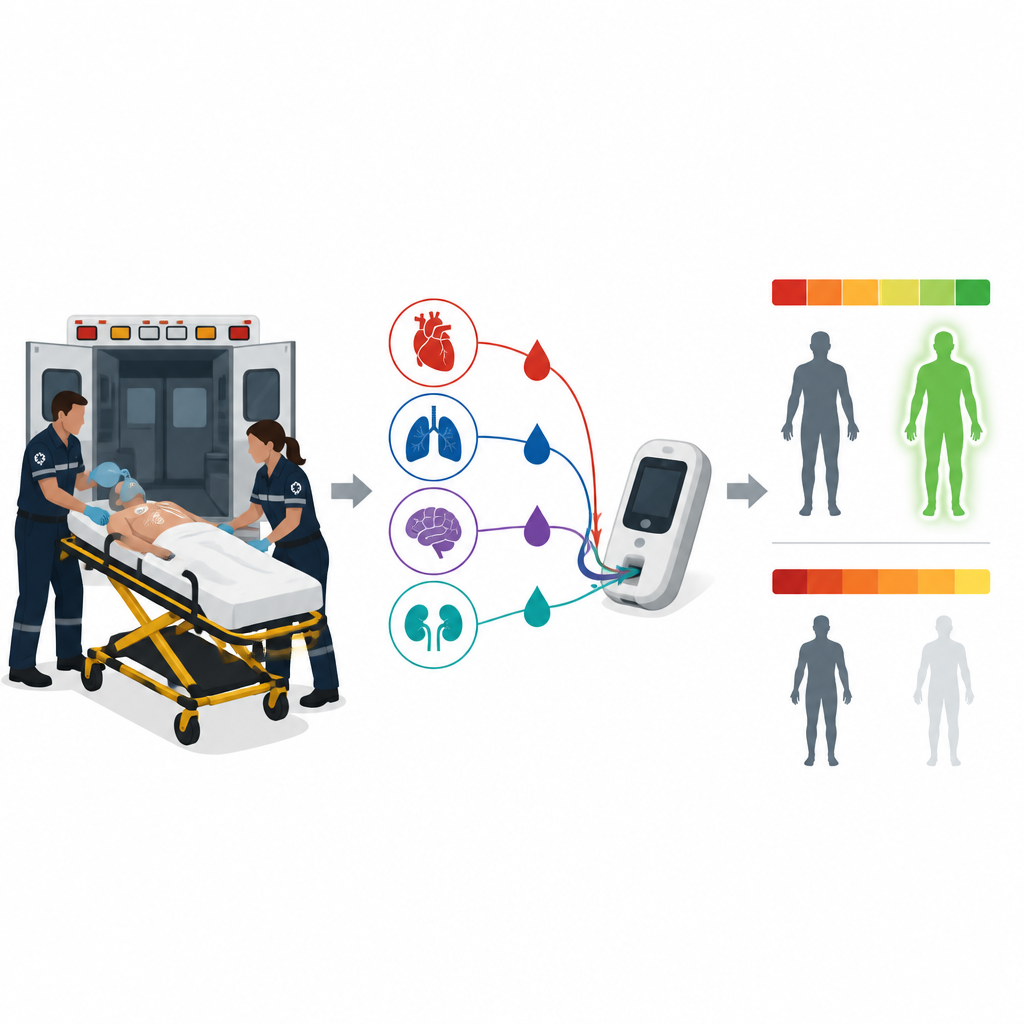
Out-of-hospital cardiac arrest is among the leading causes of death in Europe, and only a small fraction of patients survive long enough to go home. Many things that shape the outcome, such as age or where the collapse happened, cannot be changed. Others, such as how quickly cardiopulmonary resuscitation starts or which hospital the patient is taken to, depend on real-time choices. The research team set out to build a practical scoring tool that ambulance staff could use after the heartbeat has returned, combining basic vital signs and rapid blood measurements taken with a portable device, known as point-of-care testing. Their hope was that a single score could summarize how sick the body is and help guide those urgent decisions.
Following patients across two countries
The investigators ran a prospective study in several Spanish provinces and the Austrian city of Graz. Adult patients whose hearts stopped outside the hospital, but who regained a sustained pulse before arrival, were enrolled if crews were able to obtain a quick blood sample for analysis. In total, 203 people met all criteria. For each, paramedics recorded vital signs such as blood pressure, oxygenation, and level of consciousness in the minutes after circulation returned, and used a handheld analyzer to measure blood acidity, kidney function, salt balance, and other indicators. Later, hospital teams documented the course of care and whether each person was alive thirty days after admission, a standard way to define survival to hospital discharge.
Building a simple score from complex body signals
Using two thirds of the Spanish cases to build the model, the team tested many possible predictors and then checked how well each related to survival. They narrowed the list to seven measures that together captured how severely the arrest had strained the body: blood lactate (reflecting lack of oxygen), creatinine (kidney function), potassium, acidity level (pH), mean arterial pressure, oxygenation relative to supplied oxygen (SaFi), and the Glasgow Coma Scale score, which reflects how responsive the brain is. Each measure was split into ranges, and those ranges were assigned points based on medical literature and additional computer analysis. Adding the points produced a single number for each patient, with higher totals signaling a greater chance of dying before discharge.
How well the score flagged patients at risk
When the researchers tested the score in the remaining Spanish patients and in the separate Austrian group, it showed strong ability to distinguish survivors from non-survivors. Statistical measures of accuracy, summarized by the area under the receiver operating curve, were high in both settings. In practical terms, patients with low scores tended to survive, while those with high scores rarely did. The score aligned not only with survival, but also with patterns of organ strain: non-survivors more often had very high lactate, worse kidney markers, lower blood pressure, poorer oxygenation, and a deeper loss of consciousness. These findings suggest that a handful of focused checks can mirror the total burden of injury from the arrest and the period without effective circulation.
What this could mean for care in the field
If confirmed in larger and more diverse groups, such a prehospital score might help emergency teams decide which patients should be rushed to highly specialized centers, who might benefit from aggressive treatments, and when it may be reasonable to consider stopping efforts. It could also offer families an earlier and more evidence-based sense of what to expect. However, the authors stress that their current score is not ready to guide care on its own. The study involved a modest number of patients, and not all ambulance systems yet carry the needed testing devices. Until bigger, multicenter studies show that the score is reliable across regions and services, it should be viewed as a promising research tool rather than a bedside rule.
Citation: Lopez-Ballesteros, A., Sanz-García, A., Alonso, E. et al. Prehospital prediction of survival after out-of-hospital cardiac arrest using point-of-care testing and vital signs: a prospective, multinational study. Sci Rep 16, 15081 (2026). https://doi.org/10.1038/s41598-026-45761-1
Keywords: out-of-hospital cardiac arrest, prehospital care, point-of-care testing, survival prediction, emergency medicine