Clear Sky Science · en
Orally derived mesenchymal stem cells in the treatment of vascular diseases: a systematic review and meta-analysis
Healing Blood Vessels from an Unexpected Source
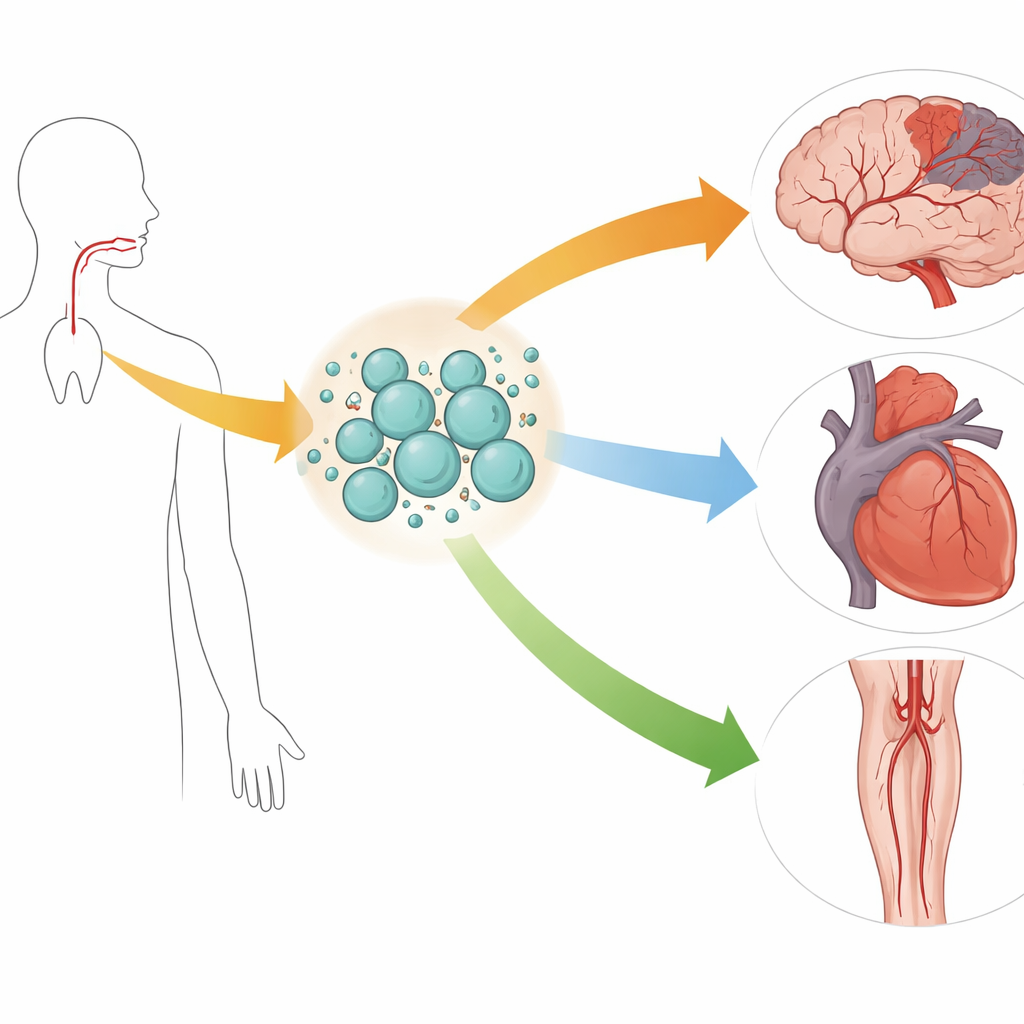
Every year, millions of people suffer strokes, heart attacks, and blocked arteries in the legs. These problems all stem from diseased blood vessels, and today’s drugs and surgeries often come too late or offer only partial relief. This article explores an unusual new ally in the fight against vascular disease: stem cells taken from teeth and other oral tissues that are normally thrown away. By sifting through dozens of animal studies, the researchers ask how far this “dental” stem cell therapy has come—and how close it is to helping human patients.
Why Blood Vessel Disease Needs New Answers
Vascular diseases occur when blood vessels in the brain, heart, or limbs become blocked or damaged, starving tissues of oxygen. Strokes, heart attacks, and poor circulation in the legs can leave people disabled or even be fatal. Current treatments—clot-busting drugs, cooling therapy for newborn brain injury, and balloons or stents to reopen arteries—are powerful but imperfect. They work only in narrow time windows, can carry serious risks, and often fail to prevent long-term damage or new blockages. This has driven interest in regenerative treatments that might repair injured tissue rather than simply limit the damage.
Stem Cells from the Dentist’s Chair
Mesenchymal stem cells, which can mature into several tissue types and release healing molecules, have long been studied for tissue repair. But harvesting them from bone marrow or fat usually requires invasive procedures. In contrast, orally derived mesenchymal stem cells (OMSCs) can be collected from sources such as dental pulp, baby teeth that fall out, or discarded wisdom teeth. The review shows that these cells grow well in the lab, secrete many helpful factors, and avoid the ethical concerns that surround embryonic stem cells. Because the source material is often medical waste, OMSCs offer a convenient and patient-friendly way to obtain regenerative cells.
What Animal Studies Reveal So Far
The authors systematically searched major medical databases and identified 41 animal studies that used OMSCs or their secretions to treat vascular diseases. Most work focused on stroke and related brain injuries, but there were also studies on heart attacks, poor blood flow in the legs, atherosclerosis, vascular dementia, and even degenerative heart valve disease in dogs. Across these models, giving OMSCs, their conditioned culture fluid, or tiny packages they release (called extracellular vesicles) generally improved movement, memory, or heart function. In stroke models, the cells homed to damaged brain regions, reduced the size of dead tissue, eased swelling, preserved the blood–brain barrier, and supported the brain’s own repair cells. A statistical pooling of six compatible stroke studies showed that treated animals had markedly smaller brain infarcts than untreated ones, both in the first days and weeks later.
How These Cells Seem to Help
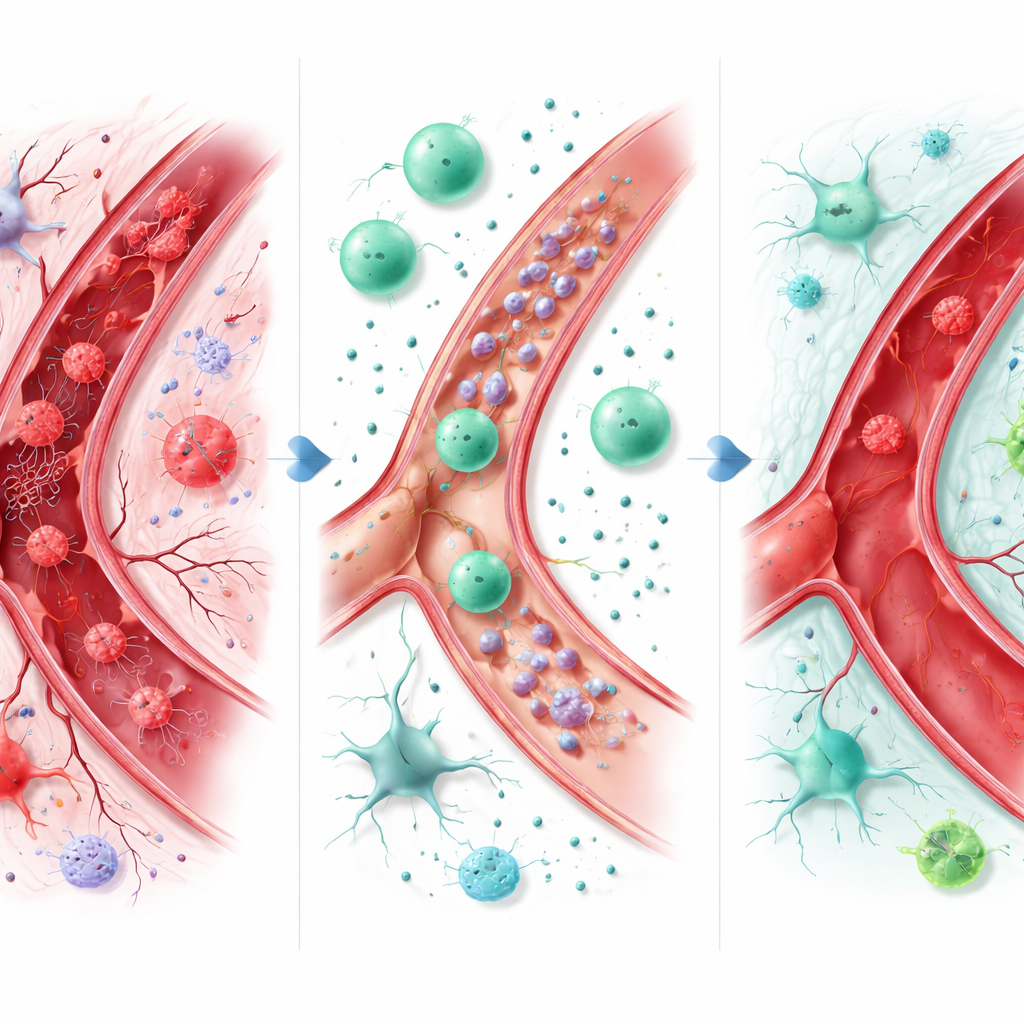
Although OMSCs can sometimes turn into nerve or blood vessel cells, much of their benefit appears to come from the substances they release. These secreted factors calm inflammation, limit cell death, encourage new blood vessels to sprout, and nudge local stem cells in the brain and other organs to join the repair effort. Specialized vesicles carrying small regulatory molecules were shown to dampen key inflammatory switches inside cells and protect the barrier between blood and brain tissue. In heart and limb models, OMSC-based treatments promoted new vessel growth, improved blood flow, and reduced scarring. In some head-to-head comparisons, dental stem cells outperformed more established stem cell sources, suggesting they may be particularly well-suited to protecting nerves and blood vessels.
Roadblocks on the Path to the Clinic
Despite the encouraging results, the review also highlights gaps. Many studies used different animal species, disease severities, cell doses, and delivery routes, making it hard to define an optimal treatment recipe. Fewer than half of the experiments fully reported measures such as randomization and blinding, which help prevent unconscious bias. Very few papers examined possible side effects in depth, even though long-lived transplanted cells could, in theory, form tumors or behave unpredictably. Only stroke studies provided enough similar data for formal pooling, and even there, the number of trials was modest and some publication bias could not be ruled out.
What This Could Mean for Future Patients
Taken together, the evidence suggests that stem cells and secreted products from discarded teeth and gums can protect and repair blood vessels and surrounding tissues in a wide range of animal models. They appear to act less like spare parts and more like mobile pharmacies, delivering healing signals that quiet inflammation and encourage regrowth. For people living with stroke, heart disease, or poor circulation, this raises the possibility of new treatments with wider time windows and longer-lasting benefits. But before such therapies reach the clinic, researchers will need more rigorous animal studies, standardized protocols, and careful tracking of safety over the long term. Only then can these promising “tooth-derived” remedies be tested with confidence in human vascular disease.
Citation: Chen, Q., Thalakiriyawa, D.S., Lam, O.L.T. et al. Orally derived mesenchymal stem cells in the treatment of vascular diseases: a systematic review and meta-analysis. Sci Rep 16, 10660 (2026). https://doi.org/10.1038/s41598-026-45734-4
Keywords: oral stem cells, vascular disease, stroke repair, regenerative medicine, dental pulp stem cells