Clear Sky Science · en
Nighttime intensive care unit admission increased 30-day mortality in sepsis patients: a retrospective propensity-score matched analysis based on MIMIC-IV database
Why the Hour of Arrival Matters
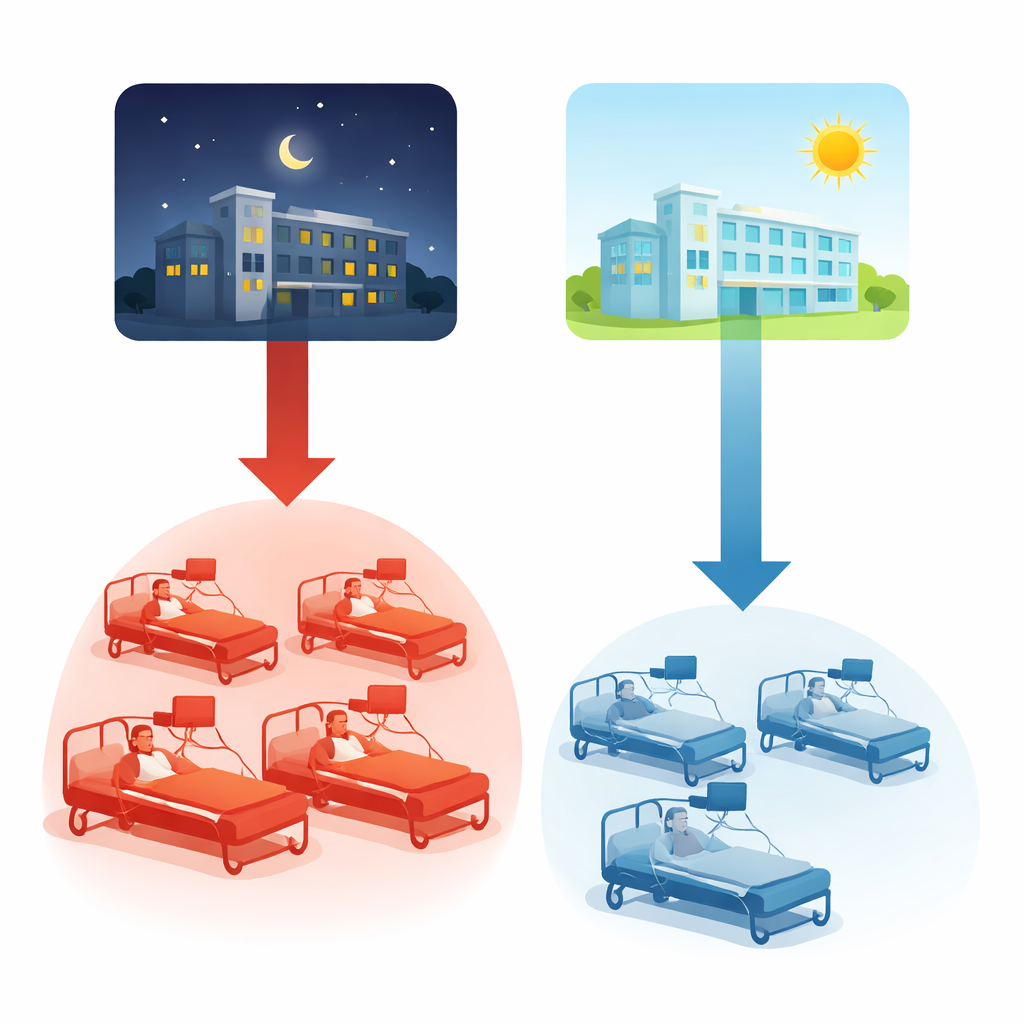
Most of us assume that a hospital’s intensive care unit (ICU) offers the same level of care around the clock. But for people with sepsis—a life‑threatening reaction to infection—this new study suggests that the time of day they are admitted to the ICU may influence whether they live or die. Using a large U.S. critical‑care database, the researchers asked a simple but unsettling question: are sepsis patients worse off if they reach the ICU at night rather than during the day?
Looking at Thousands of Real ICU Cases
To explore this, the team turned to the MIMIC‑IV database, which contains detailed, anonymized records from tens of thousands of ICU stays at a major Boston hospital. They focused on more than 25,000 adults who met modern diagnostic criteria for sepsis and stayed in the ICU for at least a full day. Each patient’s first ICU admission was classified as either daytime (roughly office hours) or nighttime (evenings, nights, and early mornings). The researchers gathered information on age, sex, chronic illnesses, vital signs, blood tests, and how sick patients were when they arrived, then used statistical tools to make fair comparisons between those admitted by day and those admitted at night.
Balancing the Two Groups
Because nighttime patients might differ in important ways—for example, having different illnesses or arriving sicker—the team used a technique called propensity score matching. In practical terms, this means they paired each daytime patient with a nighttime patient who had very similar background characteristics and severity of illness, creating two large, closely matched groups. This approach helps isolate the effect of admission time itself, rather than letting hidden differences between patients drive the results.
Nighttime Linked to Higher Death Rates
When they followed patients for a month after ICU admission, a clear pattern emerged. In both the full sample and the carefully matched groups, those admitted at night were more likely to die within 30 days than those admitted during the day, even after adjusting for dozens of medical factors. The difference was not just a short‑term blip: higher death rates for nighttime admissions persisted at 90 days and at six months. When the researchers looked more closely at the clock, they found especially low mortality among patients admitted in the morning hours, suggesting that early‑day arrivals may fare best.
More Brain and Lung Complications at Night
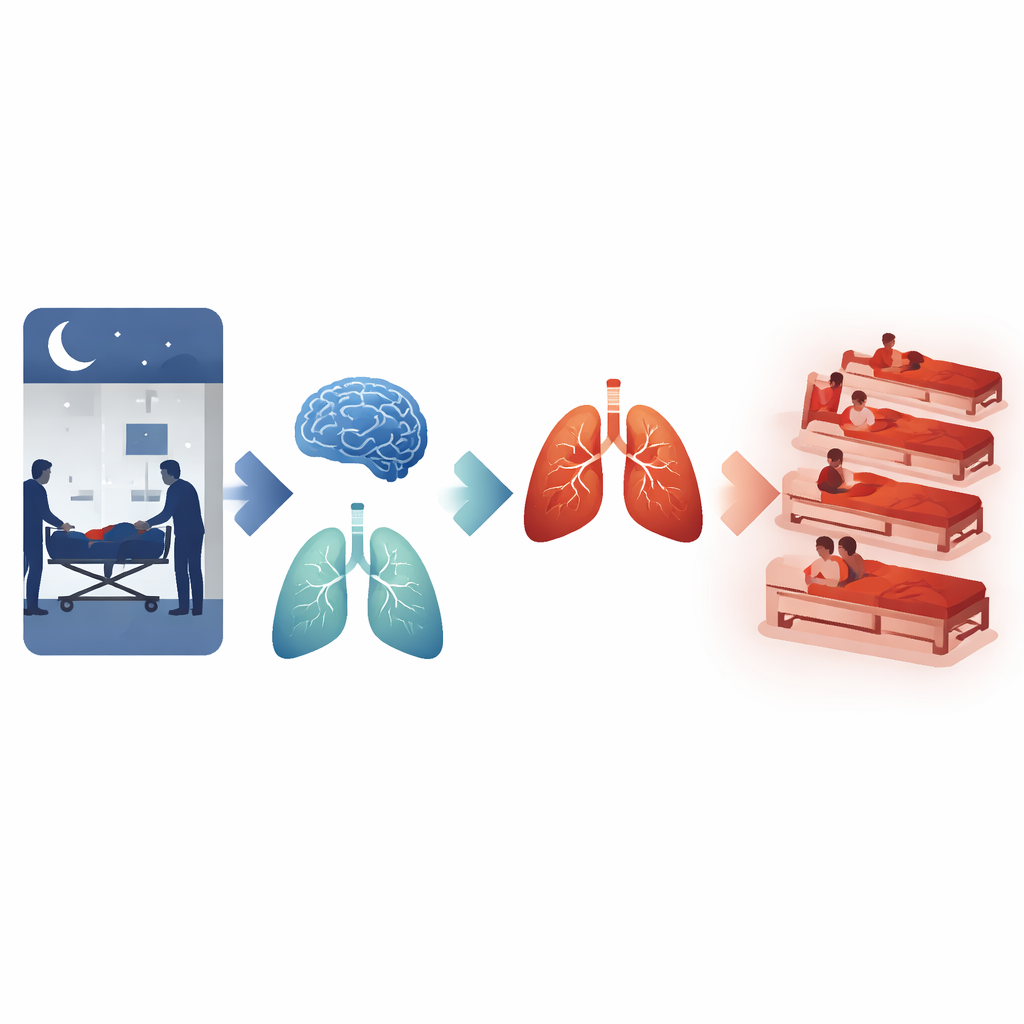
The harm was not limited to survival. Two serious complications of sepsis—sepsis‑associated encephalopathy (a form of brain dysfunction leading to confusion or coma) and sepsis‑induced acute lung injury—were also more common in patients admitted to the ICU at night, even after the same careful adjustments. Other complications, such as blood‑clotting problems, kidney injury, and need for dialysis, did not differ meaningfully between day and night admissions. Importantly, the increased risk associated with nighttime admission looked similar across men and women, younger and older adults, and patients with different levels of blood pressure, kidney disease, or overall illness severity.
What Might Be Happening Behind the Scenes
The study cannot prove exactly why nighttime admissions do worse, but it points to several plausible explanations. Hospitals typically run with leaner staffing after hours; there may be fewer experienced ICU doctors on site, fewer nurses per patient, or slower access to tests and procedures. Human biology may also play a role: both patients and staff are operating at a natural low point in their daily body clock during the night, when attention, reaction time, and decision‑making can be impaired. Together, these factors could delay critical steps in the early treatment of sepsis, allowing infection and organ damage to advance.
What This Means for Patients and Hospitals
In plain terms, this work suggests that for sepsis patients, reaching the ICU at night is linked with a modest but real increase in the chance of dying, along with higher rates of serious brain and lung problems. The findings held up across multiple kinds of analysis, which makes them harder to dismiss as a fluke. While the study comes from a single medical center and relies on past records rather than a randomized trial, it raises an urgent message for health‑care planners: high‑quality sepsis care should not depend on the clock. Ensuring stronger nighttime staffing, faster access to tests and treatments, and extra vigilance for brain and lung complications could help narrow this dangerous gap between day and night.
Citation: Peng, C., Shen, T., Peng, J. et al. Nighttime intensive care unit admission increased 30-day mortality in sepsis patients: a retrospective propensity-score matched analysis based on MIMIC-IV database. Sci Rep 16, 10626 (2026). https://doi.org/10.1038/s41598-026-45504-2
Keywords: sepsis, intensive care unit, night shift, hospital mortality, critical care staffing