Clear Sky Science · en
Utilizing Defatted Hulless Pumpkin Seed Meal for Bread Fortification: A Valorization Approach to Improve Techno-functional and Textural properties
Why This Bread Matters
Bread is a daily food for billions of people, yet the standard white loaf is rich in calories and poor in nutrients. At the same time, food factories throw away mountains of nutrient-packed pumpkin seeds. This study explores a simple idea with big appeal: can we turn an underused pumpkin seed by‑product into a flour that quietly upgrades everyday bread—adding protein, fiber, and natural antioxidants—without sacrificing the look, taste, and feel people love?
From Discarded Seeds to Useful Flour
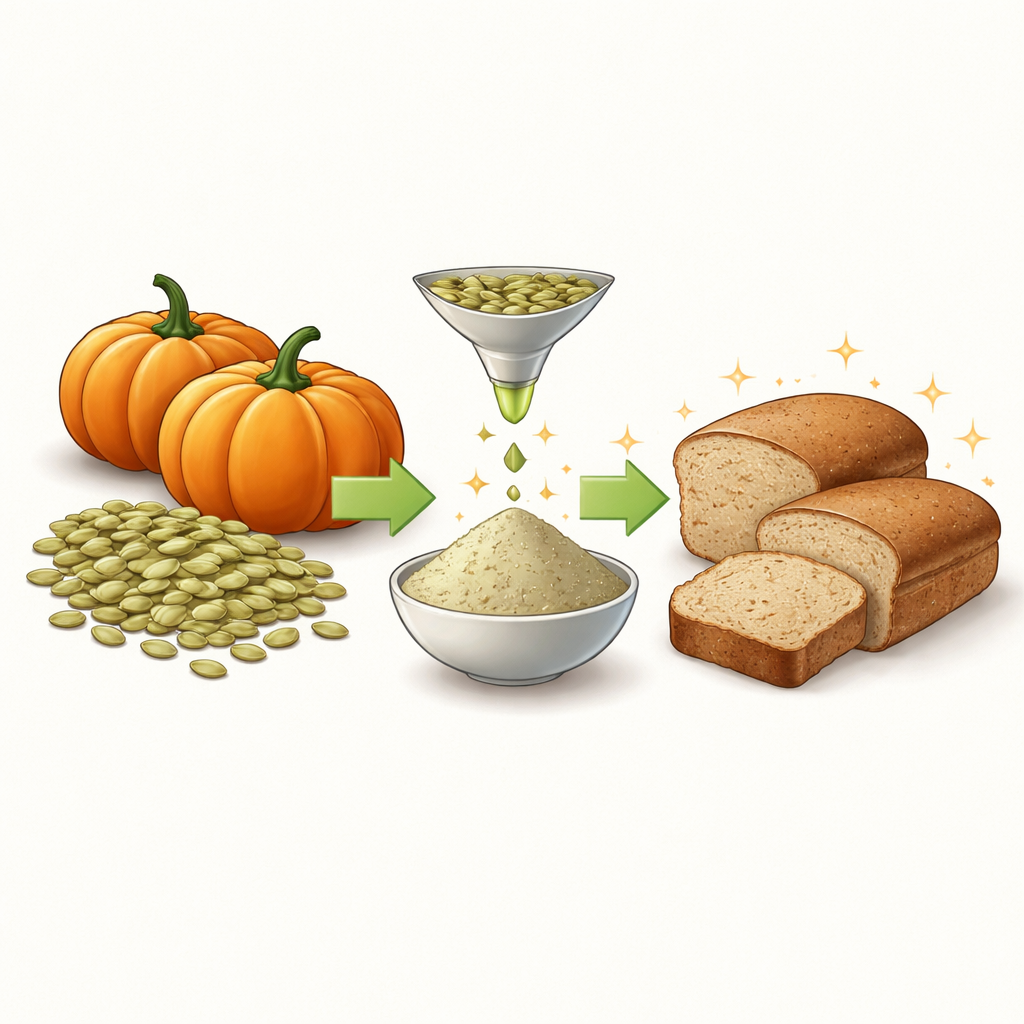
The researchers focused on a special type of pumpkin that naturally has hull‑less seeds. These seeds are easier to digest and process because they lack the tough outer shell found on regular pumpkin seeds. First, the oil was removed from the seeds, creating a defatted seed meal that is richer in protein and fiber. This meal was dried and milled into a fine powder, then mixed with ordinary wheat flour to make bread. Five recipes were tested, replacing 0%, 2.5%, 5%, 7.5% or 10% of the wheat flour with hulless defatted pumpkin seed powder.
How the Dough and Bread Behaved
Adding the pumpkin seed powder changed how the dough handled during mixing and baking. The flour blends absorbed more water, reflecting the high fiber content of the seed powder. At higher levels of substitution, the dough became less stable and the gluten network—the stretchy structure that traps gas bubbles—was weakened. When baked, these changes showed up as smaller loaves with heavier weight, lower volume, and a denser crumb. In other words, more pumpkin seed flour meant bread that was less airy and rose less in the oven.
More Nutrition in Every Slice
On the nutritional side, the results were clearly positive. As more pumpkin seed powder was added, the bread’s protein and mineral (ash) contents climbed, while fat content dropped slightly because the seed meal had already been defatted. Fiber levels also increased. The loaves became richer in bioactive plant compounds: total phenols, flavonoids, and antioxidant activity all rose steadily from the plain control bread to the bread with 10% substitution. These plant chemicals help neutralize reactive molecules in the body and are linked to potential health benefits.
Texture, Color, and What Tasters Preferred
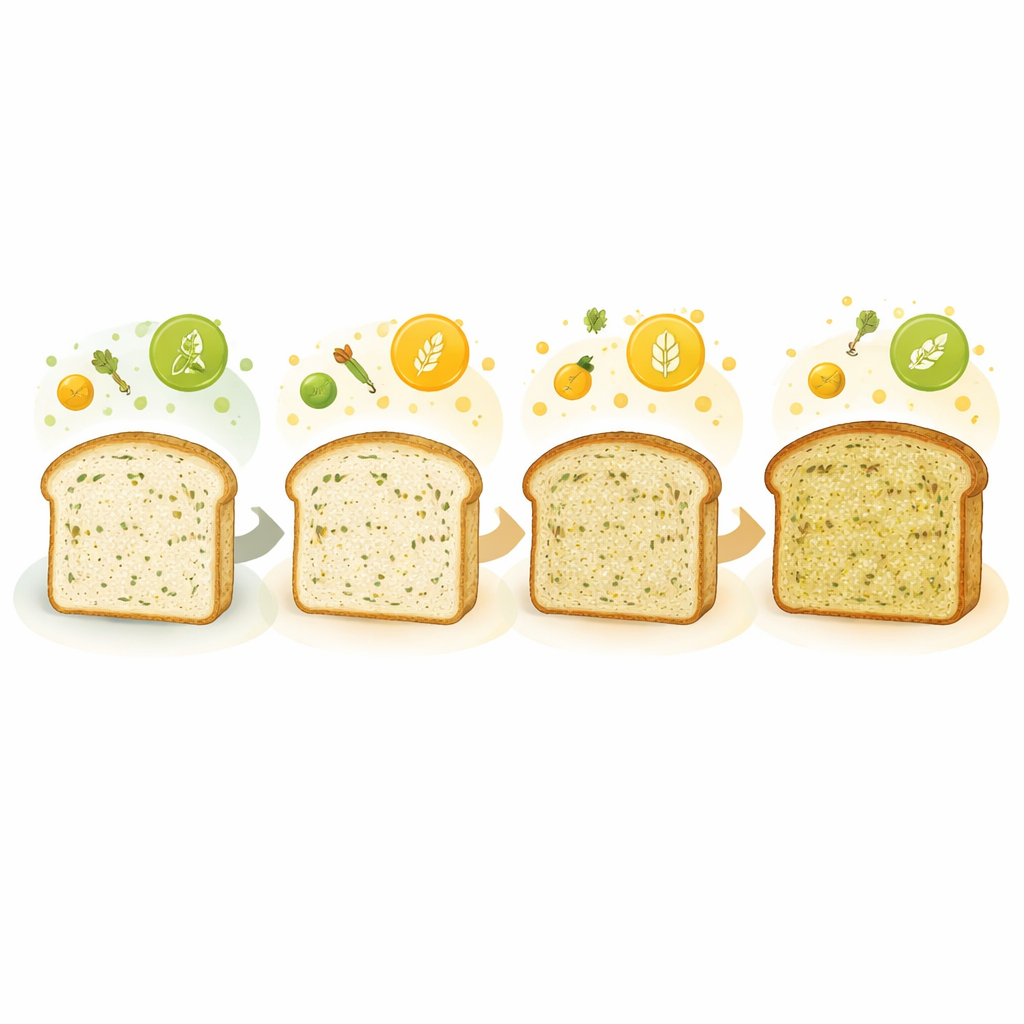
The team went beyond lab numbers to see what people actually thought of the breads. Instrument tests showed that fortified breads were firmer and chewier as substitution levels rose, reflecting their denser structure. Color measurements revealed a lighter, more yellow crust and a darker, slightly greener crumb as more dark green pumpkin material was added. A panel of 20 semi‑trained tasters scored appearance, color, taste, texture, crunchiness, and overall liking. While very high substitution levels hurt scores, a modest 5% replacement actually edged out the control loaf in overall acceptability. Tasters appreciated its flavor and pleasantly chewy texture, even though it was a bit firmer.
Finding the Sweet Spot
To understand the many measurements at once, the researchers used a statistical tool that groups related traits. This analysis showed a clear trade‑off: as pumpkin seed flour increased, nutritional and antioxidant benefits improved, but loaf volume and some texture and sensory scores declined. The 5% level landed in the “goldilocks” zone—enough seed flour to noticeably boost protein, fiber, and antioxidants, yet not so much that the bread became heavy or unpopular with tasters.
What It Means for Everyday Eating
This work suggests that a small tweak to a standard bread recipe can turn a common industrial by‑product—defatted hulless pumpkin seeds—into a valuable ingredient. At around 5% substitution, bakers can produce bread that looks and tastes familiar, while quietly delivering more nutrients and natural protective compounds. At the same time, using these seeds supports a more circular food system by reducing waste from pumpkin processing. For consumers, it offers a simple way to make a staple food just a little bit better for both health and the planet.
Citation: Raina, S., Joshi, T., Singh, A. et al. Utilizing Defatted Hulless Pumpkin Seed Meal for Bread Fortification: A Valorization Approach to Improve Techno-functional and Textural properties. Sci Rep 16, 10877 (2026). https://doi.org/10.1038/s41598-026-45497-y
Keywords: pumpkin seed bread, functional foods, food waste valorization, high-protein bread, antioxidant-rich bakery