Clear Sky Science · en
Grip strength indicators and successful aging among middle-aged and older adults: evidence from the CHARLS cohort
Why a firm handshake matters in later life
As people live longer, many worry not just about surviving into old age but about staying active, clear minded, and socially connected. This study from China looks at a surprisingly simple clue to how well someone may age: how strongly they can squeeze a handgrip device over several years. By tracking changes in grip strength among nearly two thousand adults, the researchers asked whether stronger and more stable grip strength goes hand in hand with what they call successful aging.
What it means to age well
Successful aging in this research is not just about avoiding disease. The team used a five-part yardstick that included having no major chronic illnesses such as cancer or stroke, being able to manage daily tasks like dressing and walking, keeping good memory and thinking skills, staying free of significant depression, and taking part in social activities. Only a small share of participants met all these strict conditions by the end of the study, which reflects how challenging it is to reach such a high bar in later life.
How grip strength was tracked
To explore the link between hand strength and aging, the researchers drew on four waves of data from the China Health and Retirement Longitudinal Study, which follows adults across the country over time. Participants had their grip strength measured three times between 2011 and 2015 and were then checked in 2018 to see who had reached successful aging. Instead of relying on a single reading, the team looked at several related measures: the first baseline value, the average of all three tests, how much each person’s scores fluctuated, and broad patterns of change over the years.

Stronger and steadier grip linked to better aging
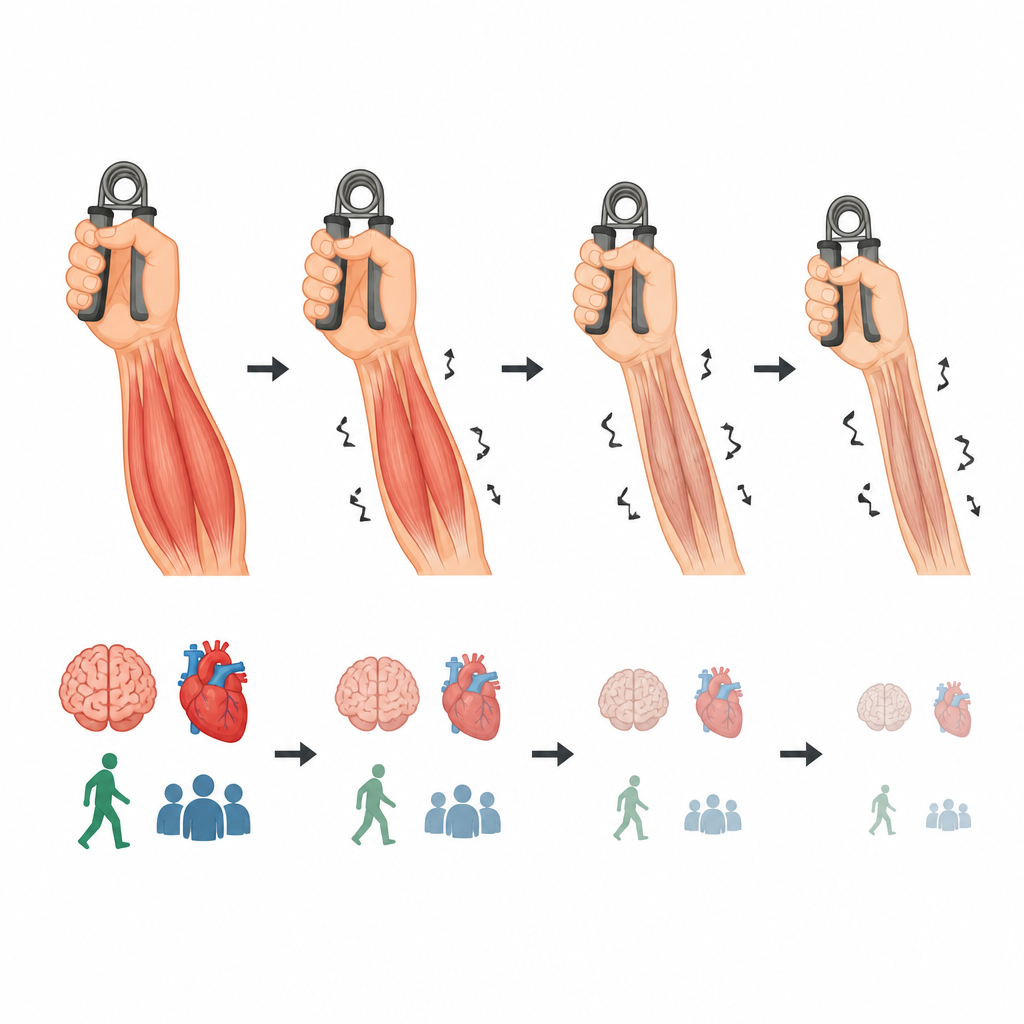
When the numbers were analyzed, a clear pattern emerged. People with higher grip strength, especially those with a higher three-time average, were more likely to meet the strict successful aging criteria later on. After taking into account age, sex, income, health habits, and other factors, each small rise in average grip strength was tied to a noticeable increase in the chance of aging successfully. In contrast, people whose grip strength bounced up and down more over time tended to have lower odds of reaching this ideal state, even when their average level was considered.
Different strength paths over time
The researchers also grouped people by the paths their grip strength followed. Some started high and declined only slightly, while others began at moderate levels or saw faster drops. Those who started with higher strength and only a gentle decline had the best outlook. In comparison, people whose strength began at a moderate level and drifted downward over time were significantly less likely to achieve successful aging, suggesting that both the starting point and the slope of decline matter for long term well being.
What this means for healthy aging
The study cannot prove that improving grip strength will directly cause better aging, but it does highlight hand strength as a useful, low cost sign of overall robustness. Regular checks of grip strength could help doctors and community clinics spot older adults who may be on a more fragile path, especially if their readings vary widely or steadily slip. In plain terms, keeping a firm and steady grip over the years appears to go along with staying healthier, more independent, and more socially engaged in later life.
Citation: Xie, B., Xu, J. & Gao, C. Grip strength indicators and successful aging among middle-aged and older adults: evidence from the CHARLS cohort. Sci Rep 16, 14907 (2026). https://doi.org/10.1038/s41598-026-45447-8
Keywords: grip strength, successful aging, older adults, China cohort, healthy aging