Clear Sky Science · en
Perceived peer support and academic achievement among university students: the chain mediating roles of emotion regulation and behavioral engagement
Why Friends Matter for Grades
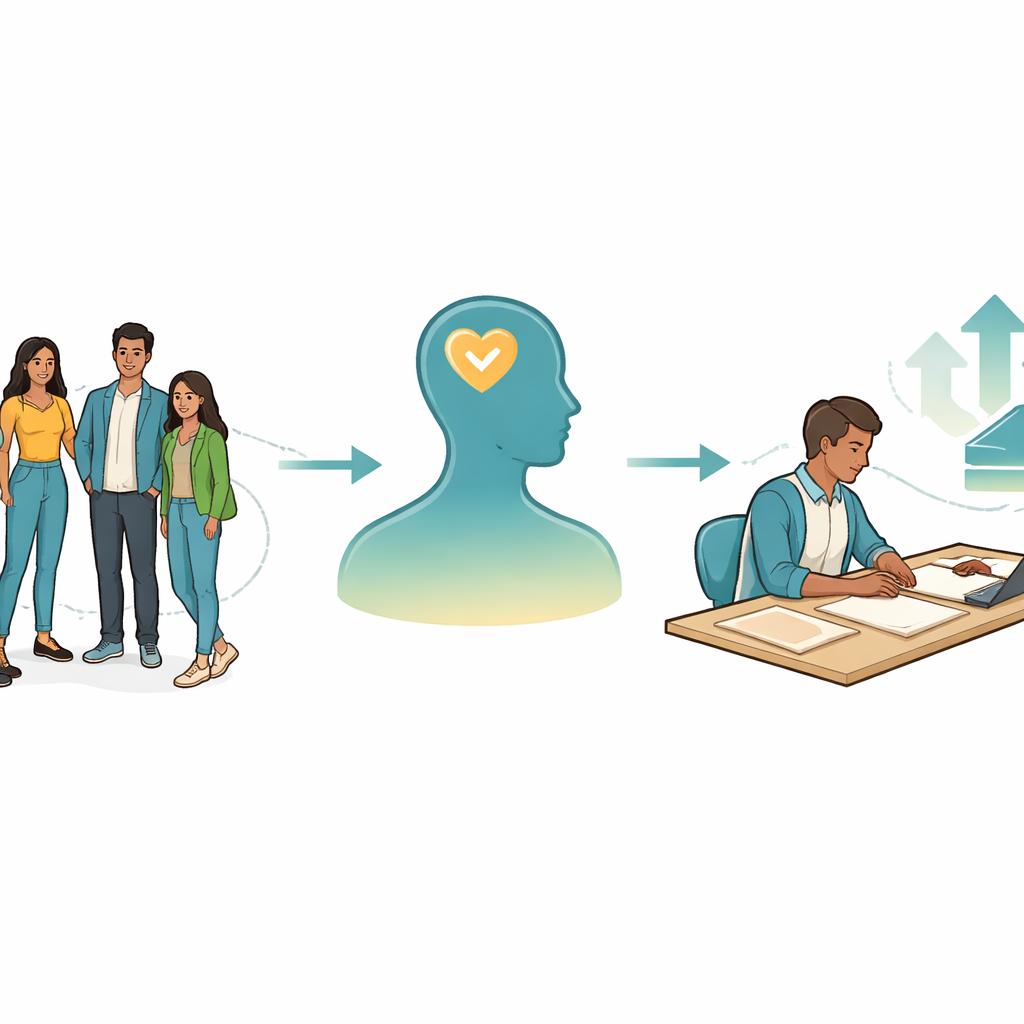
University life is often described as the best years of one’s life, yet it is also a time of heavy workload, fierce competition, and constant pressure to perform. This study asks a question that matters to students, parents, and educators alike: beyond talent and hard work, how much do supportive friendships shape university success? By tracking hundreds of Chinese undergraduates over one semester, the researchers show that feeling backed by friends helps students manage their emotions, stay engaged in their studies, and ultimately report stronger academic achievement.
Friends as a Hidden Study Resource
The authors focus on what they call perceived peer support: how strongly students feel that their friends are available to listen, encourage, and help with school-related challenges. Unlike help that can be counted, such as the number of times someone tutors you, this is about the sense that support is there when needed. Drawing on Social Cognitive Theory, which views learning as shaped by the constant interplay between environment, personal factors, and behavior, the study treats supportive peers as a key part of the student’s environment. In modern Chinese universities, where competition is intense and many students live and study alongside classmates, these peer relationships can become a powerful resource or, if absent, a serious vulnerability.
How Emotions Shape Learning Effort
One central idea in the study is emotion regulation: the ability to notice, handle, and adjust one’s feelings when under stress. Students who can calm themselves before an exam, or reframe a setback as a learning opportunity, are better positioned to concentrate and persist. The researchers argue that when students feel understood and encouraged by their friends, they are more likely to develop and use such emotional skills. Supportive peers help create a sense of safety, making it easier to try healthier ways of coping rather than slipping into worry, avoidance, or giving up. Over time, this steadier emotional life frees up mental energy for complex thinking and problem-solving.
From Showing Up to Standing Out
The study also highlights behavioral engagement, a down-to-earth but crucial element of success: showing up to class, putting in effort, and actively taking part in learning activities. In the model the authors test, engagement is the visible tip of the iceberg—the outward sign that students are channeling their motivation and emotional resources into concrete action. Supportive friends can nudge classmates to attend lectures, form study groups, and stick with difficult tasks. When students feel emotionally steady, they are more likely to sustain this kind of effort. The researchers treat engagement as the immediate pathway through which inner resources turn into better grades and stronger academic skills.
What the Study Actually Found
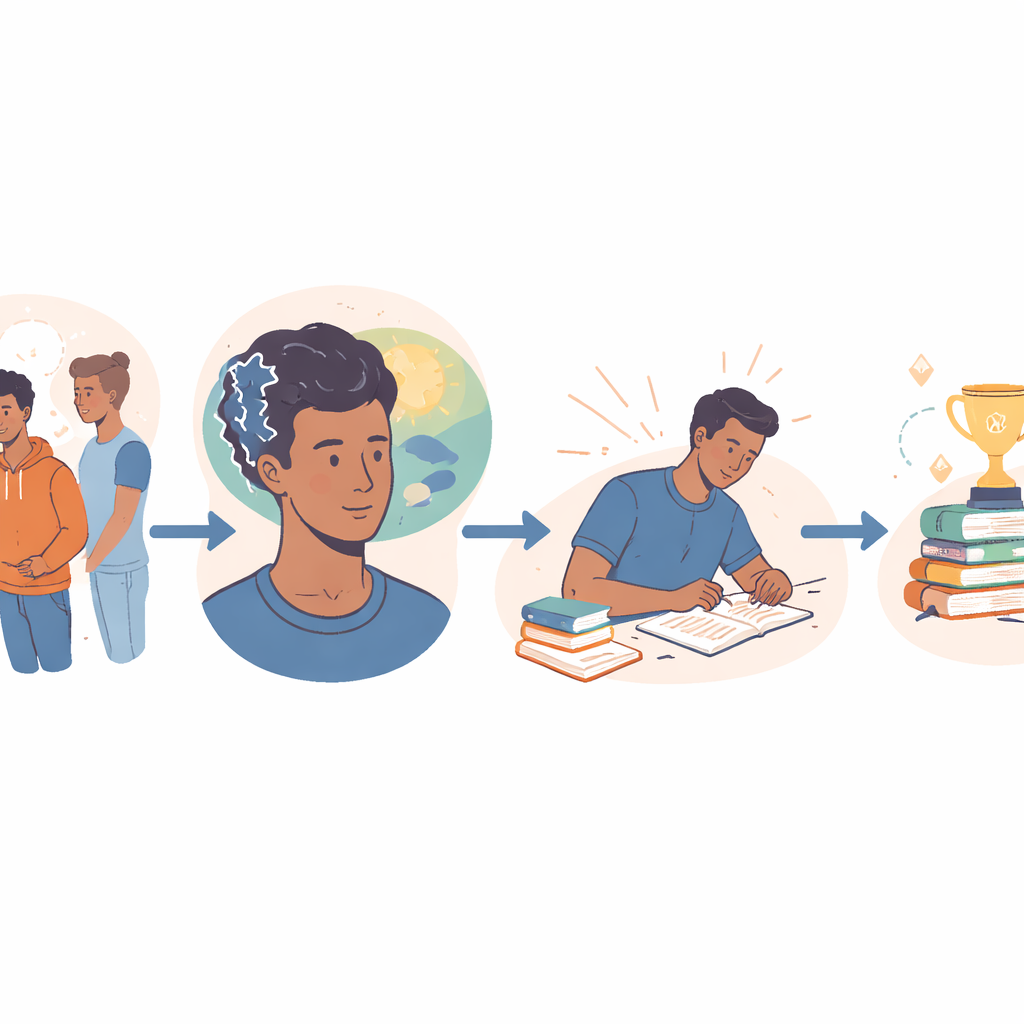
To test these ideas, the team surveyed 560 undergraduates from two universities in northeastern China at three points during a single semester. Students first reported background information, then their sense of peer support and their emotion regulation skills, and finally their study effort and self-rated academic achievement, including mastery of core knowledge and abilities like writing academic papers. Using structural equation modeling, a statistical technique that examines how variables relate as a system, the authors found that perceived peer support was linked to higher achievement in several ways. It had a small direct association with achievement, but more importantly, it worked indirectly by boosting students’ emotion regulation and their behavioral engagement. A chain pathway emerged: students who felt more supported by friends tended to regulate their emotions better; those with stronger emotional control were more engaged in their studies; and more engaged students reported higher academic achievement.
Why This Matters for Students and Universities
The findings suggest that friends in university are not just companions but part of the engine that powers academic success. Supportive peer networks appear to help students stay emotionally balanced, which in turn encourages steady effort in coursework and leads to better overall academic functioning. For students, this means that building healthy, encouraging friendships and working on emotional skills such as calming oneself and reframing setbacks can be as important as choosing the right major. For universities, it points to the value of designing learning environments that promote positive peer interaction and explicitly teach emotional coping strategies, rather than focusing only on lectures and exams.
Taking the Big Picture Home
In simple terms, this study concludes that good friends can help make good grades, but not by magic. The real story runs through how students feel and how they behave: peer support helps students steady their emotions, steady emotions support sustained effort, and sustained effort supports higher achievement. Recognizing this social–emotional–behavioral chain can help individuals and institutions move beyond a narrow focus on test scores and curricula, toward campus cultures where emotional well-being, active engagement, and academic excellence reinforce one another.
Citation: Gai, G., Zhu, X. & Ahmad, N.S. Perceived peer support and academic achievement among university students: the chain mediating roles of emotion regulation and behavioral engagement. Sci Rep 16, 14350 (2026). https://doi.org/10.1038/s41598-026-45417-0
Keywords: peer support, emotion regulation, student engagement, academic achievement, university students