Clear Sky Science · en
Technostress, digital fatigue, and AI dependency as antecedents of burnout and SDG-4 achievement in EFL classrooms
Why screens can make language learning feel so hard
For many university students, learning English now happens through screens filled with apps, video calls, and AI helpers. These tools can be exciting and convenient, but they can also leave students drained, anxious, and wondering whether they are really learning. This study looks at how constant digital demands in English as a foreign language classes can quietly build into burnout and threaten the promise of fair, high quality education for all.
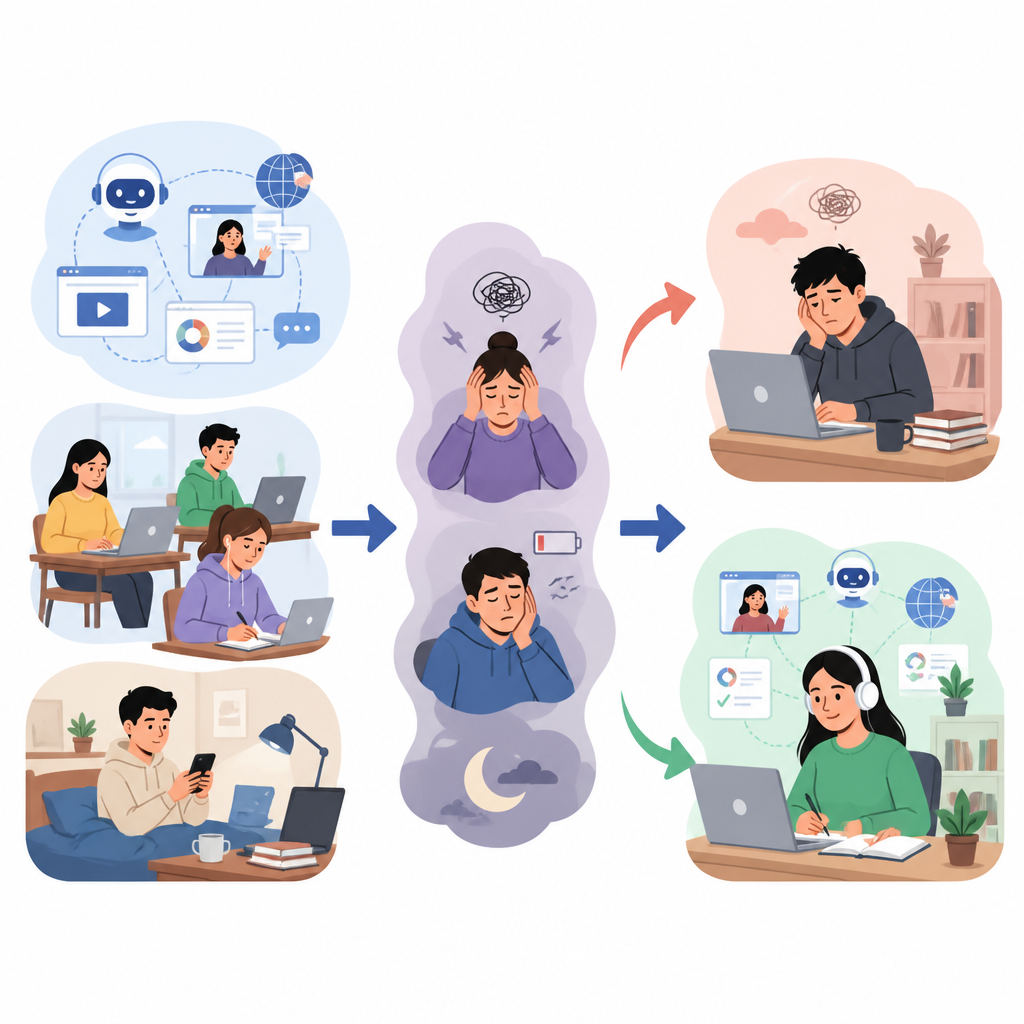
When helpful tools start to feel like too much
The researchers focused on three common digital pressures. First is technostress, the feeling of being overwhelmed or left behind by complex platforms, frequent updates, or unreliable systems. Second is digital fatigue, the tiredness that comes from long hours of online classes, homework on screens, and constant notifications. Third is a sense of depending too much on AI, such as translation or writing tools, which can spark worries about losing skills or being judged by mysterious algorithms. Together, these pressures form a heavy digital load that many language learners now carry every day.
From nervous learners to burned out students
The team surveyed 545 university students studying English in China, including both Chinese and international students, and used statistical modeling to trace how these digital pressures affect them. They found a clear chain reaction. When technostress, digital fatigue, and AI dependency rise, so does foreign language anxiety the nervousness about speaking up, making mistakes, or taking tests in English. This anxiety then spills over into digital burnout, a state of emotional exhaustion, negative feelings toward learning, and a sense of reduced ability. In short, the very technologies meant to support language practice can, if handled poorly, sap the energy and confidence students need to succeed.
Why this matters for fair and quality education
The study links this burnout to a wider global goal: Sustainable Development Goal 4, which calls for inclusive, equitable, and high quality education. Students were asked how they felt about the quality of their courses, the fairness of opportunities, and how included and supported they felt. Those with higher digital burnout reported lower scores on all of these points. Burnout made it harder to focus, easier to give up, and more likely that students felt shut out rather than invited in. In this way, invisible psychological strain in front of a laptop can slowly undermine big ambitions for fair education in a digital age.
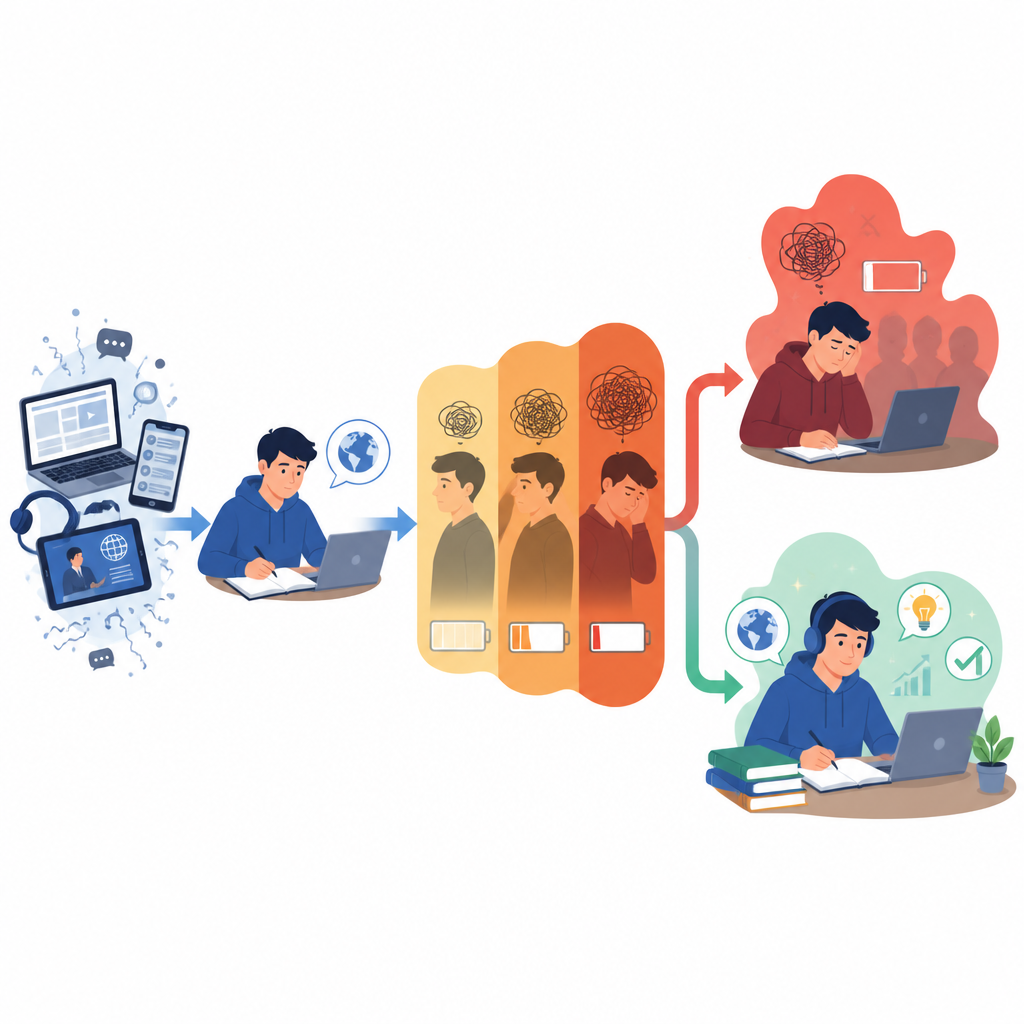
The quiet strength of feeling capable with technology
Not all students were affected in the same way. A key protective factor was technology self-efficacy, or how capable students felt when using digital tools. Learners who believed they could handle new platforms, solve basic problems, and make good use of online resources were less harmed by burnout. Even when they felt tired or stressed, this sense of capability softened the blow, helping them hold on to a positive view of their learning and their chances to succeed. International students showed stronger links between digital pressures, anxiety, burnout, and outcomes, but they also gained more from feeling confident with technology.
What this means for students and teachers
In everyday terms, the study suggests that digital language learning is not just about having enough devices or fast internet. It is also about managing the psychological cost of being online so much. If technostress, screen fatigue, and worry about relying on AI are left unchecked, they can feed anxiety and burnout that quietly erode students sense of progress and fairness. Building students confidence with technology, simplifying digital tasks, and offering extra support to those new to the system especially international students can help keep digital tools from becoming digital traps.
Citation: Honggang, W., Khoso, A.K. & Althubyani, A.R. Technostress, digital fatigue, and AI dependency as antecedents of burnout and SDG-4 achievement in EFL classrooms. Sci Rep 16, 15412 (2026). https://doi.org/10.1038/s41598-026-45402-7
Keywords: technostress, digital fatigue, AI dependency, foreign language anxiety, digital burnout