Clear Sky Science · en
Brain network functional connectivity changes induced by music-induced analgesia in fibromyalgia patients
Why music and pain matter to everyday life
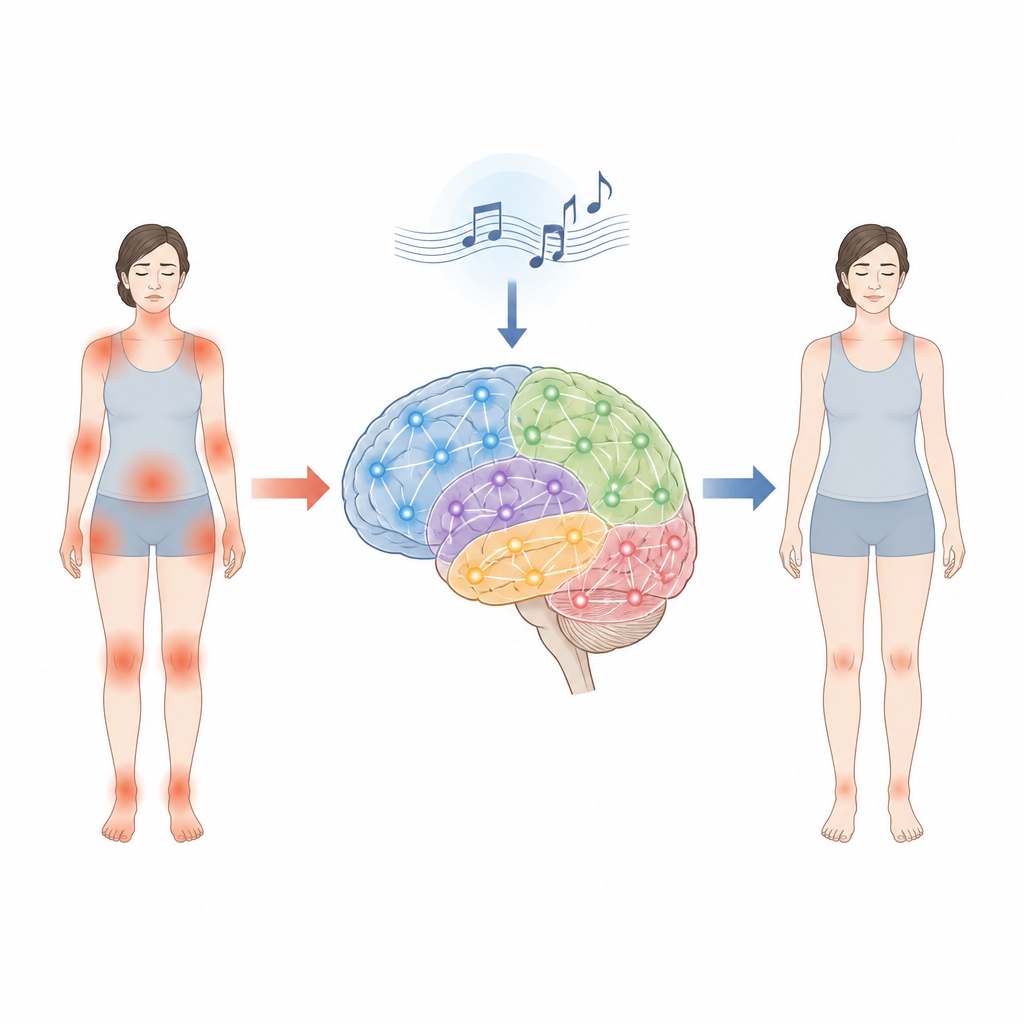
Chronic pain conditions like fibromyalgia can drain energy, disturb sleep, and cloud thinking, often for years. Many patients and clinicians are interested in safe, low cost ways to ease pain alongside standard treatments. This study explores how simply listening to favorite, calming music can lessen pain in people with fibromyalgia and, crucially, what happens inside the brain when that relief occurs.
Living with widespread body pain
Fibromyalgia affects an estimated 2 to 8 percent of people worldwide. It is marked by widespread aches, fatigue, poor sleep, and problems with memory and concentration. Medications and exercise programs can help, but they often do not fully control symptoms and can bring side effects. Music listening has emerged as a gentle aid for many types of pain, including surgical pain and long lasting pain. Patients frequently report that favorite songs help them feel less distressed and more in control, yet it has been less clear how this relief shows up in the brain as changes in communication between different brain regions.
How the study used brain scans and personal music
The researchers used an existing open brain imaging dataset of 20 women with fibromyalgia. Each participant chose slow paced, very pleasant, and familiar songs that they enjoyed. While inside the MRI scanner, each person had a brief rest scan, then listened to a five minute segment of their chosen music, and then had a second rest scan. Before and after the music, they rated how strong their pain felt and how unpleasant it was on simple verbal scales. The team then analyzed the resting brain scans with a data driven method that looked at a large scale map of 142 brain regions grouped into networks related to vision, body sensation, attention, deeper emotional areas, and the brain’s resting, self focused mode.
Music’s impact on pain and brain networks
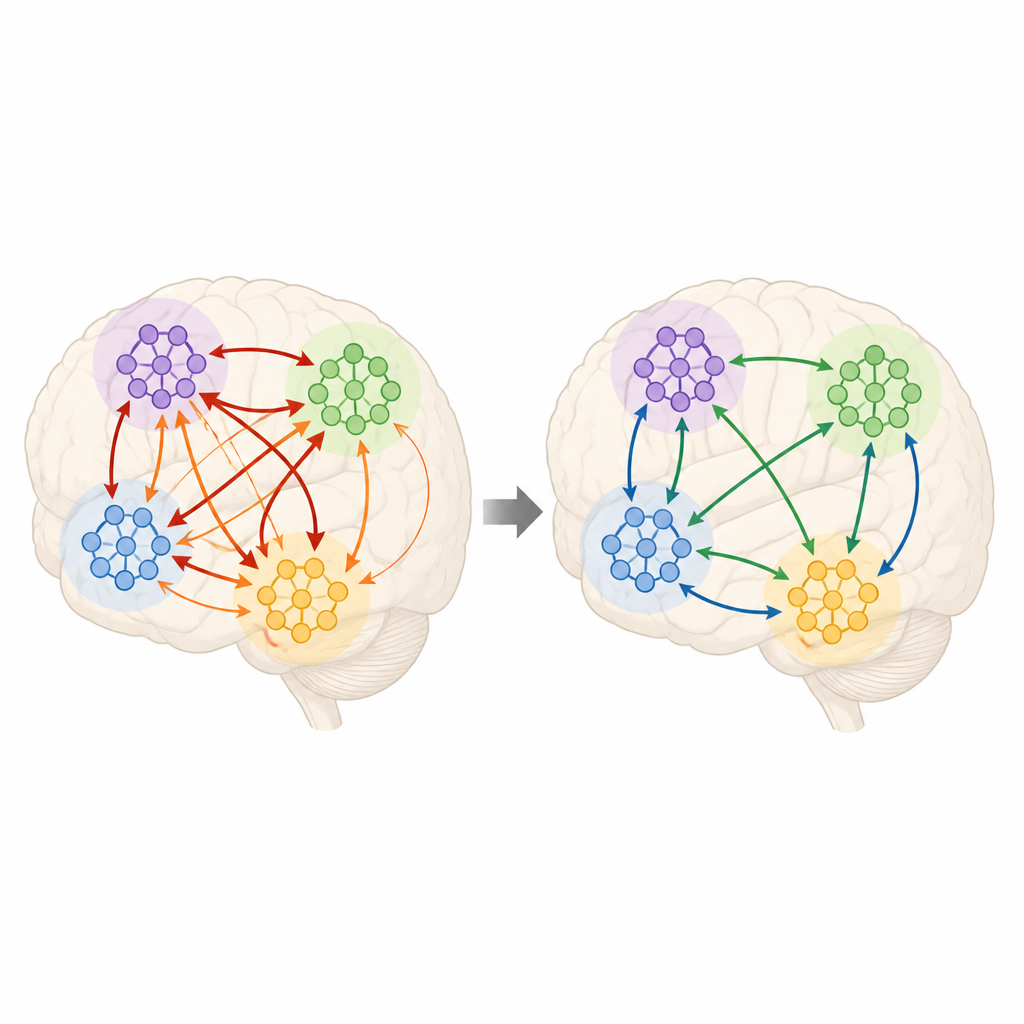
After listening to their chosen music, patients rated their pain intensity as significantly lower, and there was a trend toward lower unpleasantness as well. In the brain, the team found that communication within and between several key networks shifted. Areas involved in catching new events and shifting attention showed stronger internal links, especially connections between frontal regions that help regulate emotion and an area called the insula that processes bodily feelings and pain. Visual regions at the back of the brain also became more tightly connected with both attention and resting mode networks, hinting that mental imagery and shifts in focus may help distract from pain and reshape how it is evaluated.
Balancing emotional and sensory signals
At the same time, some connections between sensation related regions and resting mode areas became weaker after music. In particular, links involving the middle insula and parts of the limbic system, which help encode the emotional weight of pain, were reduced. The size of these changes was tied to how much pain ratings dropped: larger changes between specific visual, sensory, and resting regions went along with greater relief in both intensity and unpleasantness. These patterns suggest that music may calm overactive communication between feeling the body and dwelling on pain, while strengthening pathways that support attention shifts and soothing emotional responses.
What this means for people with chronic pain
For a lay reader, the main takeaway is that familiar, enjoyable music does more than distract from pain in fibromyalgia. The study shows that even a few minutes of listening can measurably change how different parts of the brain talk to each other at rest. Connections that help direct attention and regulate feelings grow stronger, while some of the links that may reinforce the emotional burden of pain become quieter. Although the study was small and based on existing data, it adds brain based support to the idea that carefully chosen music can be a useful companion to other treatments in managing chronic pain.
Citation: Pan, M., Hou, J., Yang, Q. et al. Brain network functional connectivity changes induced by music-induced analgesia in fibromyalgia patients. Sci Rep 16, 14786 (2026). https://doi.org/10.1038/s41598-026-45376-6
Keywords: fibromyalgia, music and pain, brain connectivity, resting state fMRI, chronic pain relief