Clear Sky Science · en
EphA2 monoclonal antibody attenuates hyperoxia-induced acute lung injury by preserving the alveolar–endothelial barrier
Why too much oxygen can hurt
Oxygen keeps us alive, yet in intensive care units patients with severe lung failure may breathe nearly pure oxygen for days. This study explores a surprising downside of that life-support: very high oxygen levels can damage the delicate barrier in the lungs where air meets blood. Using mice, the researchers asked whether blocking a specific cell-surface switch, called EphA2, could help protect this barrier and limit oxygen-related lung injury. Their findings hint at a new way to make oxygen therapy safer for the sickest patients.
How the lung’s thin wall is damaged
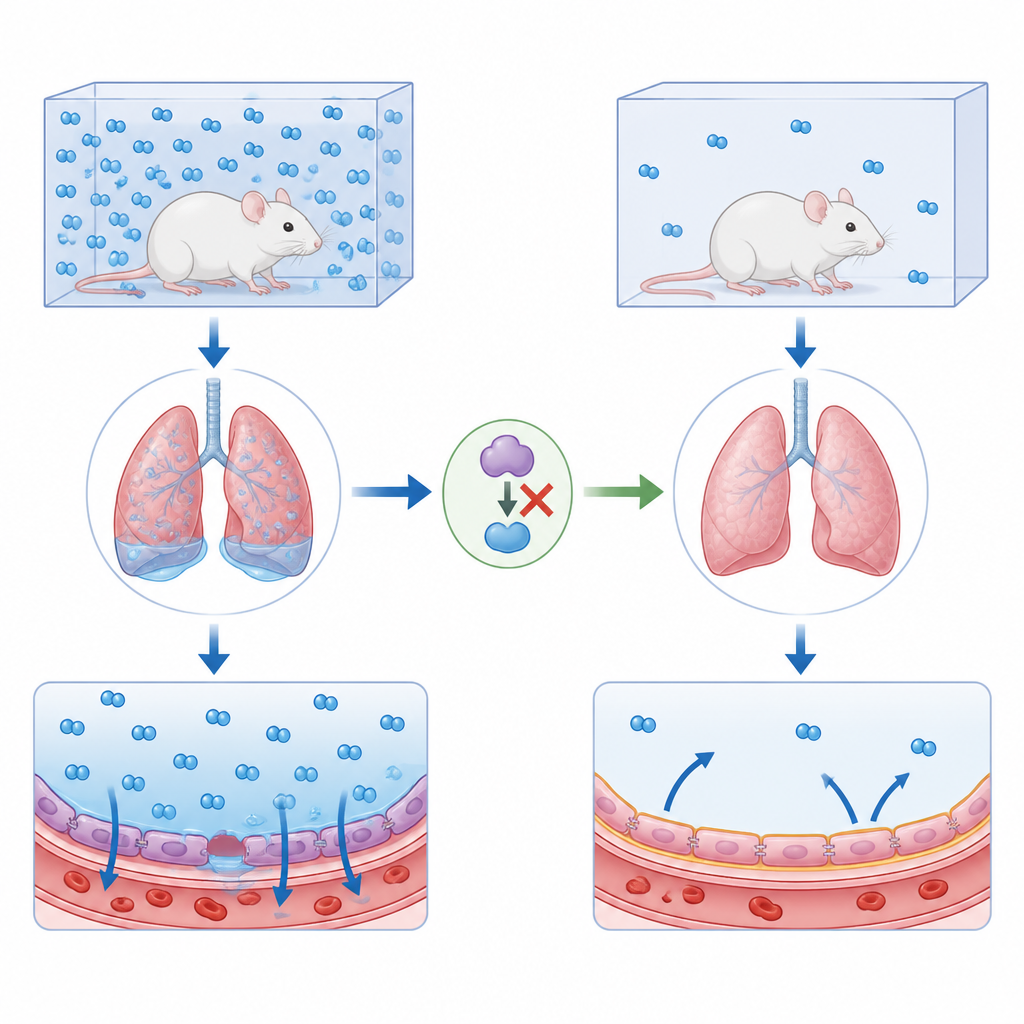
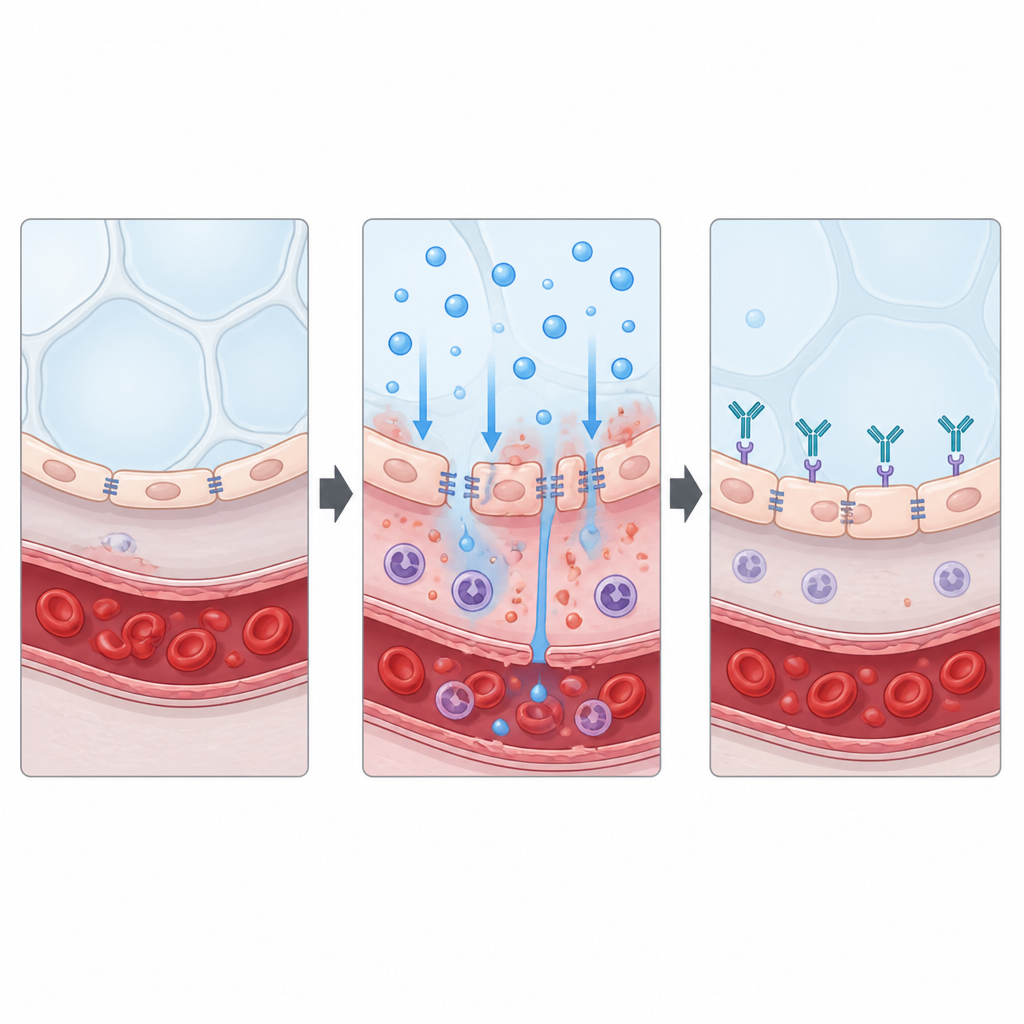
Inside the lungs, a paper-thin wall separates air in the tiny air sacs from blood in the surrounding vessels. This wall is built from tightly linked lining cells and supporting proteins that act like zipper teeth. When mice were placed in air that was almost pure oxygen for up to three days, this barrier began to fail. Fluid and proteins leaked into the air spaces, lung tissue swelled, and the microscopic appearance of the lungs started to resemble that seen in acute respiratory distress syndrome, a severe form of lung failure in humans. At the same time, levels of inflammatory molecules in lung washings rose steadily, signalling an aggressive local immune response.
A signaling switch that loosens cell junctions
The team focused on EphA2, a receptor on the surface of lung cells that helps control how tightly neighboring cells cling together. During prolonged high-oxygen exposure, the activated form of EphA2 increased in the lungs, while key junctional proteins that keep cells sealed together, such as cadherins and claudins, were lost or became disorganized. This pattern suggested that the EphA2 pathway was helping to pry open the barrier. Other related receptors changed much less, pointing to EphA2 as a central player in this kind of oxygen-driven injury.
Antibody treatment shields the lung barrier
To test whether EphA2 was simply a marker or an active culprit, the investigators gave some mice an antibody that specifically blocks EphA2 before exposing them to very high oxygen. Compared with untreated animals, mice receiving the antibody had lungs that looked healthier under the microscope, with less fluid buildup, fewer damaged areas, and more continuous staining of the proteins that stitch cells together. Markers of oxidative stress inside lung cells were reduced, and chemical signals of inflammation in lung washings tended to be lower. The antibody also nudged internal survival pathways toward a state that seemed to favor barrier stability over runaway cell stress.
Better survival after an extreme oxygen challenge
The ultimate test was whether this protection translated into a real-world outcome. After three days of near pure oxygen, many untreated mice died once they were returned to normal air. In contrast, a significantly larger fraction of mice that received the EphA2-blocking antibody survived the same challenge. Even though the dose was given only once, before the oxygen exposure began, it appeared to preserve the lung barrier enough to help the animals weather the damaging conditions and recover when the oxygen level dropped back to normal.
What this could mean for patient care
For people in intensive care, oxygen will remain a vital drug, but this work highlights how narrow the line can be between helpful and harmful doses. In a mouse model where oxygen itself is the main injuring force, turning off the EphA2 switch helped keep the lung’s air–blood barrier intact, reduced signs of inflammation and oxidative damage, and improved survival. While much more research is needed before any treatment could be tried in humans, the study offers a proof-of-concept that targeting this pathway might one day allow doctors to use the oxygen patients need while better protecting the fragile surfaces where breathing and blood flow meet.
Citation: Chung, K.S., Shin, J.H., Lee, S.H. et al. EphA2 monoclonal antibody attenuates hyperoxia-induced acute lung injury by preserving the alveolar–endothelial barrier. Sci Rep 16, 14905 (2026). https://doi.org/10.1038/s41598-026-45319-1
Keywords: hyperoxia, acute lung injury, EphA2, alveolar endothelial barrier, oxygen therapy