Clear Sky Science · en
Adverse events following SARS-CoV-2 mRNA vaccination in norwegian adolescents
Why this matters for parents and teens
The rapid rollout of COVID-19 vaccines for teenagers raised a very practical question for families: how safe are these shots in real-life use, beyond small clinical trials? This Norwegian study followed nearly half a million adolescents to look for serious health problems that might appear after vaccination. Its results help put rare side effects into perspective, showing where small increases in risk exist and where no worrying patterns were found.
Looking at real life, not just trials
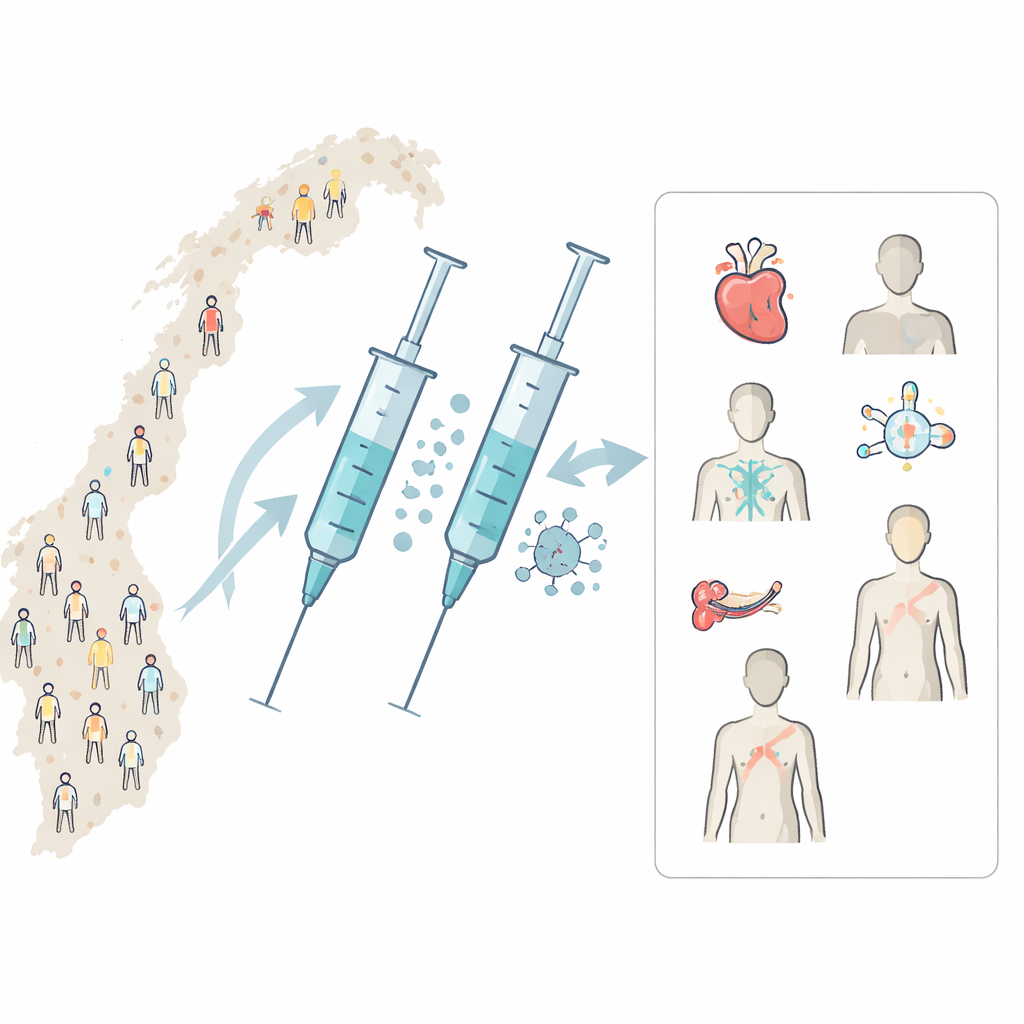
Clinical trials are designed to test whether vaccines work and to pick up the most common side effects, but they usually include limited numbers of participants who are often healthier than the general population. To capture rare problems, researchers in Norway turned to national health registers that track hospital and clinic visits for everyone in the country. They studied 496,432 adolescents aged 12 to 19, most of whom received the Pfizer-BioNTech mRNA vaccine and a smaller number the Moderna vaccine. By linking vaccination dates to later diagnoses, the team could compare how often specific conditions occurred after a first or second dose versus in unvaccinated teens.
What the researchers checked
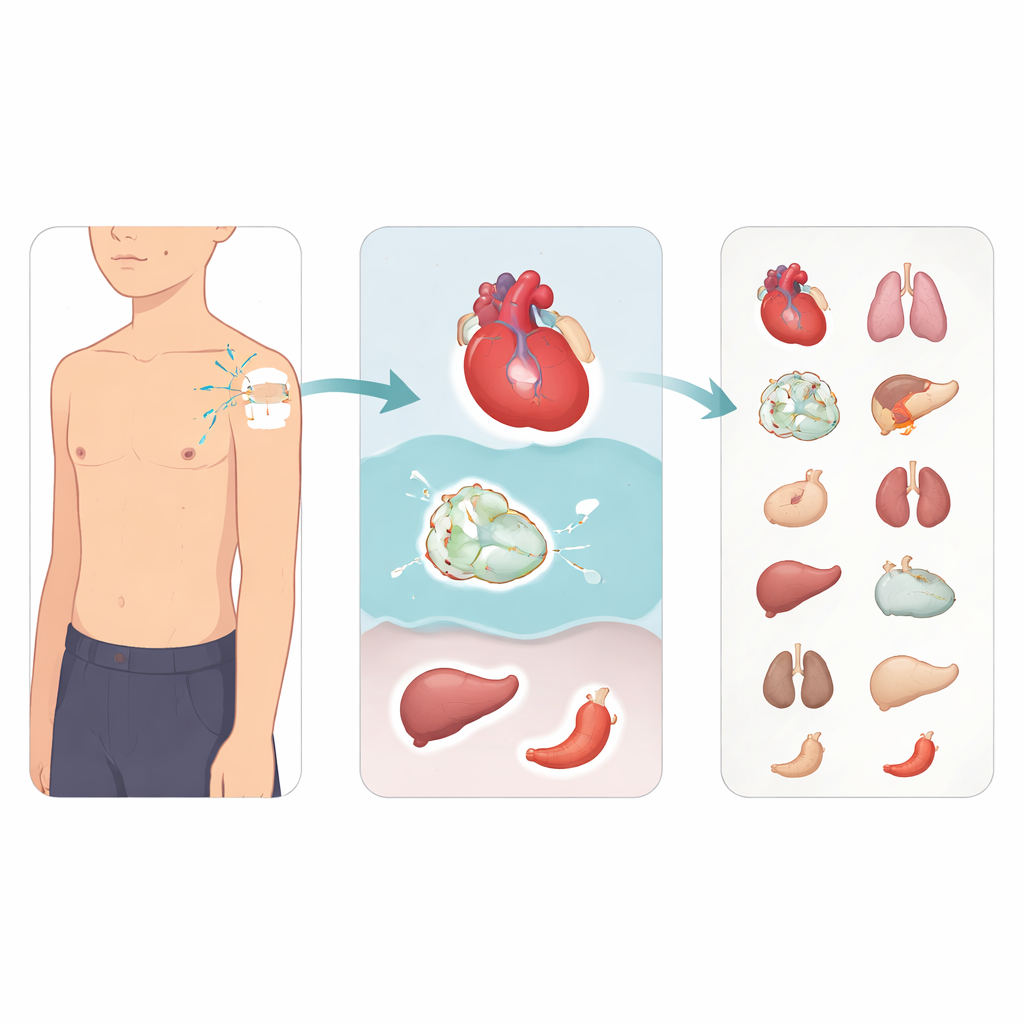
The study focused on 17 types of serious health outcomes that had been discussed internationally as possible concerns after COVID-19 vaccination. These included sudden allergic reactions, heart inflammation (myocarditis and pericarditis), swelling of lymph nodes, blood clots, strokes, severe nerve and brain conditions, certain bleeding and immune disorders, and a rare post-infection syndrome in children. For each condition, the researchers defined a time window after vaccination—ranging from a few days to several weeks—during which a vaccine-related problem would most likely appear. They then used two complementary methods: a standard comparison between vaccinated and unvaccinated teens, and a "self-controlled" approach that compares each affected person to their own time before vaccination.
What they found after the first and second doses
The reassuring headline is that the first dose of mRNA vaccine was not linked to a clear overall increase in any of the 17 serious conditions when looking at the full group of adolescents. Most of the outcomes were very rare, and rates after the first shot looked similar to rates in those who remained unvaccinated. When the team zoomed in on age groups, they did see hints of more acute appendicitis and a few allergic reactions in younger teens after the first dose, but the number of cases was small, so these signals are uncertain.
After the second dose, a more consistent pattern emerged for a few specific problems. There was a measurable increase in severe allergic reactions right after vaccination, although these remained very rare events. Swollen lymph nodes, a common and usually short-lived immune response, were more frequently diagnosed soon after the second shot. Most notably, the risk of myocarditis and pericarditis—types of heart inflammation—was higher after the second dose, especially in older teens and in some analyses of the youngest group. Even so, these heart problems were still uncommon in absolute terms. For the other conditions, such as strokes, serious nerve diseases, and blood clotting problems, the study did not find convincing links to vaccination.
Putting rare side effects in context
The researchers were careful to test how robust their findings were. They repeated analyses after excluding adolescents with known COVID-19 infection, split the results by age, and used different assumptions about how long vaccine-related risks might last. Some patterns, like the heart inflammation and enlarged lymph nodes after the second dose, appeared consistently across methods. Others, such as possible links to epilepsy, appendicitis, or certain clotting events, varied depending on the age group or model used and were based on very small numbers. The authors stress that these uncertain signals should be interpreted with caution and explored further in other countries and in future booster campaigns.
What this means for vaccine decisions
For families weighing the benefits and risks of COVID-19 vaccination for teenagers, this nationwide study offers an important message: serious health problems after mRNA vaccination in adolescents are generally rare, and most of the many conditions examined did not show a clear increase after vaccination. There are real but small risks of allergic reactions, swollen lymph nodes, and heart inflammation, especially after the second dose, which doctors and health systems can watch for and manage. Overall, the findings support the safety of mRNA COVID-19 vaccines in adolescents while underscoring the need for ongoing monitoring as vaccination programs and virus variants continue to evolve.
Citation: Bergstad Larsen, V., Gunnes, N., Gran, J.M. et al. Adverse events following SARS-CoV-2 mRNA vaccination in norwegian adolescents. Sci Rep 16, 10878 (2026). https://doi.org/10.1038/s41598-026-45261-2
Keywords: COVID-19 vaccination, adolescent health, vaccine safety, myocarditis, Norway cohort study