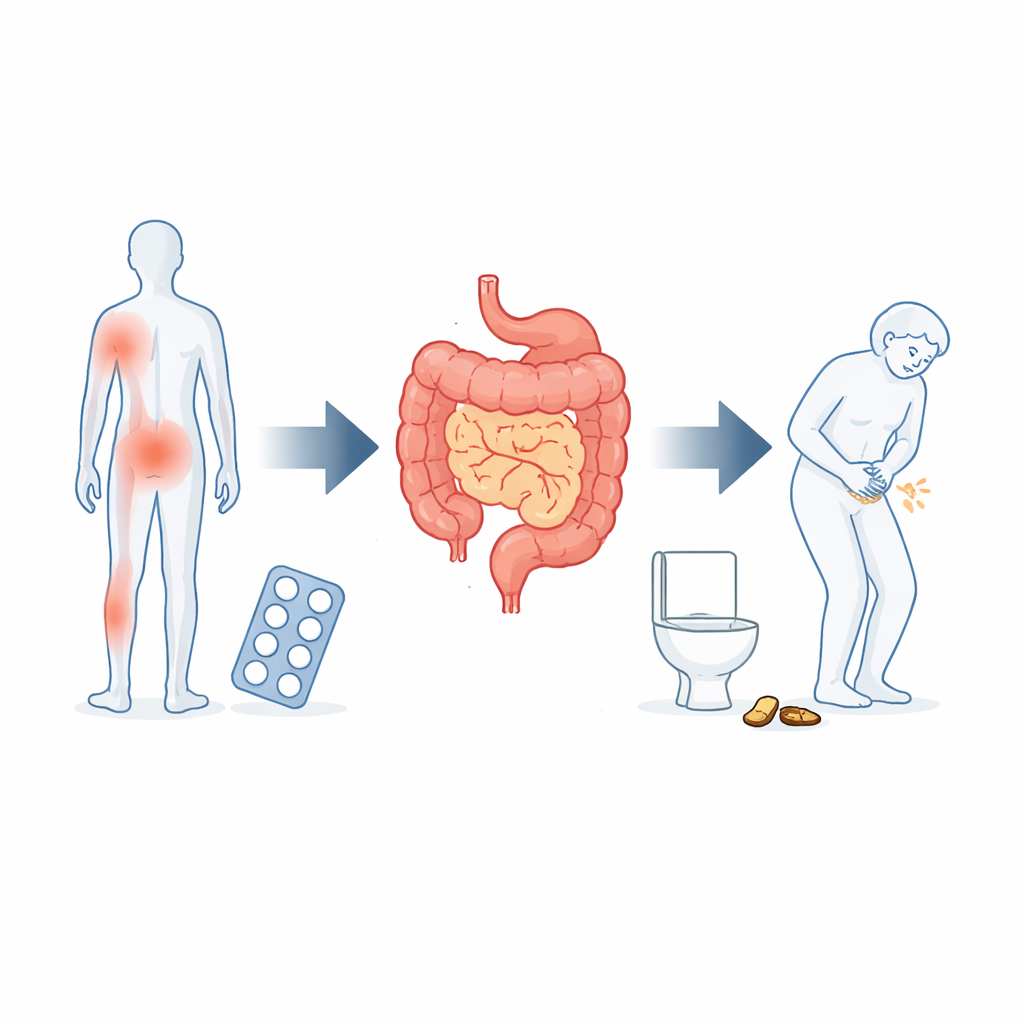
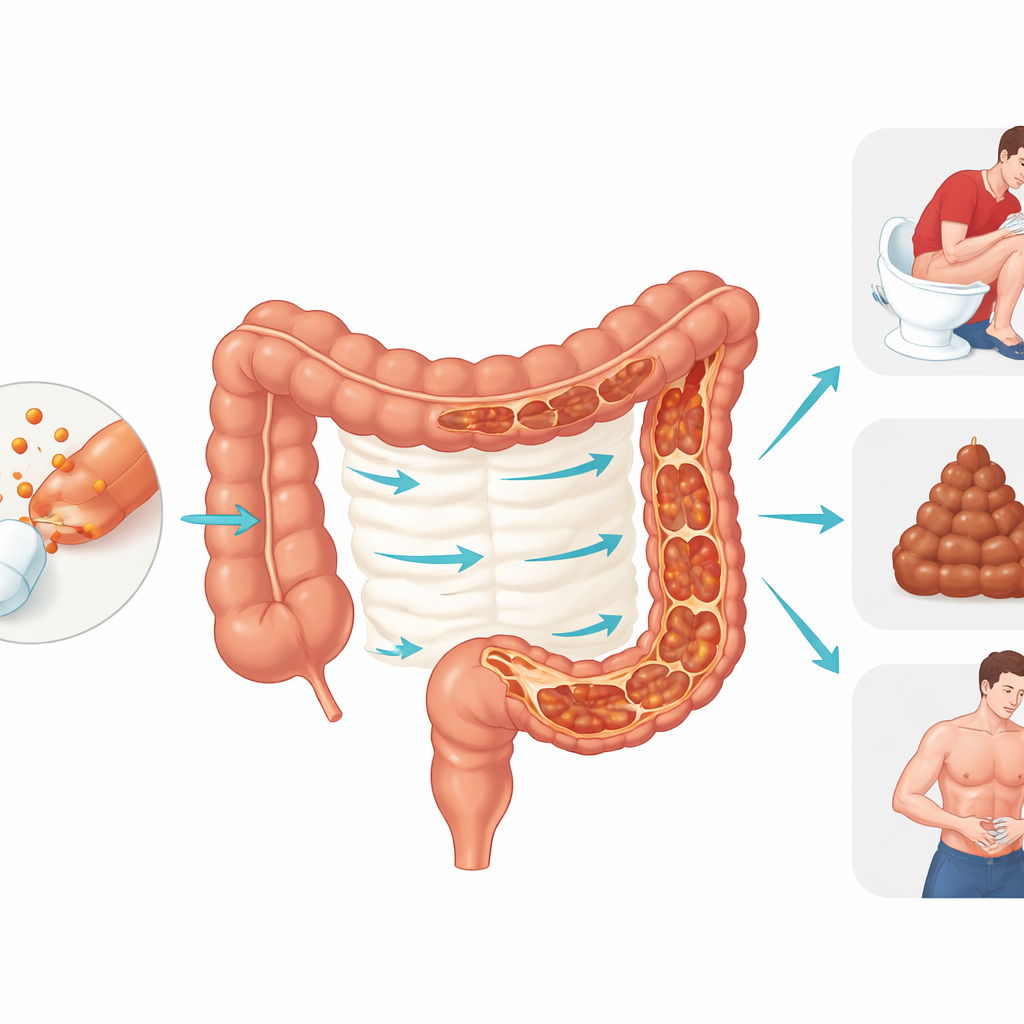
Many people living with long-lasting back or joint pain eventually turn to prescription painkillers called opioids when other treatments are not enough. While these medicines can ease pain, they often bring an under‑discussed problem: difficult, uncomfortable bowel movements. This study from Japan asks a very practical question: when someone starts a relatively mild opioid, how quickly does constipation appear, and which early bathroom changes should patients and clinicians watch for so they can step in before things get severe?
Getting a closer look at early side effects
The researchers re‑analyzed data from an earlier study of 63 adults with chronic musculoskeletal pain who were newly given weak opioids, mostly tramadol. None had constipation beforehand, and all had regular bowel habits. Instead of focusing only on whether constipation had developed after a week or two, the team zoomed in on the very first six days after the first pill. Every day, patients used their phones or tablets to record specific bowel symptoms, such as straining, hard or lumpy stools, and the feeling that they had not fully emptied after going to the toilet, as well as whether they personally felt constipated.
What happened in the first few days
The study found that trouble started surprisingly fast. By day three, nearly one in four patients already met standard diagnostic rules for opioid‑induced constipation, which require at least two typical symptoms. The most common early complaints were straining, a sense of incomplete emptying, and hard or lumpy stools, and all of these became more frequent by day six. In contrast, a simple drop in how often people moved their bowels was rare in the first days, even though many doctors and trials still rely on stool frequency as a main sign of constipation.
Early warning signs that predict later problems Figure 1.
Beyond counting how many people felt unwell, the researchers asked how well each early symptom predicted who would still have opioid‑related constipation two weeks after starting the medicine. They used basic accuracy measures that compare the symptom reports of people who did and did not go on to develop constipation. Hard or lumpy stools by day three were especially telling: most patients who reported this went on to have constipation at two weeks. Straining and the feeling of incomplete evacuation were also helpful clues, though slightly less precise. Interestingly, simply asking people whether they felt constipated performed as well as or better than these individual symptoms in predicting later problems.
Listening to patients’ own perceptions Figure 2.
Self‑awareness of constipation turned out to be both common and informative. By the third day, more than a third of patients already felt constipated, and this feeling closely tracked the formal diagnosis of opioid‑induced constipation. In practical terms, when a patient on a new weak opioid reported feeling constipated at day three, there was roughly a three‑in‑four chance that they would meet full diagnostic criteria by day fourteen. Some symptoms that doctors might associate with more advanced constipation—such as using their hands to help stool pass or feeling a physical blockage—were powerful predictors when they did appear, but they were rare in this early window.
What this means for people using weak opioids
For patients and clinicians, the message is straightforward: constipation related to weak opioid painkillers can begin within just a few days, not weeks, and it often shows up first as straining, hard stools, and a personal sense that “something is not right” with bowel movements. Because standard definitions of constipation usually require symptoms to last at least a week, they may miss this very early phase. Acting quickly—by adjusting treatment, adding or optimizing laxatives, or reinforcing diet and fluid advice—could prevent discomfort and more serious complications. In short, careful attention to bathroom habits during the first week of opioid therapy is a simple, low‑tech way to protect quality of life for people who depend on these drugs to manage chronic pain.
Citation: Morioka, Y., Hashimoto, A., Koretaka, Y. et al. Early detection of opioid-induced constipation in patients initiating weak opioids for chronic non-cancer pain.
Sci Rep16, 10605 (2026). https://doi.org/10.1038/s41598-026-45169-x