Clear Sky Science · en
Comprehensive evaluation of milk biomarkers as indicators of intramammary infection in dairy goats across lactation
Why goat milk health matters
Mastitis—an infection inside the udder—is one of the biggest hidden threats to dairy goats. It can quietly reduce how much milk a goat produces and alter the taste and quality of cheese and other dairy products, even when the animals look perfectly healthy. This study set out to see whether certain molecules naturally present in milk could act as early warning signs of infection, helping farmers protect animal welfare and milk quality without relying only on slow, costly laboratory cultures.
A closer look at infection in the udder
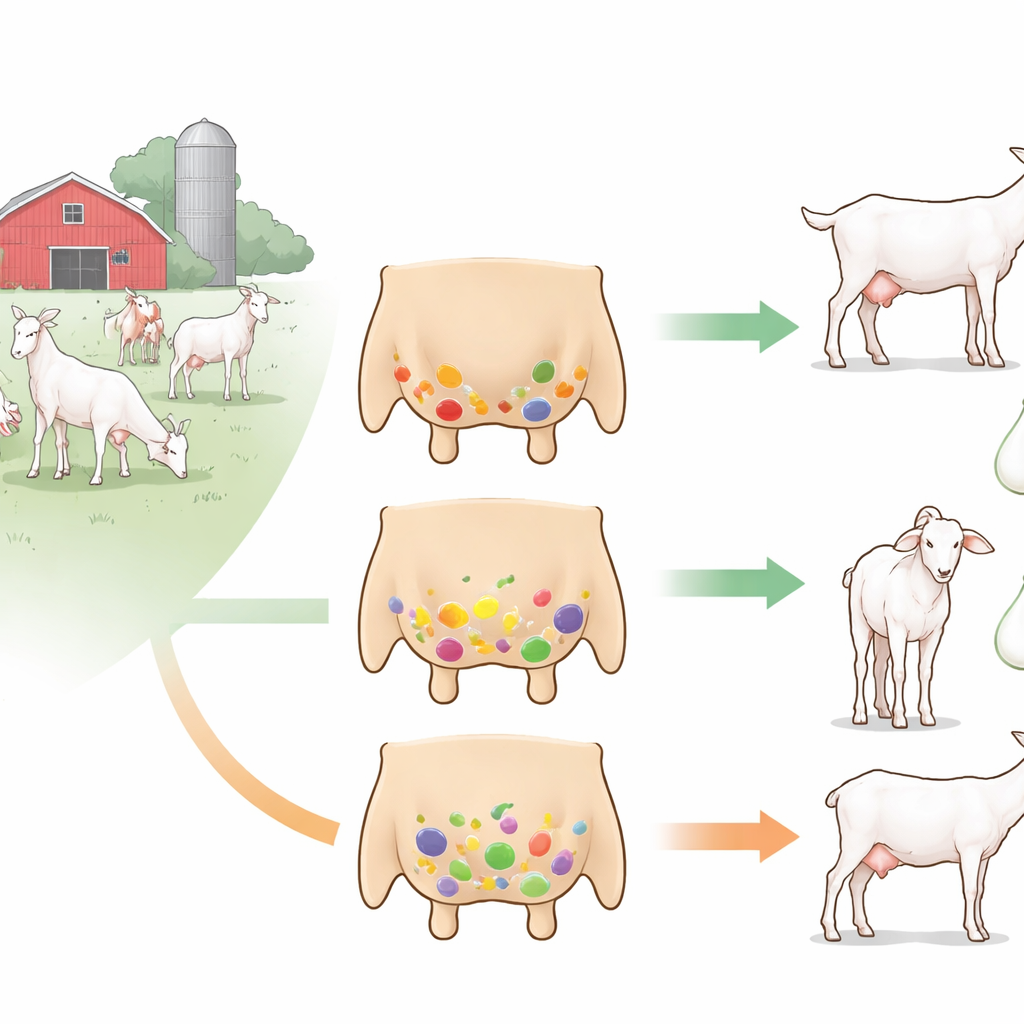
The researchers followed 105 dairy goats from two commercial farms in northern Italy over an entire milking season. They collected milk separately from each half of the udder during early, mid, and late lactation and tested it for bacteria, cell counts, and several candidate “biomarkers” linked to inflammation and immune defense. These included cathelicidin and haptoglobin—proteins released during infection—as well as enzyme activities and the overall number of somatic cells in milk, which rise when the immune system responds to a threat.
The germs that usually fly under the radar
Most of the infections they detected were not dramatic, fast-moving diseases but long-lasting, low-grade intramammary infections caused by bacteria known as non-aureus staphylococci and mammaliicocci, especially Staphylococcus caprae. These microbes typically cause subclinical mastitis: there are no swollen udders or clots in the milk, but the infection still chips away at milk quality. Major pathogens like Staphylococcus aureus were relatively rare, suggesting these herds were generally well managed. This pattern underscores why sensitive tests are needed: traditional bacteriological culture is considered the “gold standard,” but it is laborious, not very sensitive, and impractical for frequent routine screening on farms.
Testing milk’s built‑in alarm signals
The team compared how well different milk measures matched the presence of bacteria across the three phases of lactation. The familiar somatic cell count, measured separately in each half of the udder, worked reasonably well in early and mid-lactation: infected halves tended to have higher cell counts. However, the “cut-off” level that signaled likely infection had to rise as goats moved through lactation, reflecting the natural increase in cell counts in healthy goat milk over time. In late lactation, none of the standard thresholds clearly separated infected from non-infected halves, limiting the usefulness of cell counts alone.
Standout and disappointing biomarkers
Among the newer biomarkers, cathelicidin stood out. In early lactation, its presence in milk was strongly linked to infection, with high specificity and a strong ability to distinguish infected from non-infected halves. It remained helpful, though less powerful, in mid-lactation and still showed a tendency to be higher in infected milk even late in the season. Haptoglobin also showed promise, particularly in mid-lactation, but its lower sensitivity makes it less reliable on its own. Other candidates were less successful: the enzyme NAGase showed only limited, stage-dependent usefulness, while lysozyme did not track infection at all. Milk serum amyloid A suffered from technical problems in the test used, with high background levels and poor reproducibility, meaning its true diagnostic value could not be judged here.
Challenges at the end of lactation
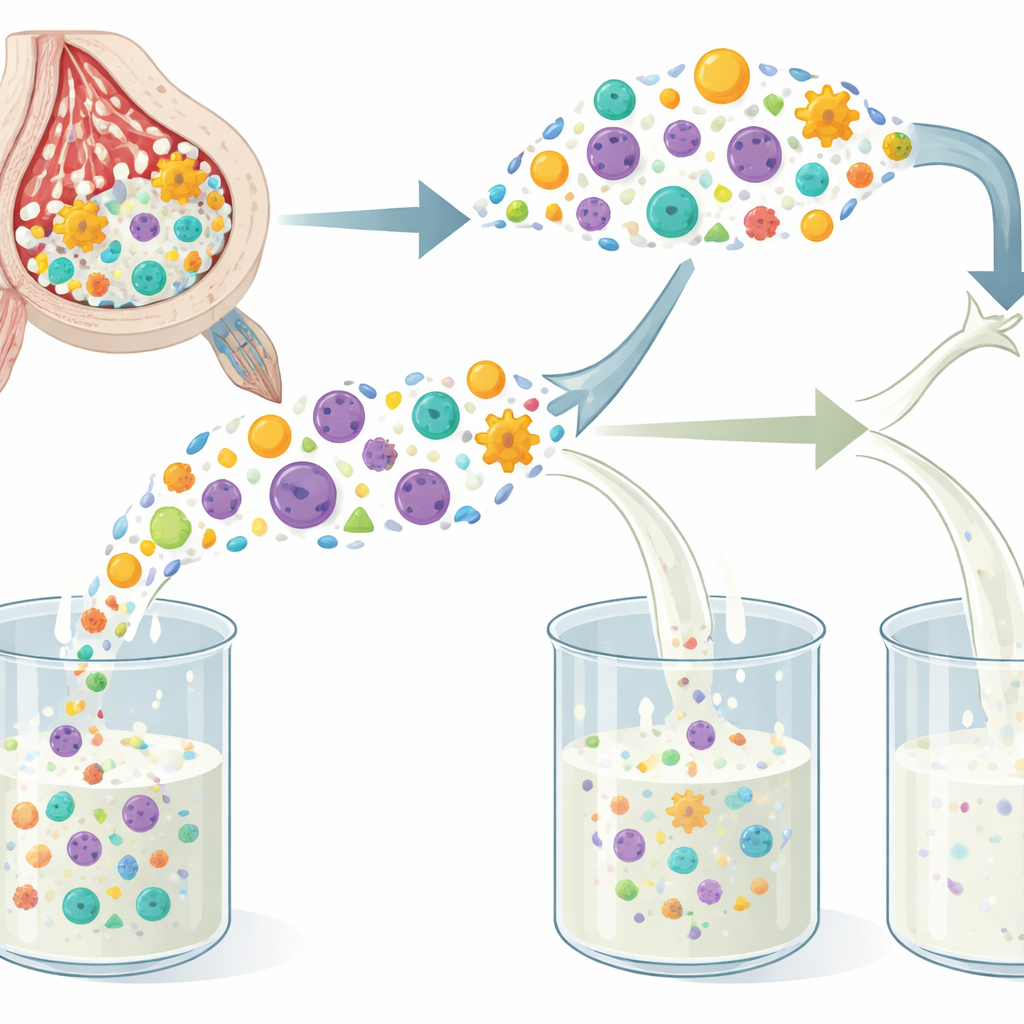
Late in lactation, interpreting all of these signals became especially tricky. Goat milk naturally contains more immune cells toward the end of the milking cycle, as the udder begins to wind down and prepare for the next season. These cells and their antimicrobial products may suppress bacterial growth in culture, making infections harder to detect with standard laboratory methods and potentially masking real disease. As a result, even promising biomarkers appeared to lose diagnostic power, not necessarily because they stop responding to infection, but because the reference test—bacteriological culture—misses more cases.
What this means for farmers and milk lovers
Overall, the study shows that no single test is perfect, but some combinations look promising. Using cathelicidin together with somatic cell counts that are adjusted for the stage of lactation could improve the detection of subclinical udder infections in goats, especially in early and mid-lactation when most of the milk is produced. Haptoglobin may add further value in targeted panels. Before these markers can be used routinely on farms, however, they need to be validated in larger and more diverse goat populations and measured with more practical, quantitative tests. If developed successfully, such biomarker-based tools could help farmers catch mastitis earlier, reduce antibiotic use, and safeguard both animal welfare and the quality of the goat milk products that reach consumers.
Citation: Addis, M.F., Santandrea, F., Fusar Poli, S. et al. Comprehensive evaluation of milk biomarkers as indicators of intramammary infection in dairy goats across lactation. Sci Rep 16, 14139 (2026). https://doi.org/10.1038/s41598-026-45097-w
Keywords: goat mastitis, milk biomarkers, udder health, somatic cell count, dairy goat milk