Clear Sky Science · en
Water treatment chemical supply chain disruption risk assessment and mitigation strategy ranking using BWM–VIKOR
Why water treatment supplies matter to everyone
Clean drinking water depends on a steady stream of treatment chemicals, from chlorine to coagulants. When those supplies are delayed or run short, utilities can struggle to keep tap water safe and flowing. This study looks at how to spot weak points in the chemical supply chain and how to choose the most effective backup plans so that communities are protected even when suppliers or transport systems fail.
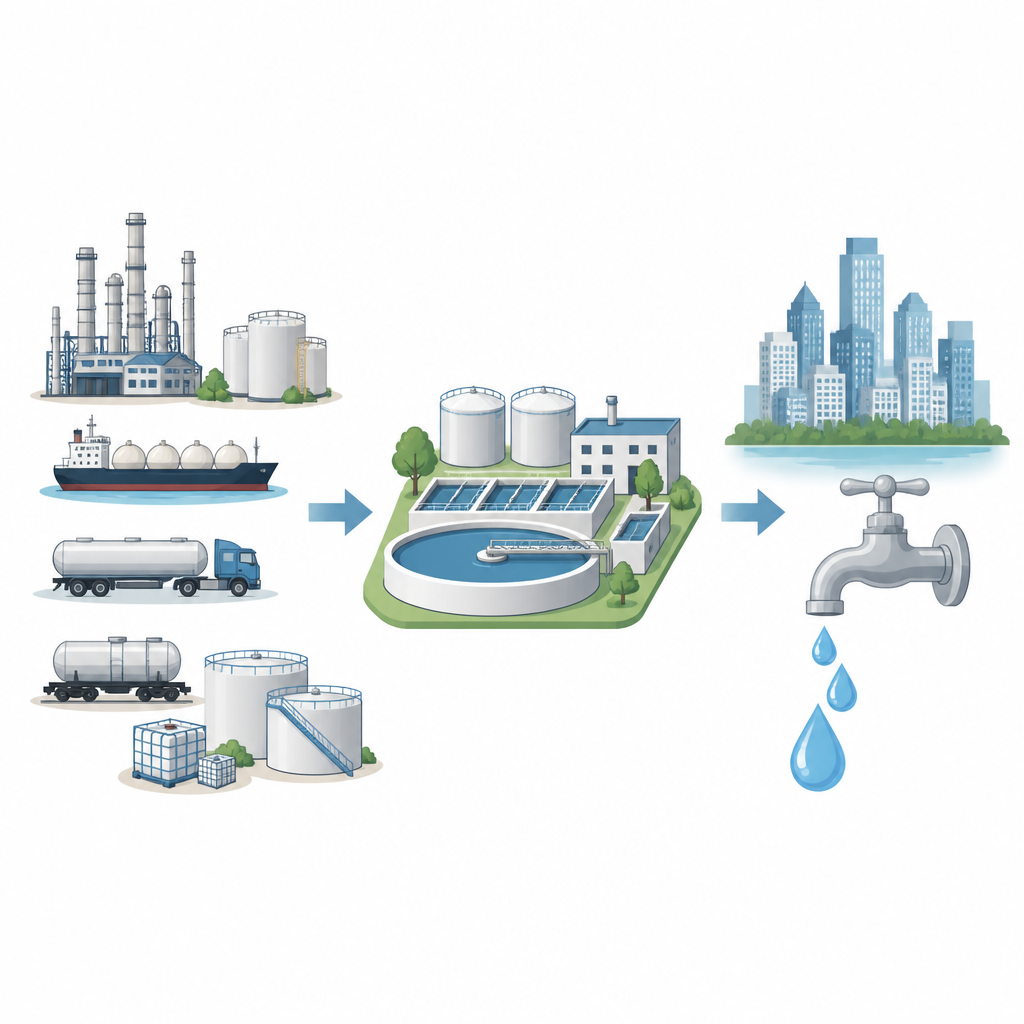
Following chemicals from factory to kitchen tap
The researchers begin by mapping the full journey of water treatment chemicals, from factories and blending plants through warehouses, ports, and trucking routes to the tanks and dosing systems inside a treatment plant. At each step they identify what can go wrong: factory shutdowns, port congestion, trucking shortages, import limits, bad batches, storage problems, and sudden jumps in demand driven by poor raw water quality. For each type of failure, they trace how it could limit chemical doses, disrupt treatment processes such as disinfection and coagulation, and increase the chance that a utility cannot meet water quality rules or customer demand.
Turning expert judgment into clear priorities
Because there is no single perfect fix, the team uses a structured two stage decision method to help utilities weigh trade offs. First they apply the Best Worst Method, which asks experts to name the most and least important decision criteria and compare them in a simple, repeatable way. From a panel spanning plant operators, purchasing staff, suppliers, logistics specialists, and researchers, the strongest message is that protecting public health and regulatory compliance comes first, followed by keeping water service running without interruption. The next tier of concerns centers on how quickly a plant can recover and how exposed it is to fragile suppliers, while cost, ease of implementation, and safety or environmental side effects, though still important, are treated more as constraints than as primary goals.
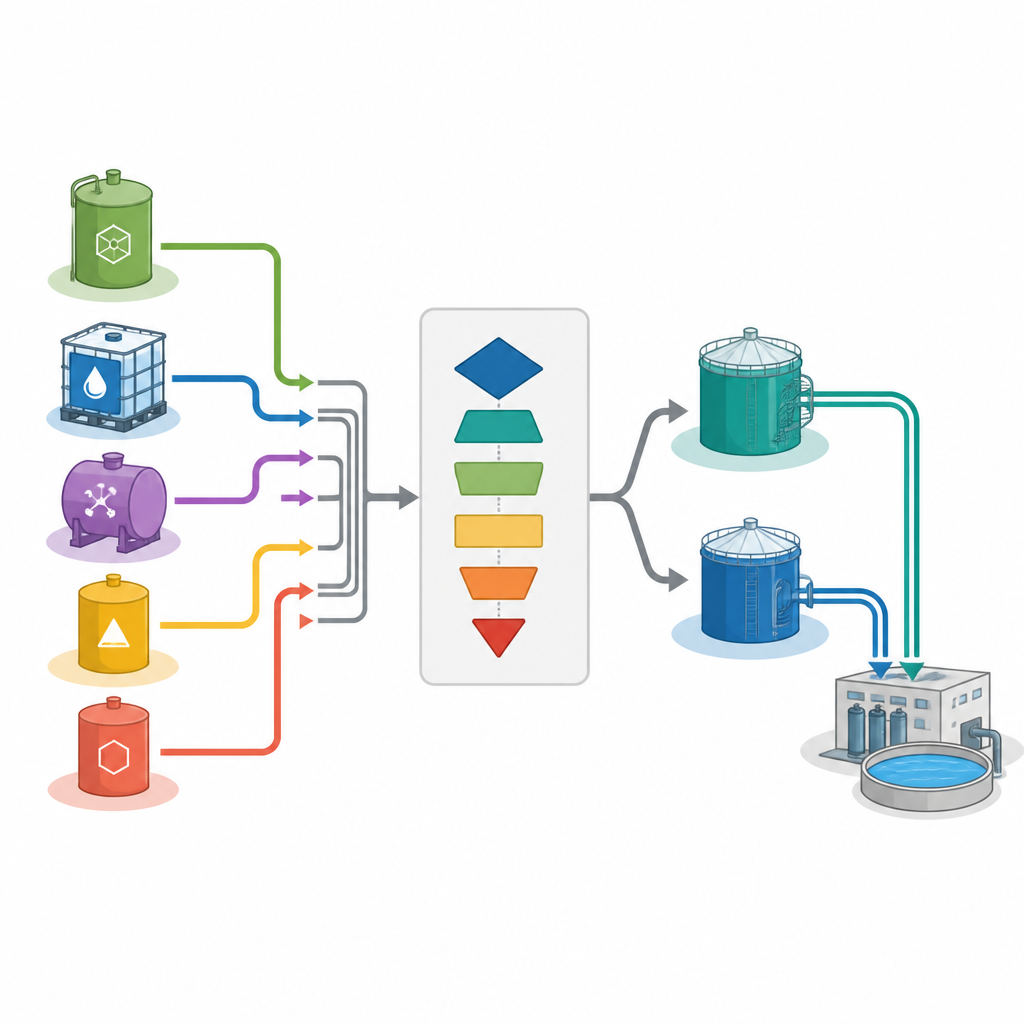
Ranking backup plans for chemical disruptions
With these weights in hand, the researchers turn to a second method called VIKOR to compare seven practical mitigation options. These include using multiple qualified suppliers, holding more safety stock and redesigning reorder rules, tightening contracts, approving substitute chemicals and flexible operating plans, improving supplier monitoring, strengthening incoming quality checks, and arranging mutual aid with nearby utilities. VIKOR looks for compromise choices that perform well across all criteria, balancing average performance against the risk that one weakness could cause strong regret in a crisis. In the case study of Shanghai’s large Yangshupu Water Plant, using multiple prequalified suppliers emerges as the best overall compromise, while improved safety stock policies provide the lowest worst case regret.
Testing decisions against changing conditions
The study does not stop at a single ranking. The authors test how results change if experts weigh criteria slightly differently or if decision makers place more emphasis on avoiding worst case outcomes versus maximizing overall benefit. They also build disruption scenarios, such as long lasting transport delays, frequent quality failures, or sudden spikes in chemical demand when river water deteriorates. Across these tests, the same small group of strategies keeps rising to the top. Dual sourcing with strong supplier checks and smarter safety stock and reorder rules remain the core recommendations, while process flexibility, improved quality testing, and mutual aid grow more important in specific types of crises.
What this means for safe and reliable tap water
For non specialists, the main takeaway is that secure chemical supplies are as vital to safe drinking water as pipes and filters. This research offers utilities a transparent, step by step way to decide which safeguards to invest in first when money, space, and staff are limited. It shows that combining structural fixes in supplier choice with well designed stock cushions and flexible treatment plans can greatly reduce the chances that a shortage of chlorine or other key chemicals will force boil water alerts or service cuts. The same framework can be adapted by other plants and cities to build a more resilient backbone for their own water supply systems.
Citation: Tang, W., Zhou, W., Manansala, L.D. et al. Water treatment chemical supply chain disruption risk assessment and mitigation strategy ranking using BWM–VIKOR. Sci Rep 16, 14802 (2026). https://doi.org/10.1038/s41598-026-45086-z
Keywords: water treatment, chemical supply chain, resilience planning, risk assessment, decision making