Clear Sky Science · en
Generalized structural equation modeling of intimate partner violence among married women in East Africa using population-based data
Why this issue matters to everyday life
Violence at home is often hidden behind closed doors, yet it shapes the health, safety, and future of millions of families. This study looks closely at intimate partner violence—physical, emotional, and sexual harm caused by a spouse or partner—among married women in 12 East African countries. By combining large, national surveys and modern analytical tools, the researchers show how common this violence is, what puts women at higher risk, and where change is urgently needed.
Taking a wide view across East Africa
Instead of focusing on a single country, the authors pooled data from 56,657 married women surveyed between 2011 and 2022 in 12 East African nations. These Demographic and Health Surveys are standardized, nationally representative snapshots of people’s lives, collected in the same way from country to country. Using women’s answers to detailed questions about hurtful acts in the last year, the team estimated how many had faced physical, emotional, or sexual violence from a partner. Overall, nearly two in five women—about 38%—had recently experienced at least one form of abuse, with rates ranging from just 10% in Comoros to more than half in Uganda. Physical and emotional violence were each reported by roughly one in four women, while one in nine reported sexual violence. 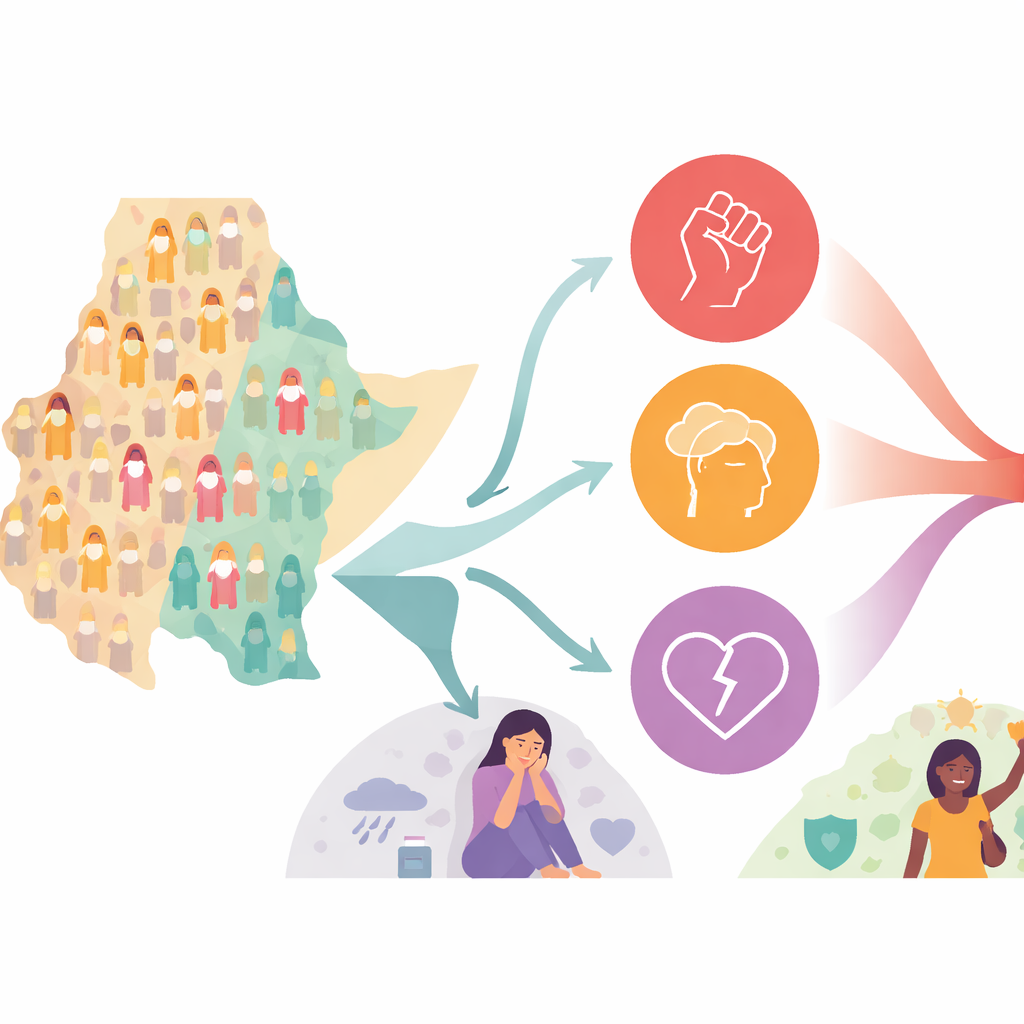
Looking inside the pattern of harm
The researchers went beyond simple tallies and asked why some women are more likely to be harmed than others. They used a method called generalized structural equation modeling, which can examine several types of violence at once and capture hidden influences such as a husband’s controlling behavior. In this framework, physical, emotional, and sexual violence are treated as related outcomes linked to many overlapping factors: a woman’s age, education, work and wealth; where she lives; her exposure to media; her own views about wife beating; and her partner’s education, work, and drinking habits. A special “latent” factor summarized controlling behaviors, such as jealousy, limiting contact with friends or family, and constantly demanding to know a woman’s whereabouts.
Who faces the greatest risk
The study found that older married women (ages 25–34 and 35–49) were more likely than younger women to face physical and emotional abuse, suggesting that risk accumulates over years in a relationship. Women with secondary or higher education and those from richer households were less likely to experience physical violence, and higher education for husbands also reduced the odds of sexual violence. However, the picture was not simple. Women living in rural areas faced more sexual violence than those in cities. Those who were working for pay had higher odds of all three forms of abuse, possibly reflecting tension or backlash when women gain economic independence. Women who believed wife beating could be justified were consistently more likely to report every type of violence, underscoring the power of social norms that excuse harm in the home.
Partners’ behavior and hidden control
Among all the influences studied, a husband’s drinking and controlling behavior stood out as particularly dangerous. Women whose partners drank alcohol faced roughly two to three times higher odds of physical, emotional, and sexual violence. Likewise, higher levels of controlling behavior—jealousy, isolation from friends and family, and constant monitoring—were strongly linked to all three types of abuse. Women’s own decision-making power at home had mixed effects: greater autonomy was associated with more emotional violence, but less sexual violence, suggesting that efforts to assert independence can sometimes provoke conflict even as they protect against certain harms. These nuanced patterns highlight how economic, emotional, and power dynamics in relationships interact in complex ways. 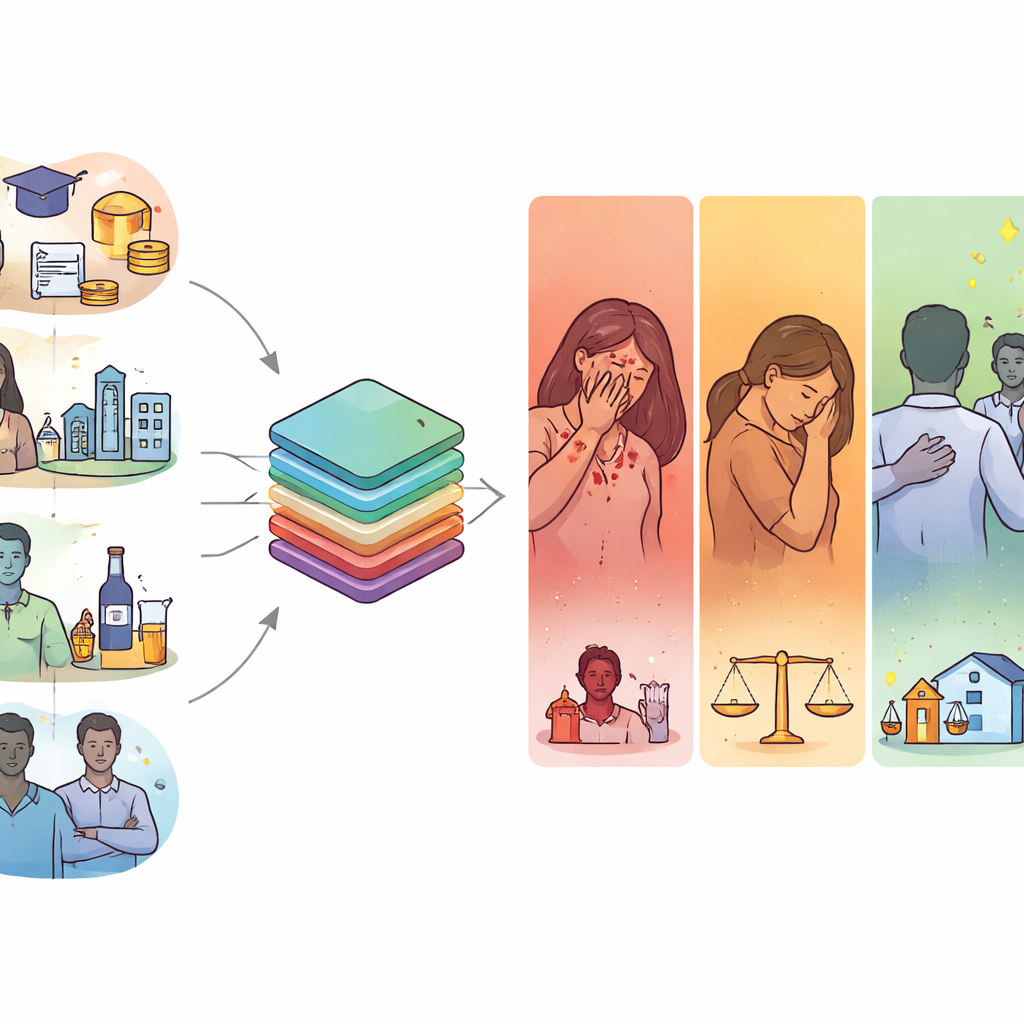
What these findings mean for change
For a layperson, the message is clear: intimate partner violence is widespread in East Africa and is shaped by more than just individual tempers. It reflects age, poverty, education, drinking, rigid beliefs about gender, and subtle forms of control that erode women’s freedom. The authors conclude that reducing this harm will require more than criminal laws alone. They call for education that promotes gender equality, economic programs that support women without putting them at greater risk, community efforts to challenge the idea that wife beating is acceptable, and strong action to reduce harmful alcohol use. By revealing how different risk factors connect and reinforce one another, this study offers a roadmap for policies and community initiatives that can help more women live free from fear in their own homes.
Citation: Terefe, B., Kebede, F.B., Gatira, D.N. et al. Generalized structural equation modeling of intimate partner violence among married women in East Africa using population-based data. Sci Rep 16, 14108 (2026). https://doi.org/10.1038/s41598-026-44933-3
Keywords: intimate partner violence, East Africa, married women, gender inequality, alcohol and abuse