Clear Sky Science · en
Peptide gel, CK2-085, maintains operative field visibility during surgery
Why Keeping the View Clear Matters
During delicate eye operations for glaucoma, surgeons work through a narrow window while tiny blood vessels may leak into the field of view. Even a small amount of blood can cloud this view, making a demanding surgery even riskier. This study tested a new transparent gel designed to gently push blood out of the way without harming the eye, aiming to give surgeons a clearer, safer view while they operate.
A Gel That Organizes Itself
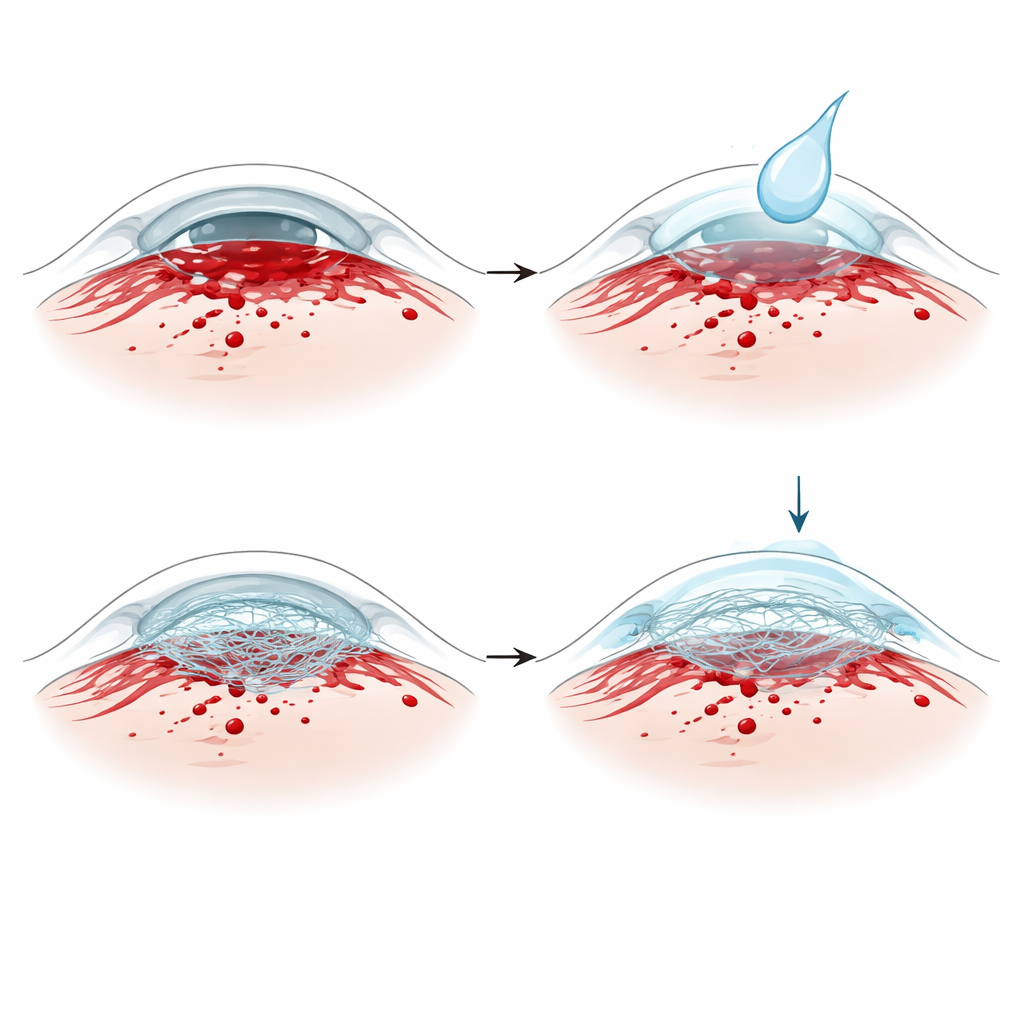
The material at the center of this work is a specially designed peptide gel called CK2-085. Peptides are short chains of amino acids, and this one is engineered so that, when it meets the salts in bodily fluids, it spontaneously assembles into a fine three-dimensional mesh and turns into a soft gel. Because its optical properties are very close to water, light passes through it with little distortion, allowing surgeons to see the underlying tissue clearly while the gel sits on the surface. Earlier animal studies suggested this gel could stop oozing blood, prevent leaks of digestive juices, support tissue repair and even stand in for the eye’s natural gel-like interior.
Putting the Gel to the Test in People
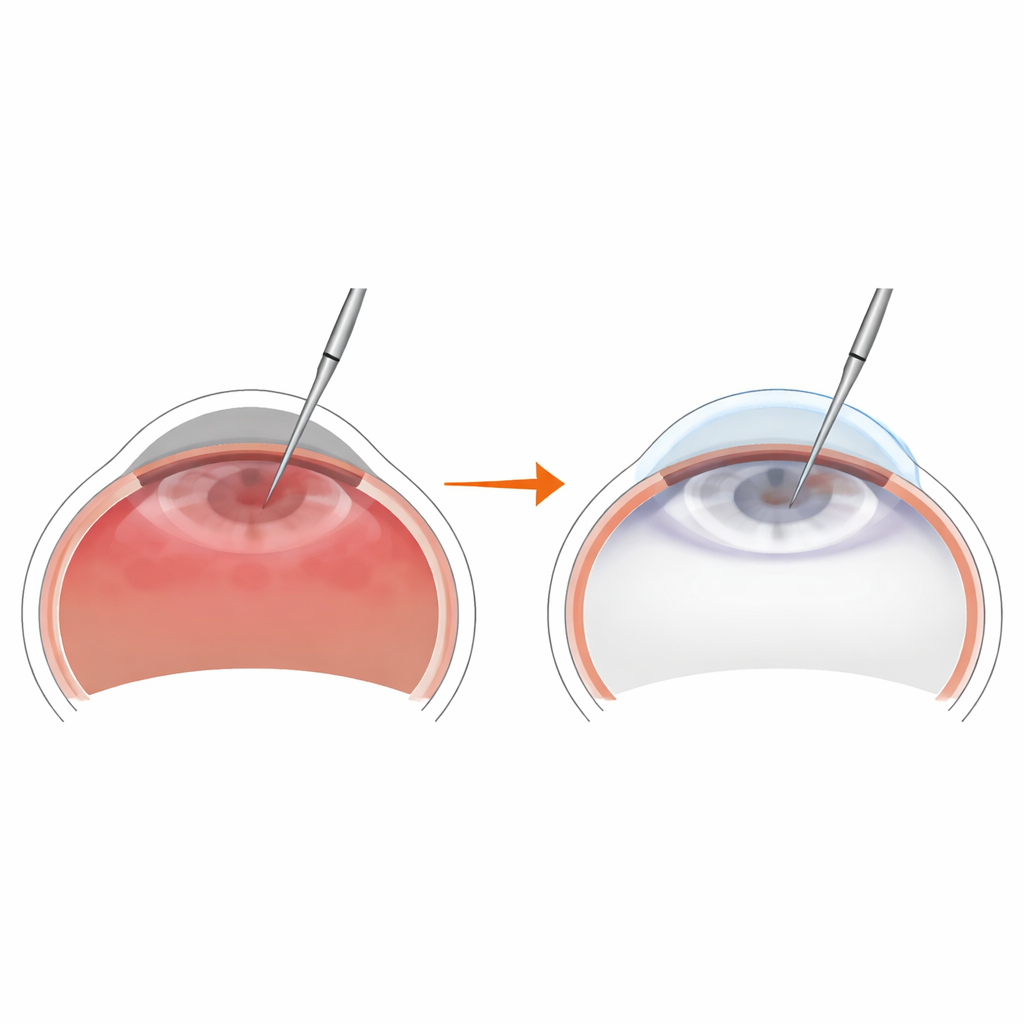
To see if CK2-085 could help in real glaucoma surgery, researchers in Japan ran a first-in-human, randomized clinical trial at five hospitals. Sixty-eight patients who needed glaucoma surgery were assigned by chance either to have the operation with the gel or to undergo the standard procedure without it; 67 completed the study. Surgeons used the gel group protocol by first opening the outer tissues of the eye, then spreading a layer of the clear gel over the white surface where they would cut a small flap. After creating the flap through the gel, they rinsed the area thoroughly to wash out any remaining material before continuing the operation as usual.
How Much Clearer Did Surgeons See?
The main question was how well surgeons could see during the crucial steps of the operation. For every surgery, the operating doctor graded visibility on a five-point scale based on how often blood or cloudiness forced them to pause and clear the field. In the gel group, about half of the operations reached the highest visibility ratings, compared with less than one-fifth in the standard-surgery group. In a few gel-assisted cases, the view stayed clear for more than 30 seconds without any wiping or rinsing, something not seen at all without the gel. Importantly, this advantage in clarity remained even after accounting for any use of electric cautery to seal blood vessels, showing that the gel itself made a real difference.
Ease of Surgery and Safety for the Eye
The team also asked whether operating through the gel made the procedure easier or harder overall. Here the gel did not clearly match the standard technique: surgeons’ ratings of how straightforward the surgery felt were slightly lower with the gel, and the results did not meet the trial’s strict definition of “non-inferior.” The authors suggest this may reflect a learning curve, since only a limited number of cases were performed by each surgeon, and using too much or too little gel could subtly distort the view. Timing data supported this idea: the early steps of surgery took longer with the gel, but later steps went slightly faster, so overall operating time was similar between groups. Measures taken one month after surgery—including eye pressure, sharpness of vision and the health of the fragile inner cell layer of the cornea—were comparable in both groups, and no serious side effects occurred.
What This Means for Future Eye Surgery
For patients and surgeons, these findings suggest that CK2-085 can safely provide a much clearer view during glaucoma surgery without altering the short-term results of the operation or damaging the eye. The gel appears to push blood away from the working area while remaining nearly invisible itself. Although surgeons may need experience to use it comfortably and avoid minor visual distortions, the study indicates that this new material could become a helpful tool whenever a clean, stable view is critical in delicate eye procedures.
Citation: Matsushita, K., Kawashima, R., Uesugi, K. et al. Peptide gel, CK2-085, maintains operative field visibility during surgery. Sci Rep 16, 10670 (2026). https://doi.org/10.1038/s41598-026-44854-1
Keywords: glaucoma surgery, peptide gel, intraoperative visibility, ocular hemostasis, self-assembling biomaterial