Clear Sky Science · en
Environmental background in Amazonian rivers near the industrial pole, northern Brazil
Why these rivers matter to everyone
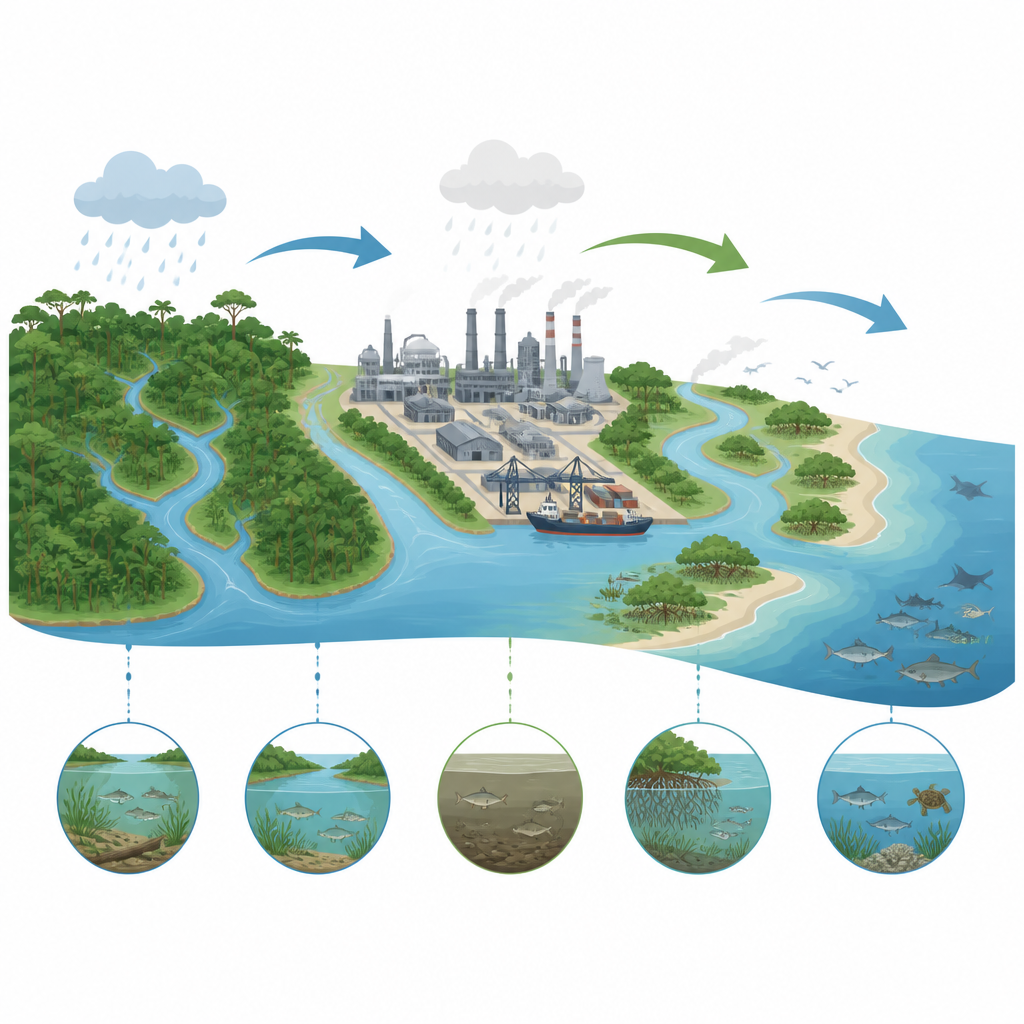
The rivers that wind through the Amazon near the cities of Barcarena and Abaetetuba in northern Brazil carry drinking water, food, and income for hundreds of thousands of people. Yet they also receive waste from factories, farms, and fast growing towns. Until now, no one had a clear picture of what counts as normal water quality in this busy stretch of the rainforest coast, or how much human activity has altered it over the past four decades. This study pulls together 41 years of scattered measurements to build that missing baseline and to pinpoint where the system is already under stress.
Taking the long view of a working river
The researchers searched technical reports, government files, company documents, and academic studies from 1980 to 2021, assembling nearly twenty thousand measurements of temperature, acidity, salts, nutrients, and metals in local rivers. They focused on an industrial corridor that includes ports, metal and chemical plants, fertilizer factories, food processing centers, and poorly treated urban waste. Using statistical tools designed to handle noisy, uneven data, they defined the natural range of key substances and set threshold values that flag unusually high concentrations without automatically calling them pollution.
What the water itself reveals
The basic behavior of the rivers still looks like that of many Amazon streams. Water is warm, close to 30 °C, and only slightly acidic. It is also very dilute, carrying relatively few dissolved salts compared with many rivers in other parts of the world. However, the rivers have a weak natural ability to neutralize acids, which makes them sensitive to any extra chemical load. Over the 41 year period, dissolved oxygen, which aquatic life depends on, has shown a clear downward trend, and episodes of very low oxygen have become more frequent. This pattern points to rising discharges of organic rich sewage and industrial effluents, even as other indicators such as overall salt content remain relatively stable.
Fertilizers and sewage tipping the balance
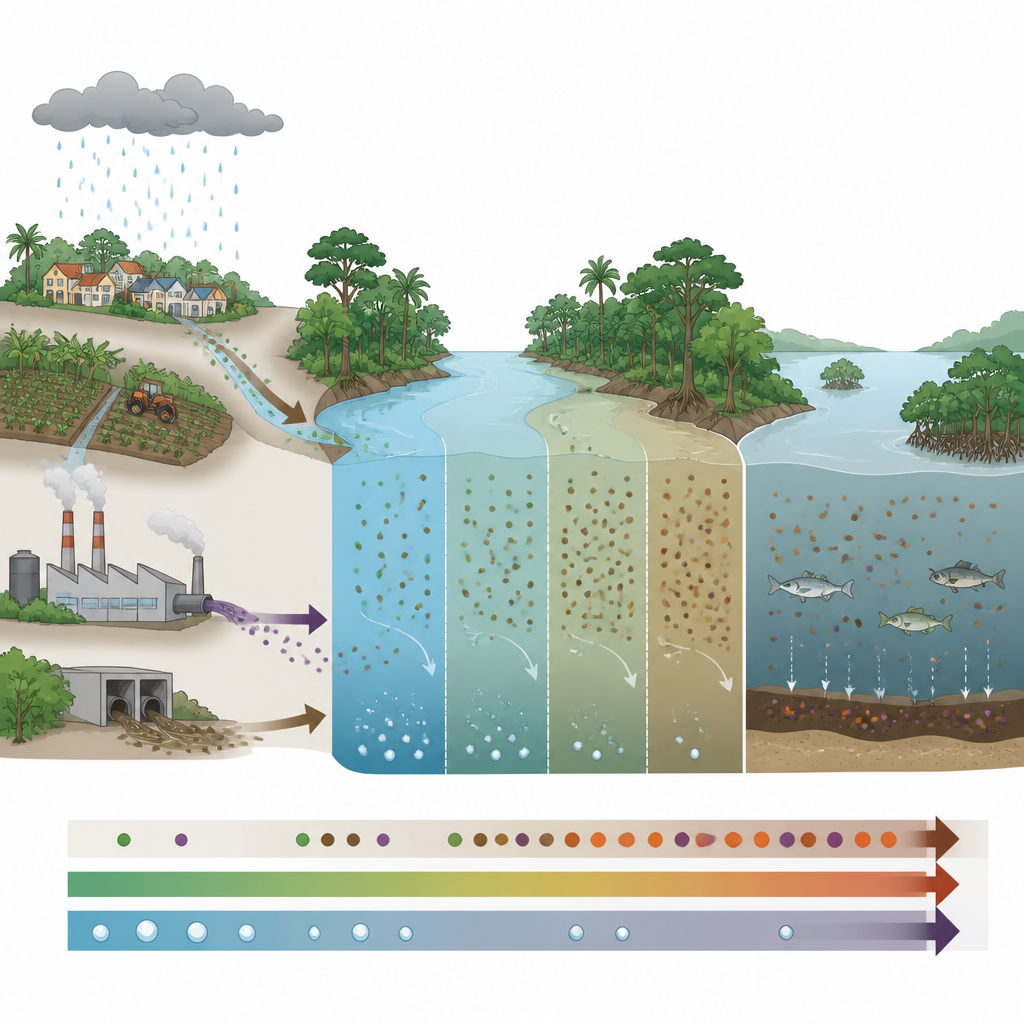
Nitrogen and phosphorus, the same nutrients found in fertilizers and detergents, tell an even clearer story. Both have increased over time, with phosphorus standing out as especially high and often above Brazilian freshwater guidelines. Calculations suggest that about five sixths of both nitrogen and phosphorus now come from human sources, led by domestic wastewater, followed by agriculture, solid waste, and urban runoff. The ratio of nitrogen to phosphorus is much lower than in most natural waters, signaling a system heavily enriched in phosphorus and prone to algal blooms and oxygen loss. Together with the falling oxygen levels, this reveals a river network whose capacity to safely absorb waste is being pushed to its limits.
Metals from rocks and from people
The team also examined metals such as iron, aluminum, manganese, copper, zinc, nickel, lead, cadmium, chromium, and mercury. Some of these, especially iron and aluminum, are naturally abundant in local rocks and soils. Their concentrations are high but slowly declining, likely because of changes in erosion and runoff. Others, including lead, cadmium, and mercury, are more clearly tied to human activity from industries, open dumps, and untreated sewage. Their levels hover near or above values expected from natural conditions and sometimes approach legal limits. Seasonal patterns show that several of these metals enter the rivers in a fairly constant way, with high flows only diluting them rather than turning off the source.
Why this new baseline matters
By converting decades of scattered measurements into a coherent picture, the study delivers the first long term reference for what is normal, and what is not, in these Amazonian rivers. It shows that while the waters still look clean by some measures, low buffering capacity, growing phosphorus pollution, and the presence of toxic metals create a fragile situation for wildlife and for people who depend on the rivers. The new background ranges and warning thresholds give regulators and communities a practical tool to track future changes, identify emerging contamination, and judge the impact of new projects before problems become harder and more costly to fix.
Citation: Rollnic, M., Noriega, C., Monteiro, S. et al. Environmental background in Amazonian rivers near the industrial pole, northern Brazil. Sci Rep 16, 15899 (2026). https://doi.org/10.1038/s41598-026-44852-3
Keywords: Amazon rivers, water quality, industrial pollution, nutrient enrichment, heavy metals