Clear Sky Science · en
Knowledge attitudes and practices regarding MRI safety among healthcare providers and patients/family members in China
Why this matters for everyday medical scans
Magnetic resonance imaging (MRI) is one of the most common scans people receive in hospitals, often seen as both powerful and harmless. Yet MRI machines rely on strong magnets that can turn everyday metal objects into dangerous projectiles or interfere with implants. This study from a large Chinese hospital asked a simple question with big safety implications: how much do healthcare workers, patients, and family members actually know about MRI safety, and how does that knowledge shape what they do before and during a scan?
What the researchers set out to learn
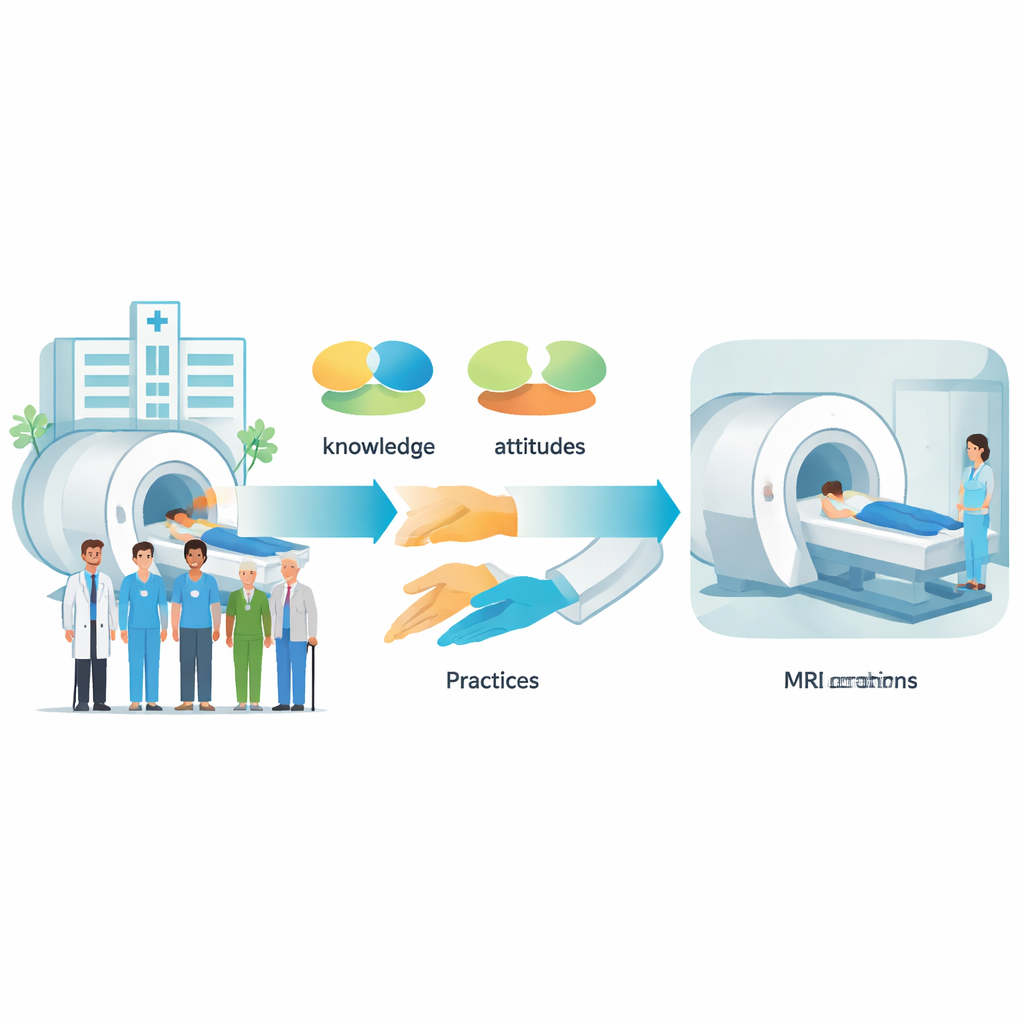
The team focused on three connected ideas: what people know about MRI safety, how they feel about it, and how they behave in real-life situations. They surveyed more than 800 participants online, including doctors, nurses, MRI technologists, medical students, patients getting scans, and accompanying family caregivers. Everyone answered the same structured questionnaire, which covered basic facts (such as whether MRI uses radiation), feelings and worries about MRI, and practical habits like reporting metal implants or reading warning signs. The goal was to see how these three elements fit together and whether they differed between professionals and the general public.
How the study was carried out
Participants completed a 47-item survey distributed through a popular mobile platform. The questions reflected typical steps in an MRI visit: filling out safety forms, talking with staff, removing metal objects, and entering the scan room. Answers were scored to give each person a “knowledge,” “attitude,” and “practice” score. The researchers then used statistical models to test how these three scores were linked. They also examined how factors such as age, education, income, work department, previous MRI experience, and the presence of metal implants influenced people’s responses and safety behaviors.
What people really knew and did
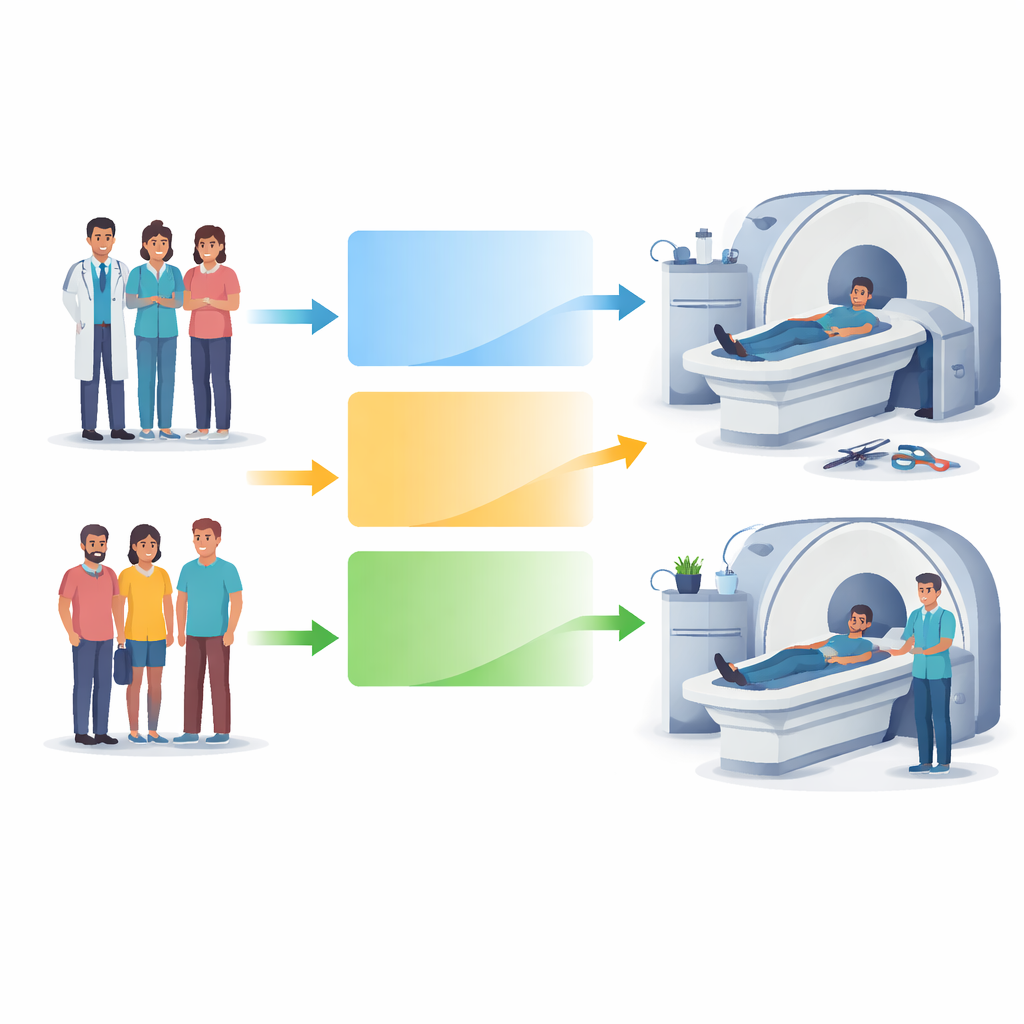
Healthcare workers scored higher than patients and families across knowledge, attitude, and practice, but both groups had clear blind spots. Many professionals knew that MRI does not involve ionizing radiation and that metal objects must stay out of the scan room, yet a sizeable number were unsure about more detailed risks, such as whether tattoos can heat up. Among patients and family members, misunderstandings were much more common: nearly half wrongly believed MRI uses the same harmful radiation as X-rays, and many were confused about whether common heart implants are safe. Attitudes were generally cautious but not strongly negative—people trusted MRI’s usefulness but worried about noise, cramped spaces, and possible side effects from contrast dyes and costs. In practice, most respondents said they cooperated with safety checks and removed metal items, but fewer routinely sought updated information or reminded others about precautions.
How thoughts and feelings shape safe behavior
When the researchers looked at how knowledge, attitudes, and practices fit together, a striking pattern appeared. Simply knowing more about MRI safety did not directly translate into safer behavior. Instead, knowledge improved people’s attitudes—making them more confident, less fearful, and more accepting of safety rules—and those more positive attitudes were what actually drove better habits. This effect was especially strong for patients and family members: for them, feelings about MRI played an even larger role in whether they followed safety steps than for healthcare workers. Education level, income, prior MRI experience, and living in cities were also linked to better understanding and safer behavior, while having allergies or certain health problems could make people more hesitant or less consistent.
What this means for safer scans
The study concludes that both professionals and the public in this Chinese setting lack solid MRI safety knowledge, even though their day-to-day behaviors are often reasonably good. Crucially, the safest outcomes arise when clear information is paired with trust and reassurance. That means hospitals cannot rely on pamphlets or forms alone. They need ongoing staff training, clear and friendly explanations for patients and families, and simple systems—like checklists and visual reminders—that encourage conversation about implants, metal objects, and fears about the scan. By strengthening both understanding and attitudes, MRI units can reduce preventable accidents and make an already valuable test safer and more comfortable for everyone involved.
Citation: Zhang, M., Lu, G., Zhai, D. et al. Knowledge attitudes and practices regarding MRI safety among healthcare providers and patients/family members in China. Sci Rep 16, 14571 (2026). https://doi.org/10.1038/s41598-026-44648-5
Keywords: MRI safety, patient education, healthcare providers, China, medical imaging