Clear Sky Science · en
Severe adverse clinical impacts are predicted by an early high positive fluid balance in patients with severe acute pancreatitis
Why Too Much Fluid Can Be Dangerous
When people develop severe inflammation of the pancreas, doctors often rush to give large amounts of intravenous fluid to keep blood pressure and organs working. This approach seems logical—after all, dehydration is common and fluids are lifesaving in many emergencies. But this study shows that in severe acute pancreatitis, giving too much fluid in the first few days can actually worsen outcomes, raising the risk of death and organ failure. Finding the “just right” amount of fluid could help doctors around the world treat these critically ill patients more safely.
Understanding a Sudden Pancreas Storm
Acute pancreatitis is a sudden inflammation of the pancreas, often triggered by gallstones, high blood fats, alcohol, or abdominal injury. Most people recover, but roughly a quarter of cases turn into a severe, body-wide illness. In this dangerous form, the inflamed pancreas leaks active digestive enzymes and inflammatory chemicals into the bloodstream. Blood vessels become leaky, fluid seeps into tissues, and organs such as the lungs and kidneys start to struggle. Because patients lose fluid from the circulation, early hospital care routinely focuses on fast and generous fluid replacement through an intravenous drip.
When Helpful Fluids Become Harmful
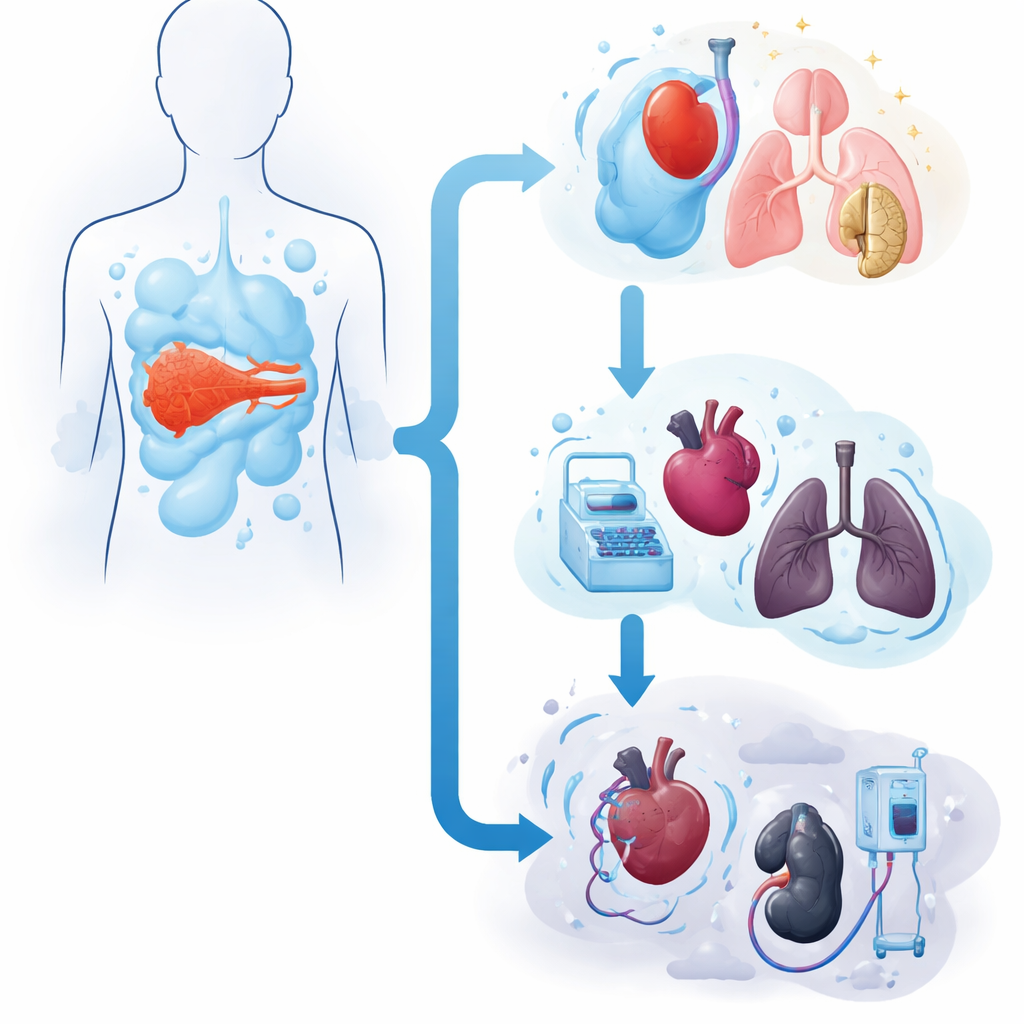
Fluids are essential to restore blood flow to vital organs in the early hours, but they do not simply disappear after they are infused. Any fluid that goes in and does not come out as urine, stool, or drainage stays in the body as “positive fluid balance.” That extra water can soak into tissues, causing swelling in the lungs, abdomen, and limbs, and may squeeze delicate organs just when they are already under attack from inflammation. Earlier research hinted that more fluid might mean more organ failure, but it did not clearly define how much is too much, especially in the crucial first three days of severe pancreatitis.
Two Cohorts, One Critical Threshold
The researchers at Ruijin Hospital in Shanghai examined this problem in two parts. First, they looked back at 560 patients with severe acute pancreatitis treated between 1996 and 2008. They carefully calculated each patient’s net fluid balance over the first three days after admission and adjusted it for body weight. By running statistical models that also accounted for age, blood pressure problems, illness severity scores, pancreatic tissue death, and surgery, they identified positive fluid balance itself as an independent risk factor for dying in the hospital. Using a diagnostic curve, they pinpointed a cut-off: patients who had accumulated more than about 48 milliliters of extra fluid per kilogram of body weight in those three days were much more likely to die than those who stayed below that level.
Confirming the Risk in Modern Intensive Care
Next, the team put this threshold to the test in a newer, prospective group of 343 severe pancreatitis patients admitted to the emergency intensive care unit between 2020 and 2023. They split them into a “balanced” group (below the 48.4 ml/kg cut-off) and an “unbalanced” group (at or above it). Even after allowing for how sick patients were on arrival, those in the high fluid group were over three times more likely to die within 30 days. They also needed breathing machines and blood-cleaning treatments far more often, signaling serious lung and kidney stress. Survival curves over the first month showed that patients with excessive fluid buildup died earlier and more frequently than those whose fluid was kept in check.
What This Means for Patient Care
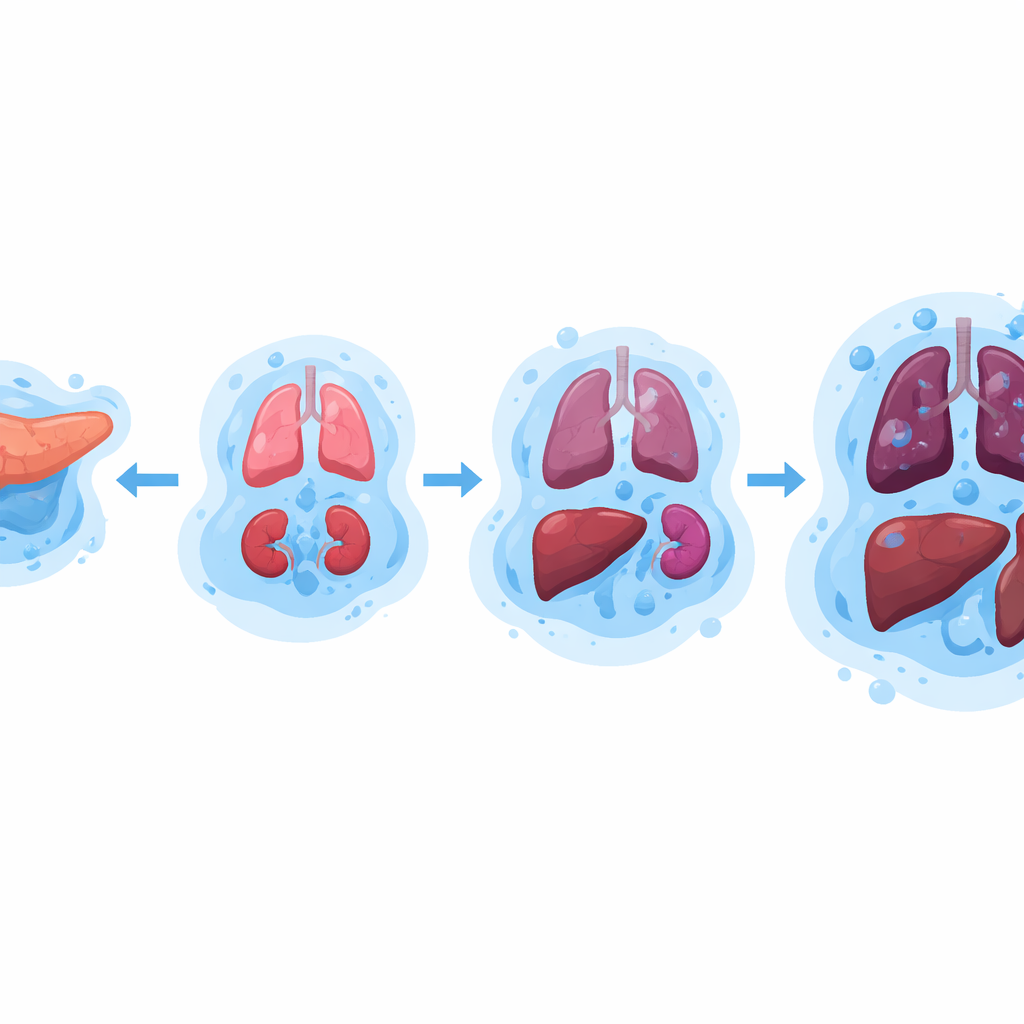
These findings suggest that, in severe acute pancreatitis, more fluid is not always better. While patients clearly need early resuscitation to correct low blood volume, continuing to pour in fluid without watching how much the body retains may push vulnerable organs toward failure. Keeping the three-day positive fluid balance below about 48.4 ml per kilogram of body weight emerged as a practical target that could help doctors avoid serious complications. The authors caution that their work is observational and from a single hospital, so it cannot prove cause and effect, and larger multi-center trials are still needed. Nonetheless, the study adds a crucial piece to the puzzle: careful tracking of fluid in and out is not just a bookkeeping task—it may be a lifesaving strategy for people caught in the storm of severe pancreatitis.
Citation: Zhong, M., Chen, WJ., Huang, SW. et al. Severe adverse clinical impacts are predicted by an early high positive fluid balance in patients with severe acute pancreatitis. Sci Rep 16, 13492 (2026). https://doi.org/10.1038/s41598-026-44583-5
Keywords: severe acute pancreatitis, fluid balance, critical care, organ failure, intravenous fluids