Clear Sky Science · en
The effects of inspiratory muscle training on respiratory function and aerobic capacity in sedentary adolescents: A single-blind randomized controlled trial
Why Teen Breathing Muscles Matter
Many teenagers spend much of their day sitting in classrooms, on buses, or in front of screens. This long sitting time can quietly weaken the heart and lungs, making it harder to be active and increasing future health risks. The study in this paper explores a surprisingly simple idea: can training the muscles we use to breathe—just a few minutes a day—help sedentary high school boys breathe better and last longer during exercise, without asking them to do more sports or workouts?
Too Much Sitting, Not Enough Air
Across the world, most adolescents are not meeting daily activity recommendations, and they spend more than half of their waking hours sitting. Earlier research shows that this pattern is linked to lower lung capacity, poorer heart and lung fitness, and a higher risk of heart and metabolic diseases later in life. The teenage years are a crucial window for body development: bones and muscles grow quickly, but the heart and lungs may lag behind. As a result, young people can feel out of breath and tired easily, which further discourages them from moving more. Schools try to fix this with physical education, but traditional exercise programs can be time-consuming, tiring, and hard to sustain for students who are already inactive.
A Simple Daily Breathing Workout
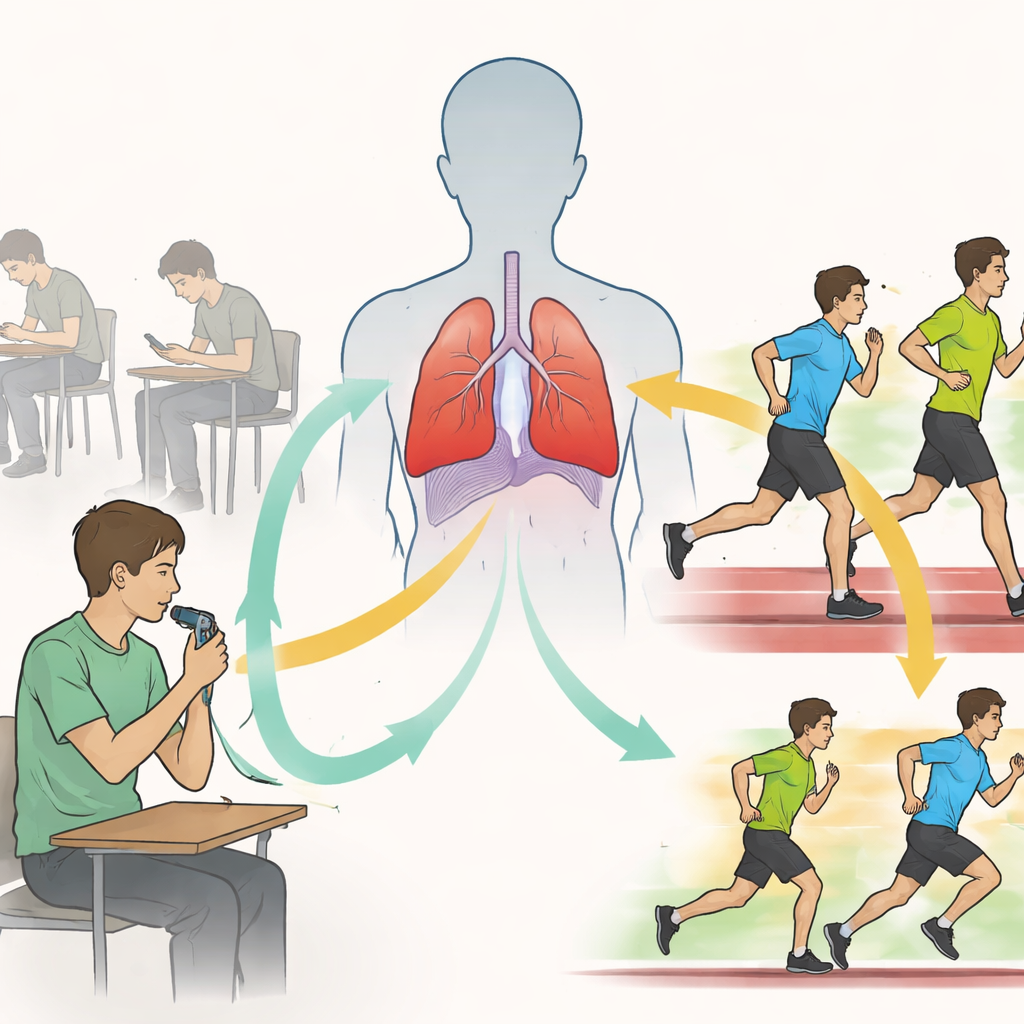
To tackle this problem, the researchers tested inspiratory muscle training, a method that specifically strengthens the muscles that pull air into the lungs. Forty-one sedentary male high school students in China were randomly assigned to either a true training group or a sham group. Both groups used the same handheld breathing device three times a week for 12 weeks during school recess. Each session took about 20–25 minutes, including warm-up, and involved sets of strong, quick inhalations against resistance through a mouthpiece while wearing a nose clip. The key difference was intensity: the training group worked against a challenging and gradually increasing load (from half to about four-fifths of their maximum inspiratory strength), while the sham group breathed against a very light load that was not expected to produce real training effects.
Testing Lungs, Breathing Strength, and Endurance
Before and after the 12 weeks, the teens were carefully tested. The team measured how much air they could blow out in a single forced breath, how strong and fast they could inhale and exhale, and how much air they could pull into their lungs during a powerful breath. To estimate aerobic fitness, the boys performed the Yo-Yo intermittent running test, which involves repeated 20-meter runs back and forth at increasing speeds with short walking rests. From the distance completed, the researchers estimated maximal oxygen uptake, a common marker of endurance. They also tracked heart rate during and after the test, paying special attention to how quickly heart rate dropped in the first minute of recovery, which reflects how well the body can calm down after intense effort.
Stronger Breaths, Longer Runs
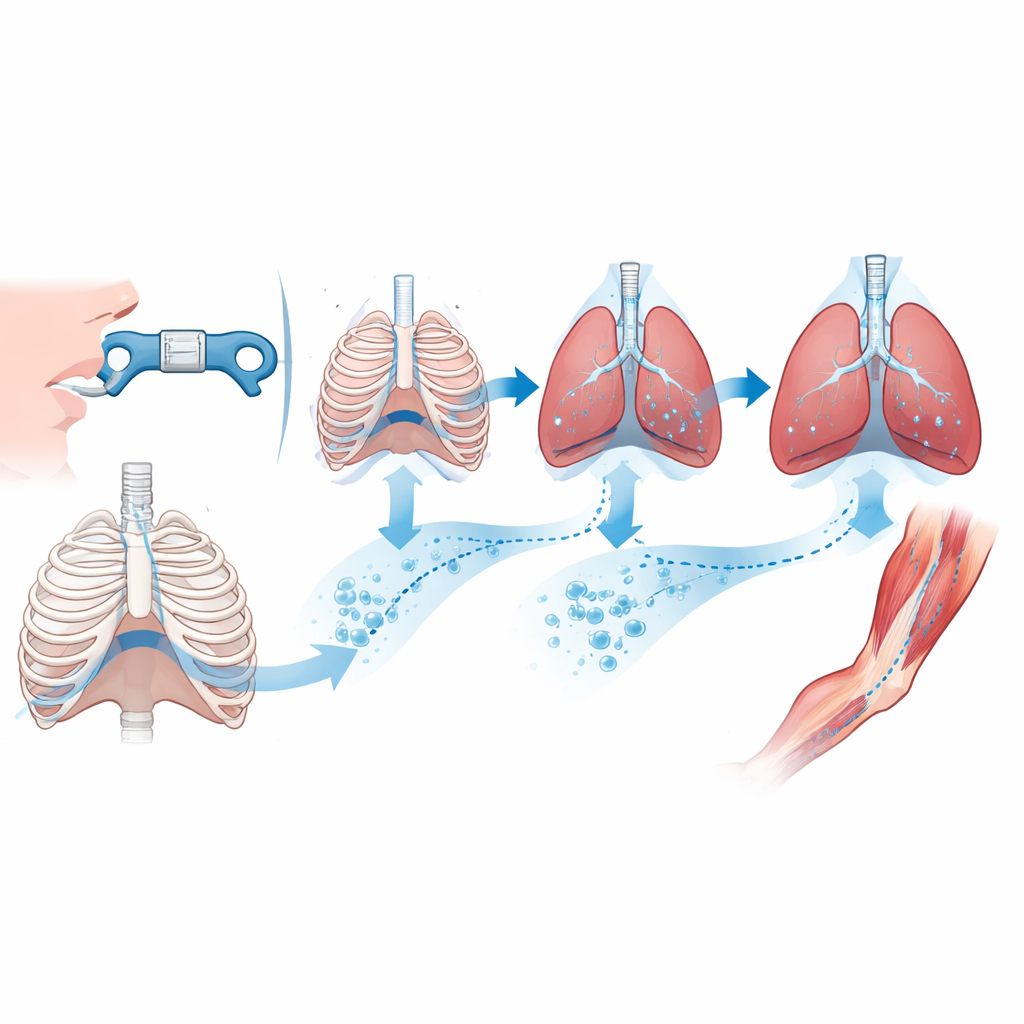
The differences after training were striking. Compared with the sham group, boys who did real inspiratory muscle training showed clear improvements in all major breathing measures: they could inhale more forcefully, move air into the lungs more quickly, and take in a larger volume of air. Their ability to push air out also improved, suggesting that the benefits were not limited to a single muscle group. These changes translated into better whole-body performance. The training group increased their estimated maximal oxygen uptake, ran significantly farther in the Yo-Yo test, and showed a faster drop in heart rate during the first minute after exercise, all signs of better endurance and recovery. The sham group, despite following the same schedule and school physical education, showed little or no meaningful progress on these measures.
What This Means for Schools and Teens
For parents, teachers, and policymakers, the message is encouraging. A brief, low-burden breathing routine added to regular physical education appeared to make sedentary teenage boys’ lungs stronger and their bodies better able to handle hard exercise—without demanding extra running, complex skills, or special facilities. The authors caution that their study included only boys from one region and used indirect tests of oxygen uptake, so more work is needed in girls, other settings, and with more detailed measurements. Still, the findings suggest that training the breathing muscles could become a practical, time-efficient tool to counteract the hidden toll of too much sitting and to support healthier hearts and lungs during a critical stage of growth.
Citation: Li, G., Zhao, Y., Mo, T. et al. The effects of inspiratory muscle training on respiratory function and aerobic capacity in sedentary adolescents: A single-blind randomized controlled trial. Sci Rep 16, 14484 (2026). https://doi.org/10.1038/s41598-026-44416-5
Keywords: inspiratory muscle training, sedentary adolescents, respiratory fitness, aerobic endurance, school-based intervention