Clear Sky Science · en
Multi-omics feature engineering driven by biomedical foundation models improves drug response prediction for inflammatory bowel disease patients
Why this research matters for patients
People with inflammatory bowel disease (IBD) often face a frustrating trial-and-error process when starting new medicines. The same drug can calm severe gut inflammation in one person yet barely help another. This study explores how powerful new artificial intelligence (AI) models, originally built to understand biology at massive scale, can be repurposed to squeeze far more insight out of small patient datasets. The goal is simple but ambitious: use each person’s genetic and molecular profile to predict in advance how well they will respond to a common IBD drug.
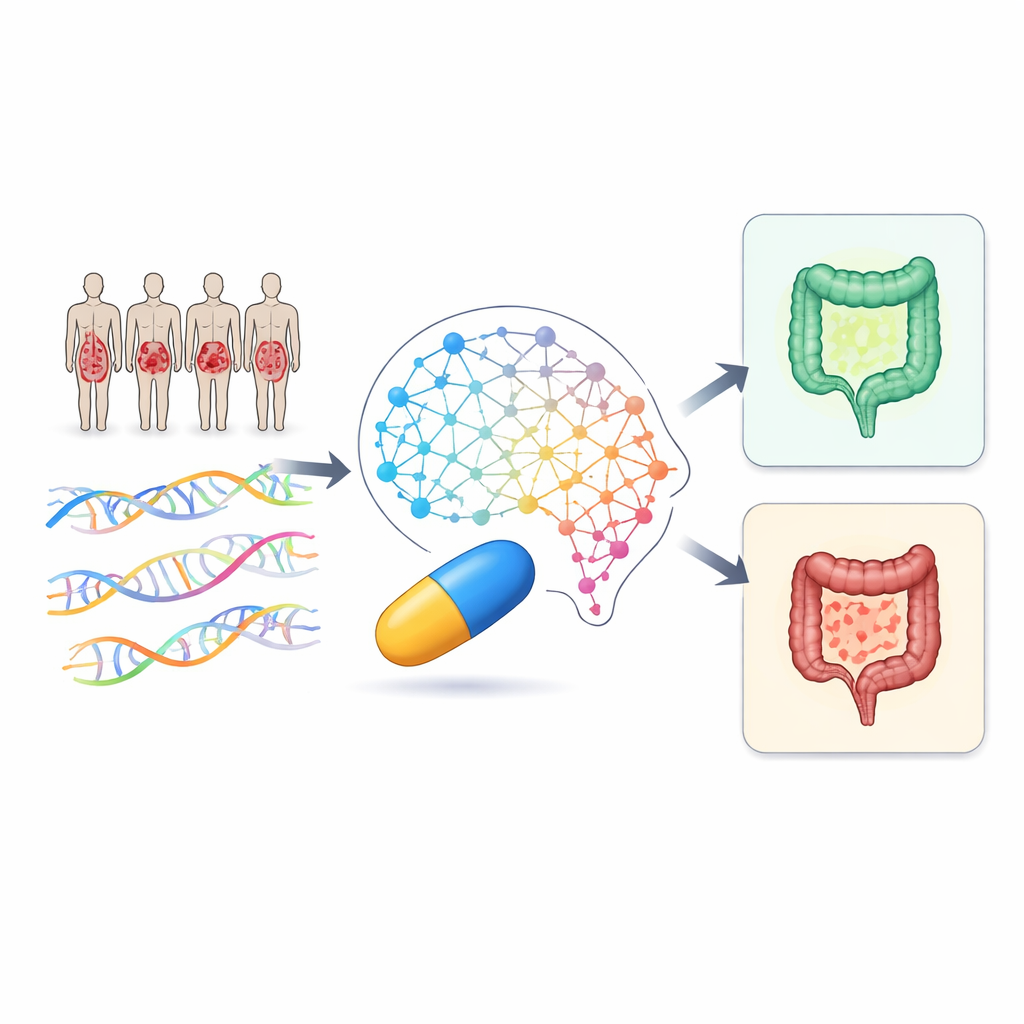
Using big AI to help with small studies
Traditional medical AI tools struggle when the number of patients is small, even if each patient is deeply measured. In this work, the researchers turn that problem on its head by borrowing knowledge from a huge “foundation model” called MAMMAL, originally trained on vast collections of protein and drug data. Instead of retraining this model, they use it as a smart calculator to estimate how strongly a given drug binds to thousands of human proteins. Those binding strength scores then become new, information-rich features that can be plugged into more modest machine-learning models tailored to the 51 IBD patients in this study.
Looking inside the gut at DNA and RNA
The team worked with tissue samples taken from the inflamed intestines of people with ulcerative colitis or Crohn’s disease. From each sample they measured two main layers of biology: DNA, focusing on small genetic changes called SNPs, and RNA, which reflects how active each gene is in the tissue. They also exposed the tissue to prednisolone, a standard first-line steroid treatment for IBD, and measured how much a key inflammatory signal called TNFα dropped in response. This TNFα change served as a stand-in for how well that patient’s tissue responded to the drug. The challenge was to connect thousands of genetic and molecular measurements to this drug response outcome.
Teaching models what to pay attention to
The first step was deciding which proteins and genes the models should care about most. Using the foundation model, the researchers estimated how tightly prednisolone would bind to more than 11,000 human proteins, then focused on the top 5 percent with the strongest predicted binding. Encouragingly, this short list included the drug’s known targets and proteins involved in chemical sensing and signaling, suggesting the AI’s rankings were biologically sensible. They then combined this list with each patient’s DNA changes, creating personalized “mutated” protein sequences and recalculating how each mutation might slightly strengthen or weaken prednisolone binding. These predicted shifts in binding strength became compact, patient-specific features capturing how variants in key proteins could alter drug action.
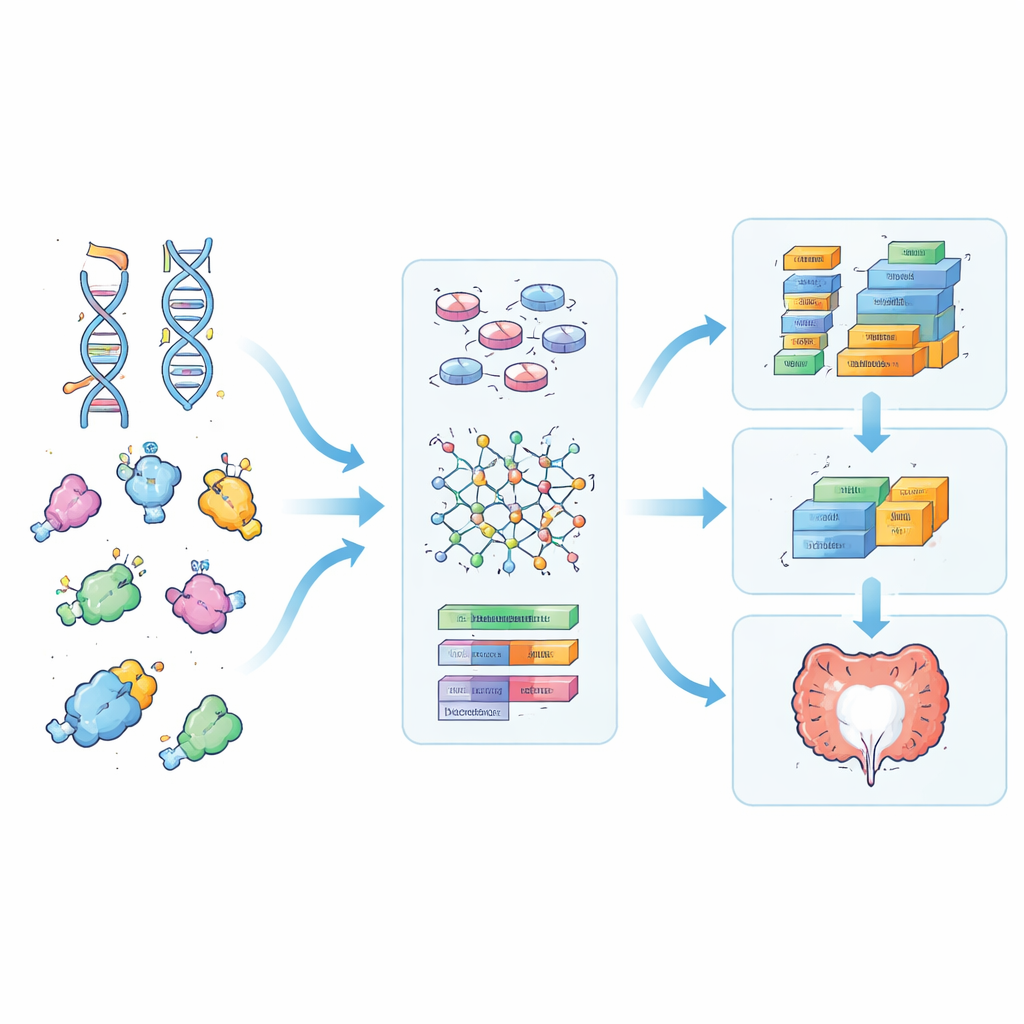
Blending genetic signals with gene activity
Next, the team layered in gene activity from RNA measurements, taken from the very same gut tissue used in the drug tests. For each prioritized protein, they paired its predicted binding strength with the activity of its corresponding gene, and also multiplied the two to create an “interaction state” that reflects both how strongly the drug is expected to bind and how much of the target is present. Machine-learning models trained on these enriched features were better at distinguishing between samples that responded well to prednisolone and those that did not, compared with models using more basic representations of the same DNA data. Some of the most influential features pointed to families of smell-related receptors and a receptor involved in the calming brain signal GABA, hinting at underappreciated roles for these proteins in gut inflammation and steroid response.
Making complex tools usable by non-experts
Beyond the biology, the researchers also tackled a practical barrier: most labs lack the computing expertise needed to run large foundation models. To address this, they wrapped their binding-affinity workflow in an open Model Context Protocol (MCP) server that can be called directly by AI assistants such as Claude or ChatGPT. With this setup, a scientist can ask, in plain language, for predicted binding between a drug and a set of proteins, and the system quietly handles the technical steps behind the scenes. This lowers the bar for others to explore similar personalized drug-response questions using their own data.
What this means for future treatment choices
In everyday terms, this work shows how a single, powerful AI model trained on huge public datasets can help small, real-world patient studies punch above their weight. By turning raw DNA changes and gene activity into richer, biology-aware features, the authors improved the accuracy of models that predict who is likely to benefit from prednisolone. The results are still early and based on a limited number of patients, so the specific gene–drug links they highlight will need further testing. But the overall strategy—using foundation models as smart feature generators and making them accessible through simple interfaces—points toward a future where doctors could use multi-layer molecular tests, interpreted through AI, to pick the right drug and dose for each person with IBD.
Citation: Gardiner, LJ., Kelly, J., Evans, A. et al. Multi-omics feature engineering driven by biomedical foundation models improves drug response prediction for inflammatory bowel disease patients. Sci Rep 16, 13820 (2026). https://doi.org/10.1038/s41598-026-44366-y
Keywords: inflammatory bowel disease, drug response prediction, biomedical foundation models, multi-omics, personalized medicine